
Appetizers
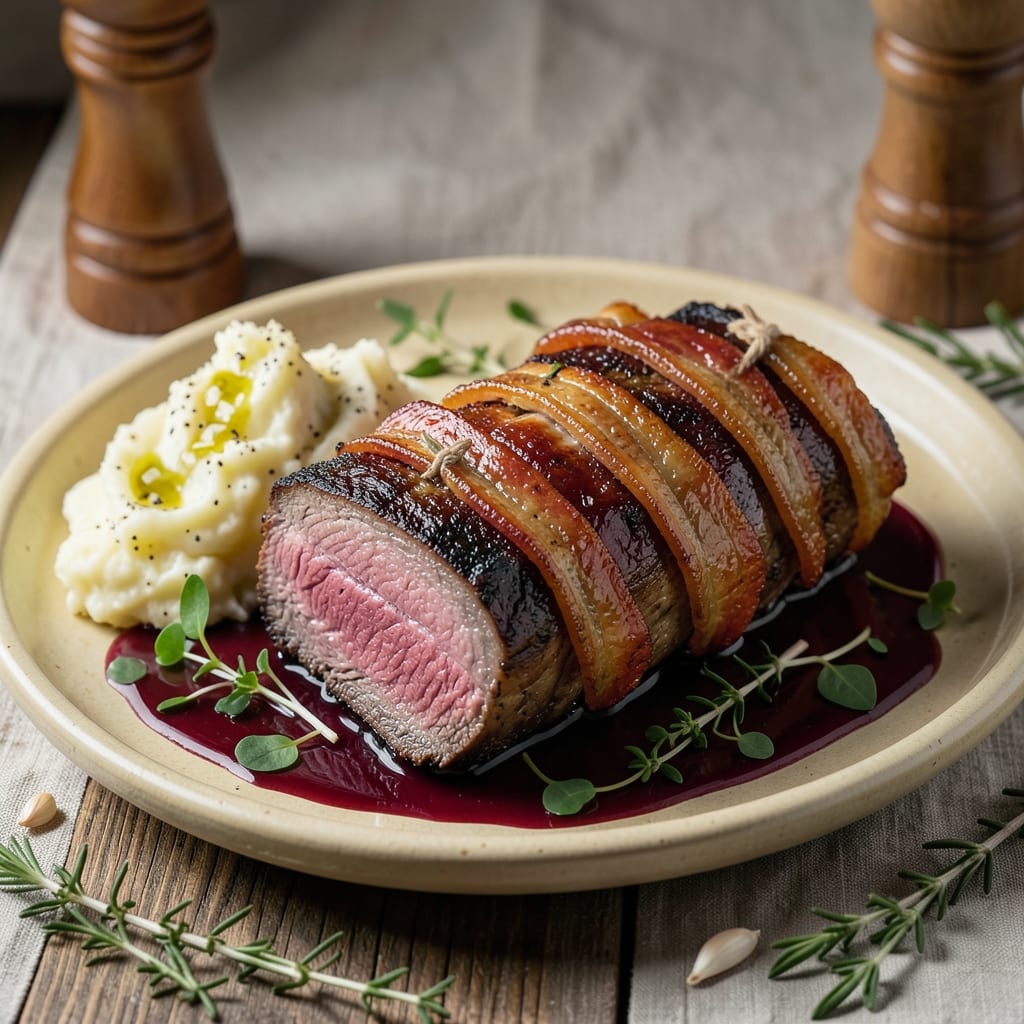
Bacon-wrapped beef tenderloin transforms a simple roast into a showstopping centerpiece that delivers crispy edges and tender meat every time. 🔥 After years of testing oven techniques with my butcher's help, I've perfected the balance between high heat and gentle cooking that keeps the interior juicy while rendering the bacon to golden perfection. This isn't just dinner—it's an experience that makes weeknights feel like special occasions.
The secret lies in the preparation: thinly sliced bacon wrapped tightly around the tenderloin, then seared and roasted to develop deep, smoky flavors. I use a combination of garlic, rosemary, and black pepper for seasoning, which complements the bacon's saltiness without overpowering the beef's natural richness. The key is patience—letting the meat rest before slicing ensures those crispy bacon layers stay intact while the beef stays perfectly tender.
What you'll end up with is a dish that looks like it belongs on a restaurant menu but comes together in your own kitchen. The bacon renders into crispy, caramelized slices that cling to the beef, while the interior remains juicy and melt-in-your-mouth tender. This technique works equally well for holiday dinners or impressing guests when you want to show off your cooking skills without stress.
Pair it with roasted garlic mashed potatoes and baby arugula for a complete meal that's both elegant and satisfying. The rich, savory flavors of the beef tenderloin contrast beautifully with the creamy potatoes and peppery greens, making this a dish that feels special without requiring hours in the kitchen. Let's get started—your taste buds will thank you.
Ingredients for bacon wrapped beef tenderloin recipe oven
Thick-cut bacon, premium beef, and a handful of aromatic herbs—this is the trifecta for showstopping oven-baked beef tenderloin.
| Ingredient | Amount | Notes |
|---|---|---|
| Beef Tenderloin 🥩 | 2 lb | Center-cut, trimmed of fat |
| Thick-Cut Bacon 🥓 | 12 oz | Applewood or hickory smoked |
| Kosher Salt 🧂 | 1 ½ tsp | Diamond Crystal preferred |
| Freshly Ground Black Pepper 🌶️ | 1 tsp | Cracked peppercorns preferred |
| Garlic Powder 🧄 | ½ tsp | Freshly ground preferred |
| Olive Oil 🫒 | 2 tbsp | Extra-virgin, for brushing |
| Fresh Rosemary 🌿 | ½ tsp | Finely chopped, fresh preferred |
| Fresh Thyme 🌿 | ½ tsp | Leaves only, finely chopped |
| Unsalted Butter 🧈 | 2 tbsp | Softened, for basting |
| Balsamic Vinegar 🍷 | 1 tbsp | For finishing drizzle |
| Roasted Garlic Mashed Potatoes 🥔 | 2 cups | For serving, optional |
| Baby Arugula 🌱 | 2 cups | For salad, optional |
The beef tenderloin is the star, so spring for the center-cut—it's more tender and less fatty than other cuts. Costco or Whole Foods carry excellent quality, but your local butcher will often have better selection. Look for even grain and vibrant color—pale or grayish meat is a red flag. The bacon should be thick-cut (about 1/4-inch) for maximum crispiness, and applewood or hickory smoked varieties add the best depth of flavor. I always buy a few extra ounces—crispy bacon makes everything better, and you can save the leftovers for breakfast sandwiches.
No thick-cut bacon? Double-wrap regular bacon to mimic the thickness, or use pancetta if that's what you've got. The herbs can be swapped—fresh thyme or rosemary are ideal, but dried works at half the amount if you're in a pinch. Want to skip the balsamic? A splash of red wine reduction gives similar richness. The olive oil matters here—use something fruity and peppery, not the cheap cooking oil. And trust me on the butter for basting: full-fat, unsalted ensures you're not over-salting the already-seasoned beef.
The beef should rest at room temperature for 30 minutes before cooking—this ensures even doneness. Wrap the cooked tenderloin in foil and let it rest for 10 minutes after baking (seriously, don't skip this). The bacon stays crispy while the beef reabsorbs its juices, guaranteeing that first cut is as impressive as it looks. Leftovers? 3-4 days in the fridge, but honestly, this tastes even better the next day when the flavors meld. Portion into slices and freeze for up to 3 months—perfect for quick fancy dinners.
Why You'll Love This Recipe
- Two-Ingredient Magic: I swear by this recipe because it’s that simple—just wrap, season, and bake. No fancy techniques, no last-minute shopping. The bacon acts like a built-in foil, locking in juices while adding smoky depth with zero extra effort.
- Crispy-Creamy Perfection: That first bite? Pure satisfaction—the tenderloin stays juicy inside while the bacon gets gloriously crispy outside. Honestly, the garlic powder and black pepper combo makes it taste like you spent hours searing, but it’s all oven magic.
- Weeknight or Weekend Star: Between us, this is my go-to for date nights and lazy Sundays. Slice it thin for sandwiches or serve it whole for a showstopper—no one will guess how little work went into it. (Yes, even on a Tuesday night.)
- Leftovers That Don’t Suck: Unlike most roasts, this actually improves the next day. Cold slices in salads? Heaven. Reheated with a splash of broth? Still ridiculous. And because tenderloin is lean, you’re not wasting money on dry meat—just flavor-packed leftovers.
Step-by-step instructions for oven-baked bacon-wrapped beef tenderloin
This method delivers melt-in-your-mouth tenderness with perfectly crisp bacon—no guesswork, just foolproof technique.
Season and Prep the Beef Tenderloin
Remove the beef tenderloin from the refrigerator and let it sit at room temperature for 30 minutes. This ensures even cooking throughout. Pat it completely dry with paper towels—wet surfaces prevent proper browning and crispiness later.
In a small bowl, combine 1.5 teaspoons kosher salt, 1 teaspoon freshly ground black pepper, 0.5 teaspoon garlic powder, 0.5 teaspoon finely chopped fresh rosemary, and 0.5 teaspoon finely chopped fresh thyme. Rub this mixture all over the beef, pressing firmly so the seasoning adheres. Let it rest uncovered for another 15 minutes—this helps the spices penetrate and develop flavor.
Wrap with Bacon and Secure
Cut the 12 ounces thick-cut bacon into 8 even strips, each about 2 inches wide. Arrange the beef tenderloin on a cutting board and wrap each strip snugly around the meat, overlapping slightly. Use kitchen twine to secure the bacon in place—this prevents it from unraveling during cooking.
Here's the thing—don't skimp on the bacon overlap. You want a continuous layer that crisps evenly. If any gaps appear, tuck additional bacon underneath to ensure full coverage. The goal is that golden, crackling crust all around.
Sear and Baste for Maximum Flavor
Preheat your oven to 425°F. Heat a large oven-safe skillet over medium-high heat until very hot. Add 2 tablespoons olive oil and swirl to coat the bottom. Place the bacon-wrapped beef tenderloin in the skillet and sear for 2-3 minutes per side until deeply browned.
Remove the skillet from the heat and add the 2 tablespoons softened unsalted butter. Tilt the skillet and spoon the melted butter over the beef repeatedly for 1 minute—this basting step creates a glossy finish and locks in moisture. Return the skillet to the oven and transfer it to the preheated oven.
Roast to Perfect Doneness
Roast the beef for 25-30 minutes until the internal temperature reaches 125-130°F for medium-rare. Use a meat thermometer to check—insert it into the thickest part of the beef, avoiding the bacon. The bacon will crisp beautifully while the beef remains tender.
During the last 5 minutes of cooking, increase the oven temperature to 450°F to ensure the bacon gets extra crispy. Watch closely—you want that bacon to turn a rich, caramelized brown without burning. If it starts to darken too quickly, pull it out and tent loosely with foil.
Rest and Serve with Elegant Sides
Remove the beef from the oven and transfer it to a cutting board. Tent loosely with foil and let it rest for 10-15 minutes—this resting period is crucial for redistributing juices and ensuring tender slices. While it rests, drizzle the pan with 1 tablespoon balsamic vinegar to deglaze and create a quick pan sauce.
Slice the beef tenderloin into ½-inch thick medallions and serve immediately with the 2 cups roasted garlic mashed potatoes and 2 cups baby arugula. The contrast of creamy potatoes, peppery arugula, and the rich, smoky beef creates a restaurant-worthy meal. Each bite delivers that perfect balance of crisp bacon and melt-in-your-mouth tenderness.
Pro Tips For Making Bacon Wrapped Beef Tenderloin Recipe Oven
- USE A MEAT THERMOMETER: The oven’s temperature isn’t the only thing that matters—your beef needs to hit 125–130°F internal temp for medium-rare perfection. I used to eyeball it and ended up with overcooked, dry meat every time. Trust the thermometer, not the clock.
- WRAP TIGHT, NOT TIDY: Secure those bacon strips with toothpicks or kitchen twine, but don’t stress about even spacing. Bacon will shrink unevenly, so overlap the edges where it looks messy—it’s the spots that crisp up best. (Yes, it’ll look like a bacon Frankenstein, but that’s how you get the crunch.)
- SALT THE BACON FIRST: Pat the bacon dry with paper towels, then season it generously with salt before wrapping it around the tenderloin. This draws out moisture so it crisps properly, and it keeps the bacon from tasting bland under all that beef flavor. (I learned this after a batch of soggy, flavorless bacon—don’t make my mistake.)
- REST IT UNDER FOIL: Once the tenderloin comes out of the oven, tent it loosely with foil and let it rest 10–15 minutes before slicing. This keeps the juices from pooling on the cutting board, and it lets the bacon stay crisp instead of turning limp. (I know, waiting is hard—but your first slice will be worth it.)
Regional styles of these flavors
Southern Smoky Style
In the South, they take bacon-wrapped beef to another level by adding a spicy brown sugar glaze made with 2 tablespoons molasses, 1 tablespoon hot sauce, and 1 teaspoon smoked paprika. Brush this on the beef after searing but before wrapping in bacon. The result? A caramelized crust with a kick that pairs perfectly with creamy coleslaw and cornbread. I first tried this version at a friend's family reunion in Georgia—it became an instant crowd-pleaser. 🌶️
Pacific Northwest Herb Infusion
Here in Portland, I love elevating this dish with local flavors. Swap the rosemary and thyme for fresh sage and lemon thyme—both grow abundantly in our climate. Add 1 teaspoon lemon zest to the seasoning rub and finish with a drizzle of local honey instead of balsamic. Serve with roasted fingerling potatoes and a simple mixed greens salad> with a citrus vinaigrette. The bright, herbal notes cut through the richness beautifully. 🌿
Midwest Brisket-Inspired Twist
My Ohio roots influence how I approach this dish—especially when I crave that smoky, slow-cooked flavor. Before wrapping with bacon, I rub the beef with 1 teaspoon coffee grounds and ½ teaspoon cayenne pepper> for depth. Then, after baking, I place the wrapped tenderloin on a wire rack over a baking sheet and broil for 3-4 minutes> to get that extra crisp. The result? A dish that tastes like a cross between a steakhouse tenderloin and Texas-style brisket. Perfect with apple butter> on the side. 🔥
Italian Herb & White Wine
For a more Mediterranean approach, I've adapted this with Italian flavors. After searing, deglaze the pan with ¼ cup dry white wine> instead of balsamic. Add 1 teaspoon dried oregano> and ½ teaspoon red pepper flakes> to the seasoning rub, then wrap with pancetta> instead of bacon for an authentic touch. Serve with creamy polenta> and a simple roasted tomato salad>. The wine reduction adds a sophisticated brightness that balances the richness. 🍷
Spicy Cajun Kick
If you love heat, give the Cajun version a try. Mix 1 teaspoon Cajun seasoning> (like Tony Chachere's) with the garlic powder in the rub. Add ½ teaspoon crushed red pepper flakes> directly under the bacon before wrapping. After baking, brush with a mixture of 1 tablespoon butter> and 1 teaspoon hot sauce>. This version pairs perfectly with dirty rice> and grilled corn on the cob>. Trust me, your taste buds will thank you. 🌶️
Nutrition facts
Frequently asked questions
How do I know when the beef tenderloin is fully cooked?
Use a meat thermometer to check the internal temperature—125-130°F for medium-rare is ideal. Insert the probe into the thickest part of the beef, avoiding the bacon. The bacon will crisp beautifully while the beef remains perfectly tender.
Can I use regular bacon instead of thick-cut?
Yes, but double-wrap the strips to mimic thickness. For even crispiness, overlap the bacon snugly and secure it tightly with kitchen twine. Pancetta works too—just wrap it slightly thicker since it's leaner than bacon.
Why does my bacon get soggy while the beef cooks?
Soggy bacon usually happens when the oven isn't hot enough or the beef releases too much moisture. Preheat your oven to 425°F and pat the beef completely dry before seasoning. For extra crispiness, increase the heat to 450°F for the last 5 minutes.
What's the best way to reheat leftovers?
Reheat sliced beef tenderloin in a skillet over medium-low heat with a splash of beef broth for 3-4 minutes until warmed through. Keep the bacon separate and crisp it fresh in a dry pan. Leftovers taste even better the next day when flavors meld!
Can I make this recipe in a slow cooker?
Not ideal—this dish relies on high heat for crispy bacon and perfect sear. However, you could try a reverse sear method: Slow cook on low for 2 hours, then finish in a hot skillet for color. The bacon might not crisp as well, though. Stick to the oven method for best results!