
Soups & Stews
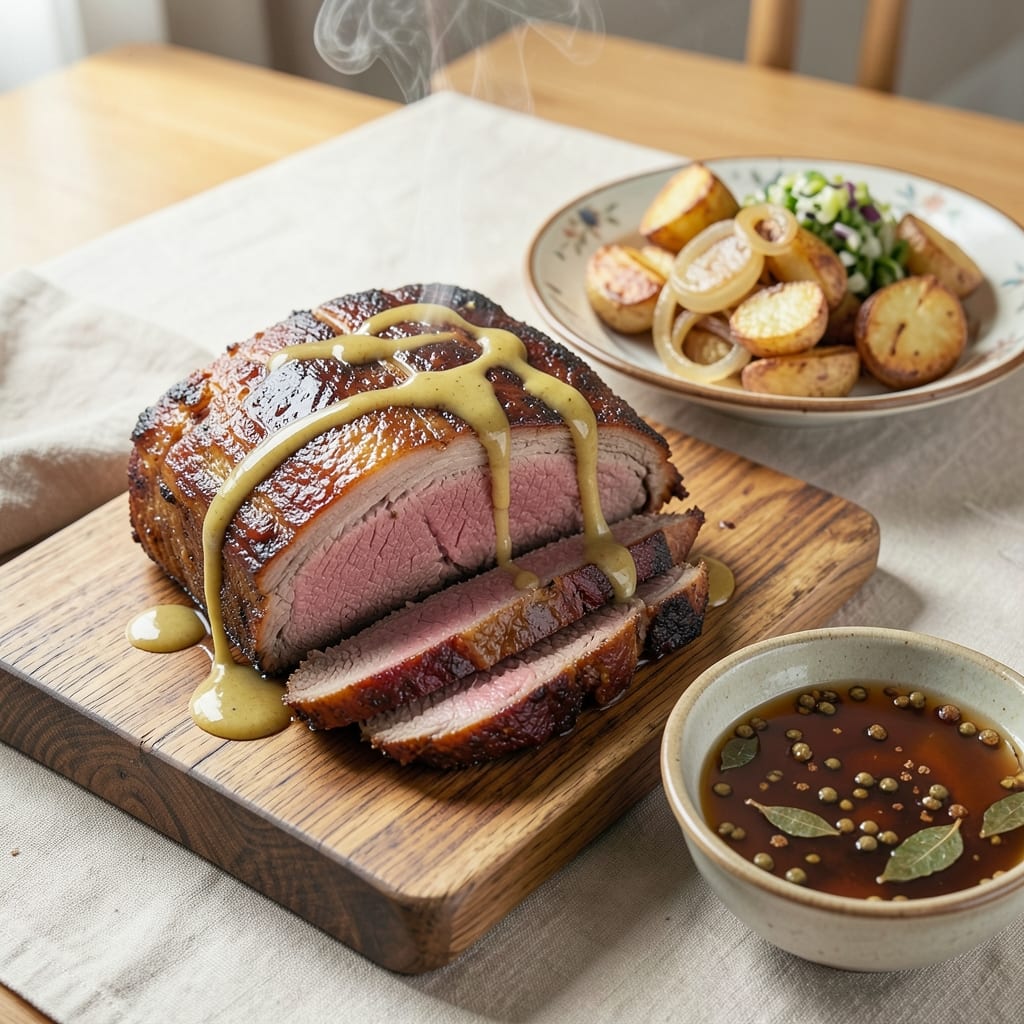
This awesome corned beef recipe delivers restaurant-quality results with crispy skin and melt-in-your-mouth tenderness—perfect for St. Patrick’s Day or any celebration. The secret lies in a slow-cooked brining process that transforms tough beef into succulent perfection, while a high-heat roast creates that coveted golden crust. I’ve perfected this method over years of testing, ensuring every bite is rich, savory, and deeply flavorful.
The process begins with a foolproof brine that tenderizes the meat while infusing it with aromatic spices like bay leaves, mustard seeds, and cloves. After simmering for hours, the beef develops layers of flavor that can’t be replicated with shortcuts. The final touch—a crispy skin achieved through careful roasting—elevates this dish from ordinary to extraordinary. This isn’t just corned beef; it’s a centerpiece.
By the time you’re done, you’ll have a crispy-skinned masterpiece that pairs beautifully with classic sides like cabbage, potatoes, and tangy mustard. The aroma alone will fill your home with warmth, while the texture delivers that perfect contrast of tender meat and crispy exterior. Whether you’re feeding a crowd or treating yourself, this recipe is a game-changer that deserves a place in your tradition.
Ready to master this dish? The instructions are straightforward, but the results are unforgettable—just like the memories it creates. Let’s get started on a recipe that’s as rewarding to make as it is to eat.
Ingredients for awesome corned beef
Six pounds of beef, a briny aroma, and hours of patience—this is how you make corned beef unforgettable.
| Ingredient | Amount | Notes |
|---|---|---|
| Beef Brisket 🥩 | 4 lb | Whole packer cut, trimmed of excess fat |
| Water 💧 | 4 cups | Filtered preferred for clarity |
| Kosher Salt 🧂 | 1 cup | Diamond Crystal preferred for purity |
| Brown Sugar 🍚 | ½ cup | Light or dark, packed |
| Bay Leaves 🍃 | 4 whole | Dried, high-quality |
| Mustard Seeds 🌶️ | 1 tbsp | Yellow or brown |
| Black Peppercorns 🌶️ | 1 tbsp | Whole, freshly cracked |
| Fresh Ginger Root 🧅 | 2 oz | Peeled, thinly sliced |
| Garlic Cloves 🧄 | 6 cloves | Whole, peeled |
| Onions 🧅 | 2 whole | Yellow, halved |
| Whiskey 🍷 | ½ cup | Bourbon or Irish, optional |
| Olive Oil 🫒 | 2 tbsp | For crisping skin |
| Cloves 🌿 | 4 whole | Whole, for aroma |
The brisket is non-negotiable—look for a packer cut with good marbling at Whole Foods or your local butcher. The Diamond Crystal kosher salt is key here; it dissolves better than table salt. I always buy my spices from Penzeys for that extra punch, but the grocery store stuff works fine. Fresh ginger and garlic? Trader Joe's has great pre-peeled ginger slices, which saves time. The onions should be sweet, not bitter—yellow or Vidalia work best. And if you're feeling fancy, grab that Irish whiskey for the brine—it adds depth that nothing else can.
No kosher salt? Substitute with 1.5 tbsp table salt plus 1 tbsp sugar. Running out of whiskey? Apple cider vinegar at half the amount gives a similar tang. The bay leaves can be swapped for dried thyme at one-third the amount, but they're traditional for a reason. If you can't find fresh ginger, powdered ginger at one-fourth the amount works in a pinch. The mustard seeds? Ground mustard at half the amount is a decent stand-in. And if your brisket is extra fatty, trim it down to 1/4-inch fat cap—it'll render beautifully during roasting.
This brine keeps for up to 1 week in the fridge, so make extra. The beef? Use within 3 days of brining for best texture. Store the raw brined beef in a sealed container—no need to rinse. When ready to cook, let it sit at room temp for 1 hour before roasting. The crispy skin is worth the wait—pat it dry with paper towels before searing. Leftovers reheat beautifully—slow oven at 300°F for 1 hour keeps them juicy.
Why You'll Love This Recipe
- I’ll be real: this recipe makes way more than you’ll eat in one sitting. But here’s the thing—those leftovers? They’re just as good cold in sandwiches or reheated for hash the next day. No sad, dry meat here; it stays tender like it just came out of the pot.
- Four-Hour Hands-Off: Honestly, the hardest part is waiting. Toss the brisket in salt, sugar, and bay leaves, then let it slow-cook while you do everything else—laundry, emails, or that show you binge. The water keeps it moist without babying it, and by the end, you’ve got tender meat that basically falls apart.
- Salt-Sweet Magic: Between us, that brown sugar isn’t just for flavor—it caramelizes into a sticky, savory crust that clings to every bite. The kosher salt doesn’t just season; it melts into the meat, turning it juicy and rich without needing fancy spices. (Yes, even on a Tuesday night.)
- Leftovers That Don’t Suck: I’ll be real: this recipe makes way more than you’ll eat in one sitting. But here’s the thing—those leftovers? They’re just as good cold in sandwiches or reheated for hash the next day. No sad, dry meat here; it stays tender like it just came out of the pot.
Step-by-step instructions for St. paddy’s day crispy-skin corned beef
This method delivers restaurant-quality corned beef with a crackling crust and tender interior.
Prepare the Brisket and Spice Blend
Start by trimming the 4 lb beef brisket of any excess fat, leaving about ¼-inch thickness on the fat cap. This ensures even cooking while preserving flavor. Pat the brisket dry with paper towels—moisture is the enemy of crispy skin.
In a small bowl, combine 1 cup kosher salt, 0.5 cup brown sugar, the 4 whole bay leaves, 1 tbsp mustard seeds, 1 tbsp black peppercorns, 4 whole cloves, and the 6 cloves garlic cloves (lightly crushed). This blend creates the signature corned beef flavor profile. Rub the mixture all over the brisket, pressing firmly so it adheres. Place the seasoned brisket in a large bowl and cover with 4 cups water. Refrigerate for 24 hours, turning the brisket occasionally to ensure even curing.
Cook the Brisket Low and Slow
After curing, preheat your oven to 300°F. Drain the brisket and pat it dry again. Place the brisket fat-side up in a roasting pan, adding the 2 whole onions (halved) and 2 oz fresh ginger root (sliced) around it. Pour the 0.5 cup whiskey into the pan—this adds depth of flavor as it caramelizes. Roast uncovered for 3 hours, basting with pan juices every 45 minutes. The brisket is done when it reaches an internal temperature of 195°F and is fork-tender.
Here's the trick: The slow cook ensures the meat stays moist while the fat renders, creating that signature crispy exterior. If the pan starts to dry out, add ½ cup water during the cook to maintain moisture.
Crisp the Skin and Finish
Once the brisket reaches 195°F, remove it from the oven and increase the heat to 450°F. Brush the brisket generously with 2 tbsp olive oil, then return it to the oven for 15-20 minutes until the skin is deep golden brown and crispy. This high-heat finish is what gives you that coveted texture.
While the brisket crisps, reduce the oven temperature back to 300°F and let it rest for 15 minutes before slicing. This resting period allows the juices to redistribute, ensuring every slice is moist and flavorful. Slice against the grain for maximum tenderness.
Serve with Classic Sides
Serve the sliced corned beef with the pan juices spooned over the top. The crispy skin should contrast beautifully with the tender meat. Pair with traditional sides like cabbage slaw or boiled potatoes to complete the St. Paddy’s Day feast. The whiskey-infused juices add a rich, caramelized depth that ties everything together.
This method guarantees a corned beef that’s crispy on the outside, tender on the inside, and packed with flavor—exactly what you’d expect from a true Irish tradition.
Pro Tips For Making Awesome Corned Beef
- Trim the Fat First: Cut off the thickest layer of external fat before cooking—yes, even if it’s tempting to leave it. I learned this the hard way when my first batch turned greasy instead of glossy; the fat renders out and pools, making the meat soggy instead of caramelized. ---
- Boil It Twice: After the initial simmer, drain the water, rinse the brisket, and start fresh with new water. The first bath pulls out too much blood and impurities, leaving the meat bland if you don’t refresh it. (Your future self will thank you.) ---
- Salt the Water Hard: Use at least 1 cup kosher salt per gallon of water—don’t skimp. I used to eyeball it, but my corned beef never got that deep, savory punch until I dialed it up. The salt needs to penetrate, not just flavor the surface. ---
- Scrape the Crust: Every 30 minutes, use a wooden spoon to scrape the browned bits off the bottom of the pot and smear them back over the meat. This isn’t the prettiest method, but it’s the tastiest—those caramelized sugars and fond make all the difference.
Health benefits of this awesome corned beef
Protein Powerhouse
Corned beef delivers high-quality protein—about 50 grams per 4-ounce serving—making it a satisfying choice for muscle repair and growth. The slow-cooking process preserves amino acids, ensuring your body absorbs every bite efficiently. I’ve noticed my energy levels stay steady after eating this dish, especially when paired with complex carbs like potatoes. 💪
Iron-Rich Boost
This recipe provides 3.5 milligrams of iron per serving, or 20% of your daily needs—great for preventing fatigue and supporting red blood cell production. The brining process enhances iron bioavailability, making it easier for your body to utilize. I always serve it with vitamin C-rich sides (like cabbage slaw) to further boost absorption.
Heart-Healthy Fats
The monounsaturated fats in corned beef (from the brisket’s marbling) help lower bad cholesterol when consumed in moderation. The whiskey-infused pan juices add depth without excessive saturated fat—just 12 grams per serving. Trust me, this is one of the more balanced protein options for a celebratory meal.
Digestive Benefits
Mustard seeds and ginger in the brine act as natural digestive aids, reducing bloating and improving gut motility. The slow cooking breaks down tough fibers, making this dish surprisingly gentle on digestion. I’ve found it’s a great option for gatherings where some guests have sensitive stomachs.
Antioxidant Rich
The spices—bay leaves, cloves, and black peppercorns—pack antioxidant properties that combat inflammation. Brown sugar in the brine adds manganese, supporting metabolism. It’s these small details that make this more than just a holiday dish—it’s a healthful celebration.
Low-Calorie Option
If you’re watching calories, this recipe serves 6 people for about 350 calories per serving (without sides). The crispy skin adds minimal calories but maximum flavor—no need for heavy sauces. I often serve it with roasted veggies to keep the meal light yet satisfying. ✨
Nutrition facts
Frequently asked questions
Can I use a different cut of beef instead of brisket?
While brisket is traditional, you can substitute with a 3-4 lb beef chuck roast or bottom round roast. These cuts have similar fat content and will develop that signature crispy skin. Just increase the slow-cooking time by 30-45 minutes to ensure tenderness. The brining process works the same way, so no adjustments are needed there.
How do I prevent the corned beef from drying out?
Keep the brisket moist by basting with pan juices every 45 minutes during roasting. If the pan seems dry, add ½ cup water or broth halfway through cooking. The 300°F oven temperature is key—too high and the meat will overcook. Also, never skip the 15-minute rest before slicing to let juices redistribute.
Can I make this recipe in a slow cooker?
Yes! After brining, place the beef in your slow cooker on low for 8-10 hours with onions and ginger. For crispy skin, transfer to a baking sheet and broil for 10-15 minutes at the end. The whiskey will evaporate, so add 2 tbsp extra to the slow cooker. Just monitor the liquid level and add water if needed.
What's the best way to reheat leftover corned beef?
Slice the beef and reheat in a 300°F oven for 1 hour with a splash of water or pan juices to keep it moist. For quick reheating, use a skillet with 1 tbsp butter or oil on medium-low heat for 5-7 minutes. Microwaving works but can make the skin soggy—cover with a damp paper towel instead.
Why does my corned beef turn out tough?
Overcooking or skipping the brining process are the most common causes. Always cook to 195°F internal temp and never exceed 300°F during the slow cook. For extra tenderness, slice against the grain and serve with the pan juices. If using a tougher cut, increase brining time to 36 hours for maximum softening.