
Main Courses
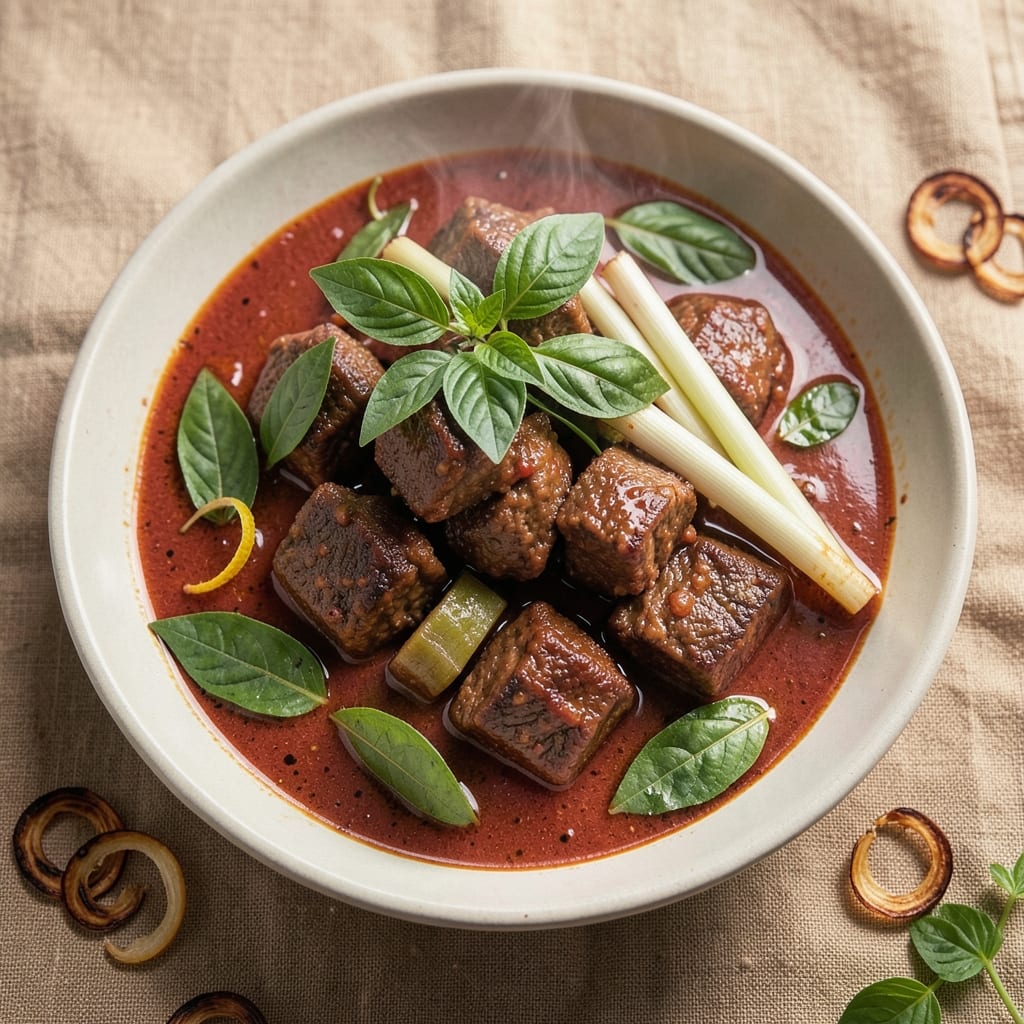
This authentic Thai red beef curry recipe delivers the bold, spice-infused harmony of heat and creaminess that defines Thai street food. The secret lies in the pounded paste—galangal, lemongrass, and kaffir lime leaves—simmered until fragrant before searing tender beef and letting it melt into a velvety, aromatic sauce. I’ve perfected this version after years of testing, ensuring every bite balances fiery chili heat with coconut richness, just like the curries served in Bangkok’s bustling markets.
What sets this recipe apart is the authentic technique—starting with a dry roast of the curry paste to deepen its flavors before adding coconut milk, a step many shortcut recipes skip. The beef cooks low and slow until fork-tender, absorbing the complex spices while the sauce reduces to a glossy, aromatic consistency. No heavy cream or artificial thickeners here; just the natural depth of Thai pantry staples like shrimp paste and bird’s eye chili.
The result is a curry that’s restaurant-quality at home, with layers of smoky, citrusy, and slightly sweet notes. The beef falls apart with the first bite, coated in a sauce that’s neither too thin nor too thick—just right for soaking up jasmine rice. Garnish with fresh cilantro and lime wedges to brighten the dish, and serve with steamed rice to let every spoonful shine.
Whether you’re feeding a crowd or treating yourself to a weeknight meal, this recipe delivers bold, authentic flavors without the guesswork. The instructions walk you through every step—from pounding the paste to balancing the heat—so you can recreate this Thai classic with confidence. Let’s get cooking!
Ingredients for authentic thai red beef curry
Bold flavors start with these essential Thai pantry staples and fresh aromatics.
| Ingredient | Amount | Notes |
|---|---|---|
| Beef Chuck Roast 🥩 | 1 ½ lb | Cut into 1-inch cubes |
| Coconut Milk 🥥 | 1 can | Full-fat, 13.5 oz can |
| Red Curry Paste 🌶️ | 3 tbsp | Authentic Thai brand preferred |
| Galangal 🌿 | 1 piece | Fresh, peeled and sliced |
| Lemongrass 🌿 | 2 stalks | Bruised and cut into 2-inch pieces |
| Kaffir Lime Leaves 🍋 | 4 whole | Bruised for aroma |
| Bird's Eye Chili 🔥 | 1 tbsp | Adjust for heat preference |
| Shrimp Paste 🦐 | 1 tbsp | Authentic Thai brand |
| Garlic Cloves 🧄 | 6 cloves | Minced |
| Shallots 🧅 | 3 whole | Peeled and sliced |
| Fish Sauce 🍶 | 1 tbsp | Red Boat preferred |
| Brown Sugar 🍚 | 1 tbsp | Light or dark |
| Jasmine Rice 🍚 | 1 ½ cups | Uncooked, for serving |
| Fresh Cilantro 🌿 | ¼ cup | Chopped, for garnish |
| Lime Wedges 🍋 | 2 whole | For serving |
The curry paste is non-negotiable for authenticity—Maesri or Thai Kitchen brands are my go-tos, but any quality paste will work. Galangal and kaffir lime leaves can be tricky to find; Asian markets usually stock them fresh. If you can't find galangal, ginger at half the amount works in a pinch, though it won't be identical. The beef should be chuck roast for that signature fall-apart texture—sirloin stays too tough. For the coconut milk, full-fat is essential—light versions won't give you that creamy, velvety sauce. If you're feeling adventurous, toast the curry paste in a dry pan for 2-3 minutes before adding liquids—this deepens the flavors significantly.
No galangal? Ginger plus a pinch of citrus zest mimics some of the earthy notes. Running out of kaffir lime leaves? Lemon zest plus a bay leaf adds brightness. The bird's eye chili is where you control the heat—start with 1 tbsp and adjust to taste. For shrimp paste, Red Boat brand is the gold standard, but any quality paste will work. The brown sugar isn't just for sweetness—it helps balance the acidity from the fish sauce and lime. If you're making this ahead, the flavors actually improve overnight as everything melds together. The jasmine rice should be steamed separately and served on the side to soak up all that glorious sauce.
Store the curry paste and shrimp paste in the fridge for up to 6 months or freeze for 1 year—they're pantry staples worth stocking. Fresh galangal and kaffir lime leaves keep in the crisper for about 1 week, but use them quickly for maximum aroma. The cooked curry reheats beautifully—just warm gently on the stove with a splash of water or coconut milk to prevent drying out. It keeps in the fridge for 4-5 days or freezes for 3 months. I always make extra because it's that good—perfect for meal prep or feeding a crowd.
Why You'll Love This Recipe
- One-Pot Magic: I swear by this recipe—just toss everything in one pot, simmer, and walk away. The chuck roast practically melts into tender perfection while the coconut milk and galangal work their flavor magic without a single extra dish.
- Flavor Bomb: That first bite? Rich, spicy, and deeply aromatic from the red curry paste and lemongrass. The beef soaks up all the complex flavors, making every spoonful taste like a little vacation in Thailand.
- Weeknight Workhorse: Between us, this is my go-to when I need something impressive but low-stress. It’s hearty enough for date night but easy enough to make when I’m too tired to think—just reheats beautifully for leftovers, too.
- Budget Stretch: A pound of chuck roast and a can of coconut milk go a long way here. I make this for four, eat two servings, and still have enough for lunch the next day—no takeout needed.
Step-by-step instructions for authentic Thai red beef curry
Here's the traditional method that delivers restaurant-quality Thai curry with perfect spice balance.
Prepare the Aromatics and Protein
In a large, heavy-bottomed pot, combine the 1 piece Galangal (sliced), 2 stalks Lemongrass (bruised and cut), 4 whole Kaffir Lime Leaves (bruised), 6 cloves Garlic Cloves (minced), and 3 whole Shallots (sliced). Cook over medium heat for 3-4 minutes until the shallots turn translucent and the aromatics release their fragrance.
Add the 1.5 lb Beef Chuck Roast (cut into 1-inch cubes) and cook for 5 minutes, stirring occasionally, until the beef begins to brown. This step develops deep flavor in the curry base. The beef should develop a light crust but not fully cook through at this stage.
Build the Curry Paste Foundation
Reduce heat to medium-low and stir in the 3 tbsp Red Curry Paste, spreading it evenly over the beef. Cook for 2-3 minutes, stirring constantly, until the paste darkens slightly and the raw aroma disappears. This indicates the paste is properly activated and ready to develop its complex flavors.
Add the 1 tbsp Shrimp Paste and cook for another 1 minute, stirring continuously. The shrimp paste will release its umami depth and slightly pungent aroma. Immediately add 1 tbsp Bird's Eye Chili and 1 tbsp Brown Sugar, stirring to combine. The sugar helps balance the heat while caramelizing slightly in the paste.
Simmer with Coconut Milk and Seasonings
Pour in the 1 can Coconut Milk and 1 tbsp Fish Sauce, stirring gently to combine. Bring to a gentle simmer over medium heat, then reduce heat to low and cover partially. Let the curry simmer for 1 hour to 1 hour 15 minutes, stirring occasionally, until the beef is fork-tender and pulls away from the bone easily.
Check the seasoning after 45 minutes of simmering. The curry should have a rich, aromatic base with balanced sweetness, heat, and umami. If needed, adjust with additional fish sauce for saltiness or brown sugar for sweetness. The coconut milk should be fully absorbed, leaving a thick, velvety sauce coating the beef.
Finish and Serve with Jasmine Rice
Once the beef is tender, stir in the 0.25 cup Fresh Cilantro (chopped) and let the curry cook uncovered for an additional 2-3 minutes to allow the flavors to meld. The cilantro adds freshness that brightens the rich, spiced curry. Taste and adjust seasoning one final time if needed.
Serve the curry immediately over 1.5 cups Jasmine Rice (cooked separately), garnished with the 2 whole Lime Wedges. The rice should be steamed to perfection—light and fluffy—to complement the rich, spicy curry. Each bite should deliver tender beef, creamy coconut milk, and a perfect balance of Thai spices.
Pro Tips For Making Authentic Thai Red Beef Curry
- Bloom the Paste First: After burning three batches, I finally figured out—sauté the red curry paste in oil for 5-7 minutes until it’s fragrant and slightly darkened. This isn’t just about flavor; it’s the step that actually develops the depth. Skip it, and your curry will taste flat, no matter how long you simmer.
- Slice the Galangal Thin: Galangal’s tough fibers need a fight. Use a sharp knife and slice it paper-thin (almost like shaving) before adding it to the curry. Thick chunks sit like rocks—this way, they melt into the sauce without chew. (Yes, even if you’re impatient like me.)
- Simmer Low and Slow: Start hot to build flavor, but once the coconut milk comes in, drop the heat to a bare simmer. I used to rush this, and the curry would break—oily, watery, or worse, curdled milk. Low heat (just bubbles, not boiling) keeps everything creamy and cohesive.
- Toast the Lemongrass Stalk: Char the lemongrass stalk over a flame for 30 seconds before bruising it with the back of a knife—this unlocks its citrusy oils. I was skeptical until I tried it: the aroma jumps from "background spice" to "main event." (Pro move: save the leftover stalk for broth.)
Perfect pairings for this authentic thai red beef curry
Rice Pairings
Jasmine rice is the gold standard for Thai curry, with its delicate floral aroma and slightly sticky texture that soaks up the rich sauce beautifully. I always use 1.5 cups uncooked jasmine rice per serving, steamed separately to maintain its perfect fluffiness. For extra authenticity, try Thai hom mali rice, a premium variety with a fragrant, nutty profile that elevates the dish. 🍚
Vegetable Sides
Thai eggplant (tam hop) is a must-try side—its tender, slightly bitter flesh absorbs the curry sauce wonderfully. Sauté 1 lb eggplant in 1 tbsp coconut oil with a pinch of salt until tender, then drizzle with a little extra curry sauce. Alternatively, steamed bok choy with a sprinkle of chili flakes adds freshness to cut through the richness. 🥦
Crunchy Garnishes
Fresh Thai basil leaves (not Italian basil) add a peppery brightness that contrasts perfectly with the creamy curry. Toss ¼ cup chopped basil with 1 tbsp lime juice and sprinkle over the dish just before serving. For extra crunch, toast 1 cup crushed peanuts in a dry pan until golden—just 2-3 minutes—and sprinkle on top. 🌿
Beverage Pairings
A cold Thai iced tea (like Thai Lion brand) is the classic pairing—its sweet, creamy, and slightly floral notes complement the spicy curry beautifully. For a non-alcoholic option, try coconut water to refresh your palate between bites. If you prefer beer, a crisp Singha or Chang beer cuts through the richness without overpowering the flavors. 🍺
Extra Sauce Options
Serve with a side of Thai sweet chili sauce (like Sriracha Rooster) for dipping—its tangy-sweet profile balances the curry's heat. For a spicier kick, offer nam prik pao (Thai chili jam) on the side. Both add another layer of flavor for those who want to customize their experience. 🌶️
Nutrition facts
Frequently asked questions
Can I substitute beef with chicken or pork in this recipe?
You can absolutely use chicken or pork, but the cooking time and cut will differ. For chicken, use 1.5 lb bone-in thighs and reduce simmering time to 25-30 minutes—they cook faster than beef. Pork should be bone-in ribs or shoulder, simmered for 1 hour 15 minutes to 1 hour 30 minutes. The beef's rich flavor is traditional, but chicken or pork work beautifully with slightly adjusted timing.
How do I adjust the heat level if I can't handle spicy food?
Start with ½ tbsp bird's eye chili instead of 1 tbsp for mild heat, or omit it entirely for a non-spicy version. Add the chili back gradually during simmering if you want to build heat slowly. For extra creaminess to balance spice, stir in 2 tbsp coconut cream at the end.
Why does my curry paste smell so strong when cooking?
The intense aroma comes from the shrimp paste and galangal—both release deep, pungent flavors that mellow as the curry simmers. Don't worry if it smells overpowering at first! The coconut milk and long simmer time will soften the aroma into complex, balanced notes. Stirring occasionally helps distribute the flavors evenly.
Can I make this curry in a slow cooker or Instant Pot?
Yes! For a slow cooker, follow the same steps up to adding coconut milk, then transfer everything to the slow cooker and cook on low for 6-7 hours or high for 3-4 hours. For an Instant Pot, sauté aromatics and beef as directed, then pressure cook on high for 25 minutes (natural release). Both methods work, but the stovetop version gives you more control over the sauce consistency.
What's the best way to reheat leftovers without drying them out?
Reheat gently on the stove over low heat with 2-3 tbsp water or coconut milk to restore moisture. Avoid microwaving—it can make the sauce watery. If the curry seems thick, stir in a splash of coconut milk until it reaches a smooth, creamy texture. Leftovers keep well for 4-5 days in the fridge.