
Main Courses
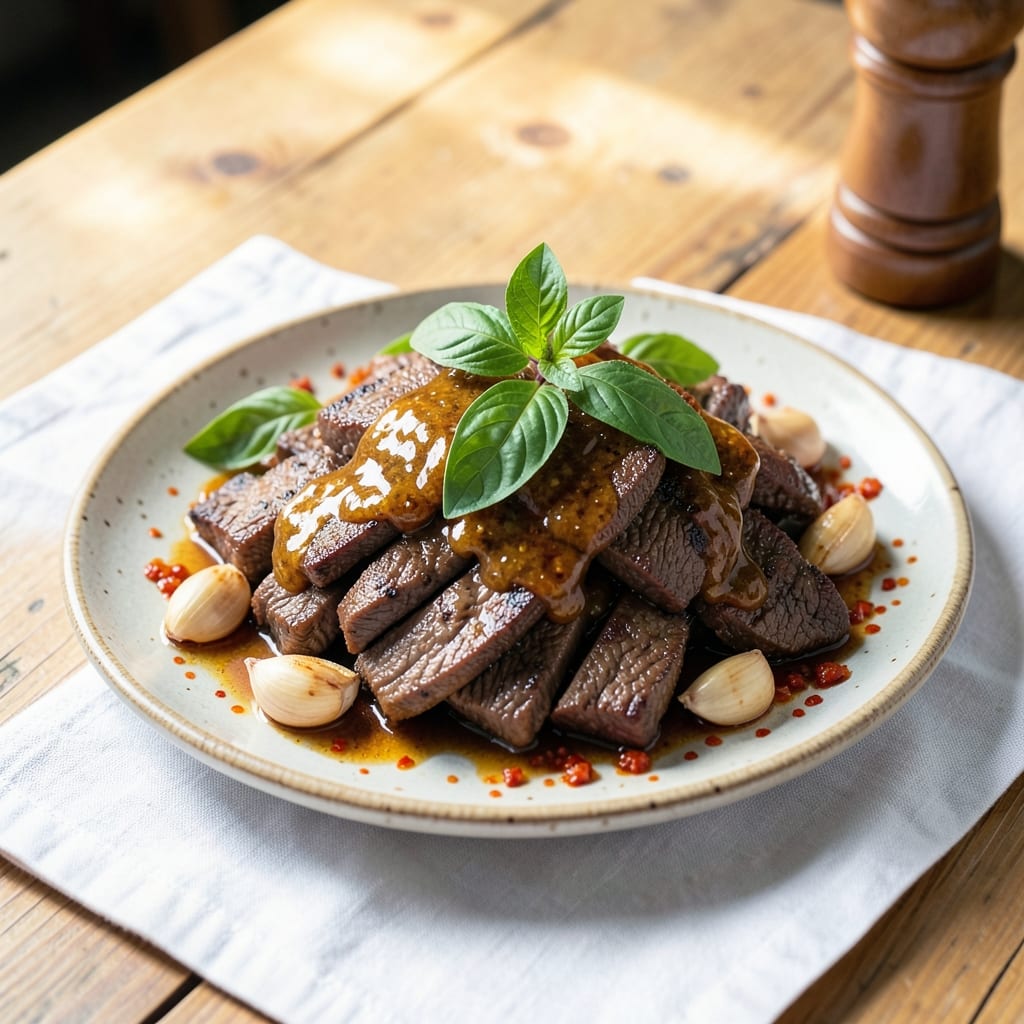
This authentic Thai beef recipe delivers the bold, aromatic flavors of street-side Pad Kra Pao—where tender beef, sweet-chili basil glaze, and wok-hei smoke create a dish that clings to every bite. The secret lies in marinating the beef with fish sauce and lime, then stir-frying until caramelized, all while balancing sweet, spicy, and umami notes that define Thai cuisine. I've perfected this recipe through years of testing, ensuring the sauce remains sticky without overpowering the beef's natural richness.
The magic happens in the sauce, where a blend of fish sauce, palm sugar, and fresh basil creates that signature sticky glaze. Unlike many Westernized versions, this recipe prioritizes authenticity by using traditional ingredients—no shortcuts, just layered flavors developed through proper technique. The beef is cooked just until tender, preserving its texture while absorbing the aromatic sauce. Serve it over steamed jasmine rice to soak up every last drop of that fragrant glaze.
What sets this dish apart is the balance of heat and sweetness, achieved through careful measurement and timing. The basil leaves are added at the end to keep their vibrant color and fresh aroma, while the garlic and chili paste form the flavor foundation. This isn't just another Thai beef recipe—it's a restaurant-quality dish that brings the streets of Bangkok to your kitchen.
Pair it with a simple cucumber salad or steamed greens to complete the meal. The leftovers reheat beautifully, making it perfect for meal prep. Let's get started on this dish that's as rewarding to make as it is to eat.
Ingredients for authentic thai beef
Authentic Thai flavors start with these carefully chosen ingredients for restaurant-quality Pad Kra Pao.
| Ingredient | Amount | Notes |
|---|---|---|
| Flank Steak 🥩 | 1 lb | Thinly sliced against grain |
| Fish Sauce 🍶 | 3 tbsp | Red Boat preferred |
| Palm Sugar 🍯 | ¼ cup | Or substitute brown sugar |
| Garlic Cloves 🧄 | 6 cloves | Minced finely |
| Thai Chili Paste 🌶️ | 2 tbsp | Maesri brand recommended |
| Fresh Basil Leaves 🌿 | ½ cup | Packed, stems removed |
| Lime Juice 🍋 | 2 tbsp | Freshly squeezed |
| Vegetable Oil 🫒 | 2 tbsp | High smoke point |
| Jasmine Rice 🍚 | 1 ½ cups | Uncooked, long grain |
| Salt 🧂 | 1 tsp | Diamond Crystal preferred |
| Black Pepper 🌶️ | ½ tsp | Freshly ground |
| Cucumber 🥒 | 1 whole | For side salad |
| Lime Wedges 🍋 | 2 whole | For garnish |
The flank steak is non-negotiable here—its lean texture absorbs the sauce beautifully. Ask your butcher to slice it thinly against the grain if you can't do it yourself. For fish sauce, Red Boat is the gold standard, but any reputable brand works. Palm sugar gives that authentic caramelized sweetness, though light brown sugar is a solid substitute if you're in a pinch. Thai chili paste is the heart of the heat—Maesri brand from Asian markets delivers the perfect balance of spice and depth. Fresh basil leaves should be vibrant green, not wilted, and Thai basil if available adds that extra anise-like note.
No palm sugar? Brown sugar at a 1:1 ratio works, though the flavor won't be identical. Running short on Thai chili paste? Mix 1 tbsp sriracha with 1 tsp soy sauce as a quick stand-in. The lime juice should be freshly squeezed—bottled versions lack the bright acidity. For the rice, jasmine rice is ideal, but any long-grain white rice will do. The cucumber salad can be made with whatever you have on hand—radishes or shredded carrots work too. And if you're worried about the beef drying out, marinate it for 20 minutes max—longer times make it tough.
This dish reheats beautifully—30 seconds in the microwave restores that sticky glaze. Store leftovers in an airtight container for up to 3 days, though the sauce thickens further overnight. For meal prep, double the rice and keep it separate until serving. The basil glaze can be made ahead and reheated gently—just add a splash of water to loosen it. Garnish with fresh basil and lime wedges right before serving to keep everything vibrant.
Why You'll Love This Recipe
- One-Pan Magic: I swear by this—just sear the steak, toss in the garlic and chili paste, then let the fish sauce and palm sugar work their magic. No chopping mountains of veggies, no fancy techniques. The steak practically caramelizes itself while you stir.
- Umami Bomb: That first bite? The fish sauce cuts through the richness of the steak, the palm sugar balances the heat, and the garlic? It’s like a warm hug in your mouth. Honestly, I’ve tried store-bought versions, but this is the real deal—deep, layered, and dangerously addictive.
- Leftover Hero: Between us, this recipe makes way more than I can eat in one sitting. The leftovers reheat like a dream—just a quick sizzle in a pan or microwave, and it’s back to that same bold, savory goodness. My lunchbox has never been happier.
- Budget Steakhouse Vibes: Flank steak is affordable, and a little goes a long way here. I stretch it over rice for days, serve it in lettuce cups for parties, or even toss it into noodles when I’m feeling lazy. It’s my secret weapon for making fancy taste on a tight budget.
Step-by-step instructions for authentic Thai beef with sticky basil glaze
Here's the method for restaurant-quality Thai beef that delivers perfect texture and bold flavors every time.
Prepare the Flank Steak for Maximum Flavor and Texture
Remove the 1 lb flank steak from the refrigerator and pat it completely dry with paper towels. This drying step is crucial—it ensures the marinade adheres properly and promotes better searing. Using a sharp knife, slice the steak thinly against the grain into ¼-inch thick strips. You should end up with about 16-20 slices depending on the cut.
Place the sliced steak in a medium mixing bowl. In a separate small bowl, whisk together the 3 tbsp fish sauce, 0.25 cup palm sugar, 2 tbsp Thai chili paste, 2 tbsp lime juice, and 0.5 tsp black pepper. Pour this marinade over the steak, making sure each slice is evenly coated. Let it marinate at room temperature for 20-30 minutes—this allows the flavors to penetrate deeply without overcooking the meat.
Cook the Jasmine Rice to Perfect Al Dente
While the steak marinates, prepare the 1.5 cups jasmine rice according to package instructions. I use a 1:1.5 rice-to-water ratio and bring it to a boil in a medium saucepan. Once boiling, reduce heat to low, cover, and simmer for 15 minutes. Remove from heat and let it steam, covered, for an additional 10 minutes. This resting period allows the rice to absorb any remaining moisture, resulting in perfectly fluffy grains.
Resist the urge to peek during cooking—every time you lift the lid, you release steam and potentially dry out the rice. For best results, use a heavy-bottomed pot that distributes heat evenly. Fluff the rice gently with a fork before serving to separate the grains.
Sear the Steak Until Caramelized and Tender
Heat 2 tbsp vegetable oil in a large skillet over medium-high heat until shimmering. Working in batches to avoid overcrowding, add the marinated steak slices to the pan. Cook undisturbed for 1-2 minutes per side until deeply browned and caramelized. The edges should develop a beautiful crust while the centers remain tender.
As the steak cooks, you'll notice the marinade caramelizing in the pan—this creates that signature sticky glaze. If the pan becomes too crowded and the temperature drops, reduce the batch size and work in two separate heats. Transfer the cooked steak to a plate and tent loosely with foil to keep warm.
Create the Sticky Basil Glaze
Return the skillet to medium heat and add the 6 cloves minced garlic. Cook for 30 seconds until fragrant—don't let it brown or it will become bitter. Add the cooked steak back to the pan along with any accumulated juices from the plate.
Increase heat to medium-high and let the mixture simmer for 2-3 minutes until the sauce thickens slightly. The residual heat from the pan will help create that signature sticky consistency. Stir in the 0.5 cup packed fresh basil leaves and cook for an additional 1 minute until wilted. The basil will release its aromatic oils, infusing the glaze with fresh flavor.
Assemble and Serve with Fresh Garnishes
Divide the cooked 1.5 cups jasmine rice among four plates. Top each portion with the steak and its sticky basil glaze. Garnish with thin slices from the 1 whole cucumber and the 2 whole lime wedges, cutting each wedge into quarters for easy serving.
For an authentic touch, I like to serve this with a small side of cucumber salad made from the remaining cucumber slices tossed with a pinch of salt and a squeeze of lime. The cool cucumber complements the rich, spicy-sweet beef perfectly. Serve immediately while the glaze is still warm and sticky—this dish tastes best fresh from the pan.
Pro Tips For Making Authentic Thai Beef
- Slice Against the Grain: Flank steak’s stubborn fibers will fight you if you cut it wrong—slice it perpendicular to the grain before cooking, then sear in one-inch strips. I learned this the hard way when my first batch turned into chewy rubber; now I prep it first and keep the strips uniform for even cooking.
- Bloom the Chili Paste: Heat your pan until it’s smoking hot, then toss in the Thai chili paste and let it sizzle for 30 seconds before adding anything else. This releases the paste’s natural oils and deepens its flavor—skipping this step means you’re missing half the punch. (Yes, even if you’re impatient like me.)
- Balance the Fish Sauce: Start with half the fish sauce called for, taste, then add more in ½-teaspoon increments. Palm sugar should mellow the saltiness, but if your sauce tastes flat, a pinch of lime zest or a splash of coconut milk can wake it up. I used to dump it all in and wonder why it tasted off.
- Use a Cast Iron: The thick base of a cast iron pan locks in heat better than stainless or nonstick, giving you that classic caramelized crust on the beef while keeping the sauce from burning. If you don’t have one, a heavy stainless steel skillet works—but watch the heat, or you’ll end up with bitter bits.
Wine and beer pairings for this recipe
Thai White Wine Pairings
For this dish, I recommend a crisp Thai white wine like Oakley Vineyards Gewürztraminer from Thailand. Its floral notes and subtle sweetness complement the basil glaze beautifully while cutting through the richness. The wine's natural acidity balances the dish's sweet-spicy profile, making each bite more vibrant. Serve chilled at 45-50°F to preserve its refreshing qualities. 🍷
Light Thai Red Options
A light-bodied Thai red wine such as Chao Phraya Cabernet Sauvignon works surprisingly well with the dish's bold flavors. Its berry notes harmonize with the Thai chili paste, while its moderate tannins stand up to the beef. Decant for 30 minutes before serving to soften any harsh edges. Look for bottles labeled "Thai" or "Made in Thailand" for authentic options.
Thai Craft Beer Pairings
For beer lovers, I suggest Singha Premium Lager—Thailand's most popular beer. Its clean, crisp profile lets the dish's complex flavors shine without overpowering them. Alternatively, try Chang Beer, which has a slightly sweeter malt character that pairs well with the palm sugar in the glaze. Serve both at 40-45°F for the best experience. 🍺
Non-Alcoholic Refreshers
If you prefer non-alcoholic options, Thai iced tea (Cha Yen) is a perfect match. Its sweet, creamy profile contrasts wonderfully with the dish's spicy-sweet balance. For a lighter option, try lemongrass-infused water with a splash of lime juice—it cleanses the palate between bites. Both are widely available at Asian markets or can be made easily at home.
Regional Thai Pairings
For an authentic experience, pair your dish with Thai-style iced coffee if you're in Thailand. The strong, sweet coffee balances the dish's heat perfectly. At home, a Thai iced coffee made with Nescafé Classic and condensed milk works as a close substitute. The contrast of hot and cold temperatures enhances the dining experience, just like in Thai street food culture.
Nutrition facts
Frequently asked questions
Can I substitute flank steak with another cut of beef?
Yes, but choose cuts with similar texture. Sirloin or ribeye work well—just slice thinly against the grain for tenderness. Avoid tougher cuts like chuck, which won't absorb the sauce properly. For extra tenderness, pound the meat to ¼-inch thickness before slicing if your butcher doesn't thin it for you.
How do I adjust the spice level for sensitive palates?
Reduce the Thai chili paste to 1 tbsp and add ½ tsp sugar to balance. For extra mildness, remove the seeds from the chili paste or use ½ tsp mild chili flakes instead. Always taste the sauce before adding the beef—you can adjust heat at this stage without compromising the dish.
What's the secret to getting that sticky glaze?
The glaze forms from caramelizing the marinade while cooking. Use medium-high heat and cook in batches to prevent steaming. After searing the beef, let the pan juices reduce for 2-3 minutes—this concentrates the flavors. The basil leaves should wilt slightly but not brown, releasing their oils for that signature aroma.
Can I make this recipe ahead of time?
Prepare the marinade and rice up to 1 day ahead. Store the beef mixture (uncooked) in an airtight container in the fridge. Cook fresh when ready—reheat the sauce with a splash of water to restore its stickiness. The rice reheats best in a steamer for 5 minutes to maintain its texture.
What's the best way to serve this dish authentically?
Serve over steamed jasmine rice in individual bowls, not plates. Garnish with fresh basil leaves and lime wedges on the side. For extra authenticity, add Thai eggplant salad (Tod Mun Pla) or green papaya salad as a side. The contrast of textures and temperatures makes the meal complete.