
Soups & Stews
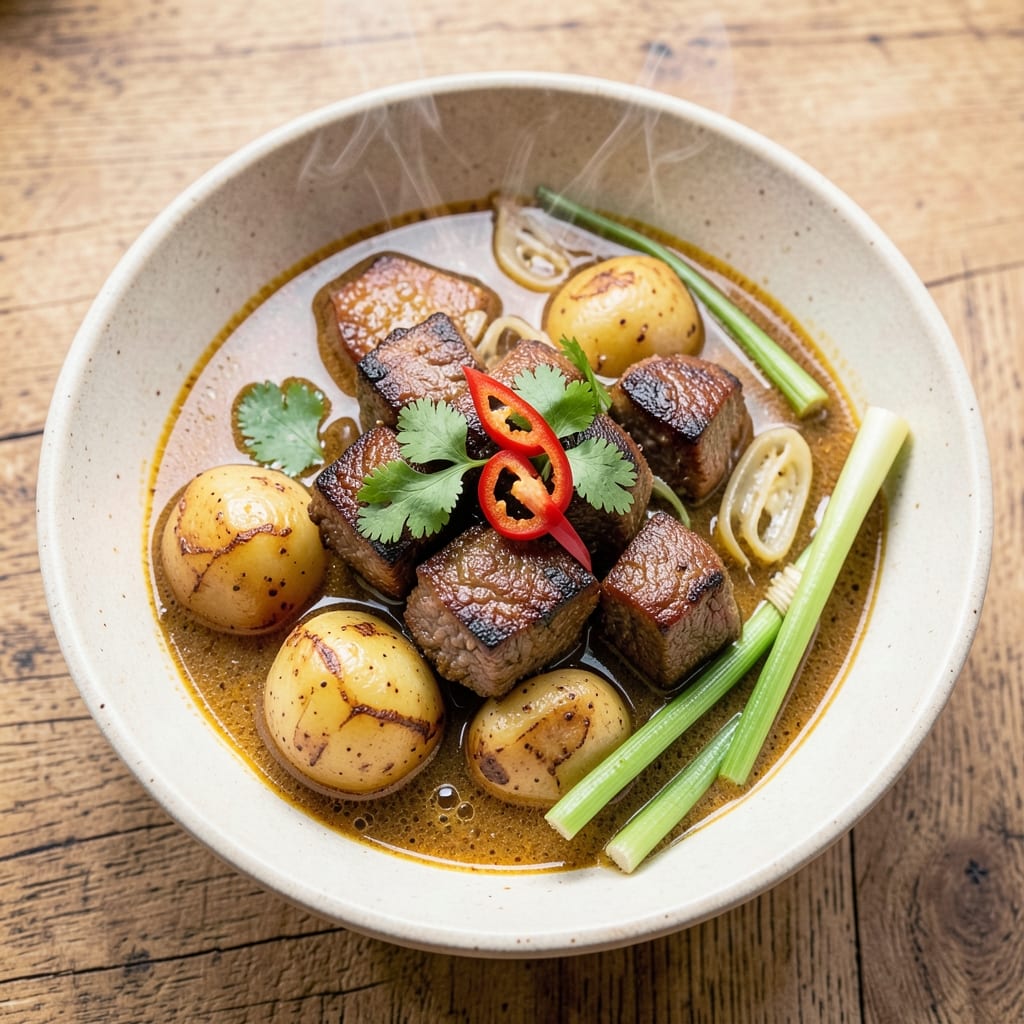
This authentic Massaman beef curry transports you straight to Thailand’s royal kitchens with its rich, coconut-kissed sauce and tender beef that falls apart at the touch of a fork. The recipe balances sweet, spicy, and savory notes through a carefully crafted paste of lemongrass, galangal, and kaffir lime leaves—ingredients that define this dish’s soul. I’ve perfected the slow-cooking method to ensure the beef stays juicy while absorbing the fragrant, velvety sauce.
The magic lies in the slow simmer, which transforms tough cuts into melt-in-your-mouth perfection while allowing the potatoes to soak up the aromatic broth. Traditional Massaman curry relies on a blend of spices like cinnamon, cardamom, and white pepper, but I’ve included modern shortcuts—like pre-made curry paste—to keep the process accessible without sacrificing authenticity. The result? A dish that’s deeply comforting yet bold enough to impress.
What sets this recipe apart is the peanut garnish, which adds a satisfying crunch and nutty depth that balances the creamy coconut milk. The dish pairs beautifully with steamed jasmine rice, which soaks up every last drop of the luscious sauce. Whether you’re cooking for a weeknight dinner or a special gathering, this curry delivers restaurant-quality flavor with minimal effort.
Ready to master this Thai classic? The step-by-step instructions guide you through marinating the beef, building the spice paste, and slow-cooking to perfection—ensuring every bite is tender, aromatic, and bursting with flavor. Let’s get started.
Ingredients for authentic massaman beef curry
Authentic Thai flavors start with these 15 ingredients—rich, aromatic, and deeply satisfying.
| Ingredient | Amount | Notes |
|---|---|---|
| Beef Chuck Roast 🥩 | 1 ½ lb | Cut into 1.5-inch cubes, trimmed of fat |
| Russet Potatoes 🥔 | 2 whole | Medium size, peeled and quartered |
| Coconut Milk 🥥 | 1 can | Full-fat, 13.5 oz can (not carton) |
| Massaman Curry Paste 🌶️ | 3 tbsp | Store-bought or homemade paste |
| Lemongrass 🌿 | 1 whole | White part only, finely chopped |
| Galangal 🌿 | 2 inches | Fresh, peeled and sliced thin |
| Kaffir Lime Leaves 🍋 | 3 whole | Bruised to release aroma |
| Cinnamon Sticks 🌳 | 2 whole | 2-inch pieces |
| Cardamom Pods 🌿 | 4 whole | Lightly crushed |
| White Peppercorns 🌶️ | ½ tsp | Freshly ground |
| Peanuts 🥜 | ½ cup | Roasted, unsalted, chopped |
| Brown Sugar 🍯 | 2 tbsp | Packed tightly |
| Olive Oil 🫒 | 2 tbsp | For searing |
| Salt 🧂 | 1 tsp | Kosher or sea salt |
| Jasmine Rice 🍚 | 1 ½ cups | Uncooked, for serving |
The beef is non-negotiable—chuck roast delivers that melt-in-your-mouth texture. Costco or Whole Foods carry it pre-cubed for convenience, but if you're buying a whole roast, ask the butcher to cut it into 1.5-inch pieces. Galangal and kaffir lime leaves are the soul of Massaman curry—Thai markets or international grocery stores stock them fresh, but frozen works in a pinch. The curry paste? Maesri or Thai Kitchen brands are my go-tos, but homemade paste takes this dish to the next level if you're ambitious. Skip the pre-shredded coconut milk—full-fat canned is essential for that velvety texture.
No galangal? Ginger at half the amount works, though it won’t be identical. Kaffir lime leaves? Substitute lime zest plus a splash of lime juice, but you’ll lose that unique aroma. Short on peanuts? Cashews or almonds add crunch, though peanuts are traditional. The brown sugar balances the heat—white sugar works too, but it won’t caramelize as beautifully. For the potatoes, Yukon Golds hold up better than Russets if you’re worried about starchiness. And if you can’t find jasmine rice, basmati is a solid backup—just don’t tell anyone.
Peanuts stay fresh for 3 months in the pantry, while curry paste lasts 6 months refrigerated. The galangal and kaffir lime leaves? Wrap them in damp paper towels and store in a sealed bag—they’ll keep for 2 weeks. Leftover curry reheats beautifully—low and slow in a pot with a splash of coconut milk to revive the sauce. Portion into containers for easy lunches, or freeze for 3 months. The rice? Cook it fresh—day-old rice turns mushy when reheated with curry.
Why You'll Love This Recipe
- One-Pot Magic: I swear by this for lazy nights—just brown the beef, toss in the curry paste and coconut milk, then let it simmer. No chopping, no fuss, and the potatoes soak up all that rich, spiced sauce like sponges.
- Sweet-Spicy Balance: That Massaman paste? It’s where the magic happens—honey, cinnamon, and cardamom play hide-and-seek with the heat. The lemongrass adds this bright, herbal lift that cuts through the richness, making every bite feel like a little vacation.
- Meal Prep Goldmine: Between us, this curry only gets better after day two. The flavors meld like old friends, and the beef turns so tender it practically falls apart. I make a double batch on Sundays—half for dinner, half for lunches that taste like a hug.
- Budget Stretch: Beef chuck roast is my secret weapon for stretching meals without breaking the bank. A pound of it feeds four, and the potatoes bulk it up so everyone gets that hearty, satisfying bite. Plus, coconut milk and curry paste are pantry staples that don’t cost a fortune.
Step-by-step instructions for authentic Massaman beef curry
Here's how to build this rich, aromatic curry with layers of spice and tender beef.
Prepare the Aromatics and Sear the Beef
In a heavy-bottomed pot, heat the 2 tablespoons olive oil over medium-high heat until shimmering. Add the 1.5 lb beef chuck roast cubes in a single layer, letting them sear undisturbed for 3-4 minutes until developing a deep golden crust. This initial searing locks in juices and builds foundational flavor.
Once the beef is browned on all sides, remove it from the pot and set it aside. In the same pot, add the 2 inches galangal slices, 3 whole kaffir lime leaves, 2 whole cinnamon sticks, and 4 whole cardamom pods. Sauté for 1 minute until the galangal becomes fragrant and slightly softens. Here's the thing—these aromatics form the heart of Massaman's signature depth, so don't rush this step.
Bloom the Spices and Build the Base
Add the 3 tablespoons massaman curry paste to the pot and stir vigorously for 2-3 minutes until it darkens and releases its complex aroma. The paste contains star anise, nutmeg, and other spices that need time to bloom properly. You'll notice the oil become fragrant and slightly thicken as the spices release their oils.
Pour in the 1 can coconut milk, scraping up any browned bits from the bottom. Add the 2 whole russet potatoes (peeled and quartered), 2 tablespoons brown sugar, 1 teaspoon salt, and 0.5 teaspoon freshly ground white peppercorns. Bring to a gentle simmer, then return the beef to the pot. The sugar helps caramelize the potatoes while balancing the heat of the curry.
Simmer Until Tender and Flavor-Infused
Reduce heat to low and cover the pot. Let the curry simmer gently for 1 hour 15 minutes until the beef is fork-tender and pulls away from the bone easily. The potatoes should be soft but still hold their shape. I check for doneness by piercing a beef cube—if it slides through with minimal resistance, it's ready.
During the last 15 minutes, add the 1 whole lemongrass (finely chopped) to the pot. This final addition brightens the curry with citrusy notes that cut through the richness. Stir gently to distribute the lemongrass throughout the sauce.
Finish with Peanuts and Serve
Remove the pot from heat and let it rest for 5 minutes. Stir in the 0.5 cup chopped peanuts, allowing them to warm through and absorb the fragrant sauce. The peanuts add a satisfying crunch that contrasts beautifully with the creamy coconut curry. Taste and adjust seasoning if needed—Massaman should balance sweet, spicy, and savory notes.
Serve the curry hot over 1.5 cups cooked jasmine rice, garnished with additional chopped peanuts if desired. The rice helps soak up the rich, spiced sauce while keeping each bite balanced. For authenticity, serve with lime wedges on the side—just a squeeze brightens the dish perfectly.
Pro Tips For Making Authentic Massaman Beef Curry
- BROWN THE BEEF FIRST: Skip the slow cooker shortcut—sear the chuck roast in batches on high heat until deep brown, not just pink. I learned this the hard way: skipping this step means your curry will taste like it’s missing something, no matter how much paste you add.
- PEEL AND CUBE POTATOES: Russets hold their shape better peeled, but don’t cut them too small—aim for 1.5-inch chunks. They’ll soften in the coconut milk but stay intact, so you get that perfect bite instead of a mushy mess.
- STIR IN COCONUT MILK GRADUALLY: Don’t dump the whole can at once—add it in two stages: first, just enough to deglaze the paste, then the rest later. This keeps the curry from turning into a thin, watery soup and lets the flavors meld properly.
- TOAST THE CURRY PASTE: Bloom the massaman paste in oil for 2-3 minutes before adding liquid—it releases the deep, nutty aromas. I was skeptical until I tried it: the difference is like comparing a flat soda to one with fizz.
Dietary considerations for these flavors
Gluten-Free Adaptations
Massaman curry is naturally gluten-free, but always double-check your ingredients. The curry paste is the most critical component—opt for brands like Maesri or Thai Kitchen, which guarantee gluten-free certification. I also recommend using certified gluten-free coconut milk (like Thai Kitchen brand) to avoid cross-contamination risks. The peanuts and potatoes are inherently safe, but if you're highly sensitive, toast your peanuts separately to prevent any shared surface contamination. 🌱
Dairy-Free Considerations
This recipe is already dairy-free, but I often get asked about substitutions for the creamy texture. The full-fat coconut milk provides all the richness you need—just avoid brands with added dairy stabilizers. For extra thickness, blend ½ cup cashew cream (soaked cashews + water) into the sauce during the final 15 minutes of cooking. The brown sugar and spices naturally balance the dish without dairy, so no adjustments are needed beyond these optional tweaks.
Vegetarian Swaps
For a vegetarian version, replace the beef with 1.5 lbs extra-firm tofu or chickpeas (double the amount). Press and cube the tofu, then pan-fry until golden before adding to the curry. Chickpeas work best if pre-cooked and tossed with 1 tbsp soy sauce to mimic the beef's umami depth. I've found that adding 1 tsp miso paste to the curry paste during blooming enhances the savory profile significantly. The potatoes and peanuts remain unchanged, ensuring the dish stays hearty and satisfying. 🥜
Spice Level Control
Traditional Massaman curry has a mild heat level, but you can easily adjust it. For a milder version, reduce the curry paste to 2 tbsp and add ½ tsp more brown sugar to balance. If you prefer more heat, increase the paste to 4 tbsp and add ½ tsp cayenne pepper during the final simmer. I also recommend keeping fresh lime wedges on the side—just a squeeze brightens the dish without adding extra spice. The white peppercorns in the recipe already provide subtle warmth without overpowering the sweet-savory notes. 🌶️
Protein Alternatives
Looking for other protein options? Chicken thighs work beautifully—they stay juicy and absorb flavors well. Use 1.5 lbs bone-in thighs, skin-on for extra richness, and sear them just like the beef. For seafood lovers, firm white fish like cod or halibut (cut into 1-inch cubes) cook in just 8-10 minutes before adding to the curry. Pork shoulder is another great choice—it mirrors beef's tenderness when slow-cooked. Just reduce the cooking time by 15 minutes to prevent overcooking. 🐟
Allergen-Friendly Tips
For nut allergies, omit the peanuts and substitute with toasted pumpkin seeds (½ cup) or crushed potato chips for crunch. The sauce remains delicious without them. If you're avoiding coconut, use 1 can light coconut milk mixed with ½ cup water to thin the sauce, then add 1 tbsp cornstarch to thicken it back up. For soy allergies, skip the optional miso paste and boost umami with an extra ½ tsp fish sauce (ensure it's gluten-free if needed). Always check labels on curry pastes—some contain trace soy or wheat. 🚫
Nutrition facts
Frequently asked questions
Why does authentic Massaman curry use potatoes?
Potatoes are traditional in Massaman curry because they absorb the rich, spiced coconut sauce beautifully while adding hearty texture. The starch helps thicken the sauce naturally, creating that signature velvety consistency without needing extra cornstarch. Their mild flavor lets the aromatic spices shine.
Can I substitute galangal with ginger?
Yes, but expect a slightly different flavor profile. Use ½ the amount of fresh ginger (about 1 inch) since galangal is more pungent. For best results, lightly toast the ginger slices first to enhance their aroma. The dish will still taste delicious, though true Massaman purists prefer galangal's unique citrusy, peppery notes.
How do I make this curry less sweet?
Reduce the brown sugar to 1 tablespoon and add ½ teaspoon more white peppercorns to balance the flavors. For extra depth, stir in 1 teaspoon fish sauce during the final simmer. This enhances umami without adding sweetness, letting the natural spice complexity shine through.
What's the best way to store leftovers?
Let the curry cool completely, then store it in an airtight container in the fridge for up to 4 days. For freezing, portion into single servings and freeze for 3 months. When reheating, add a splash of water or coconut milk to prevent drying out - the sauce thickens as it cools.
Can I make this curry in an Instant Pot?
Sear the beef first, then add all ingredients except peanuts. Cook on High Pressure for 25 minutes, then quick-release. Add peanuts at the end and adjust seasoning. The Instant Pot version cooks 40% faster while maintaining all the authentic flavors - just be sure to stir well before serving.