
Soups & Stews
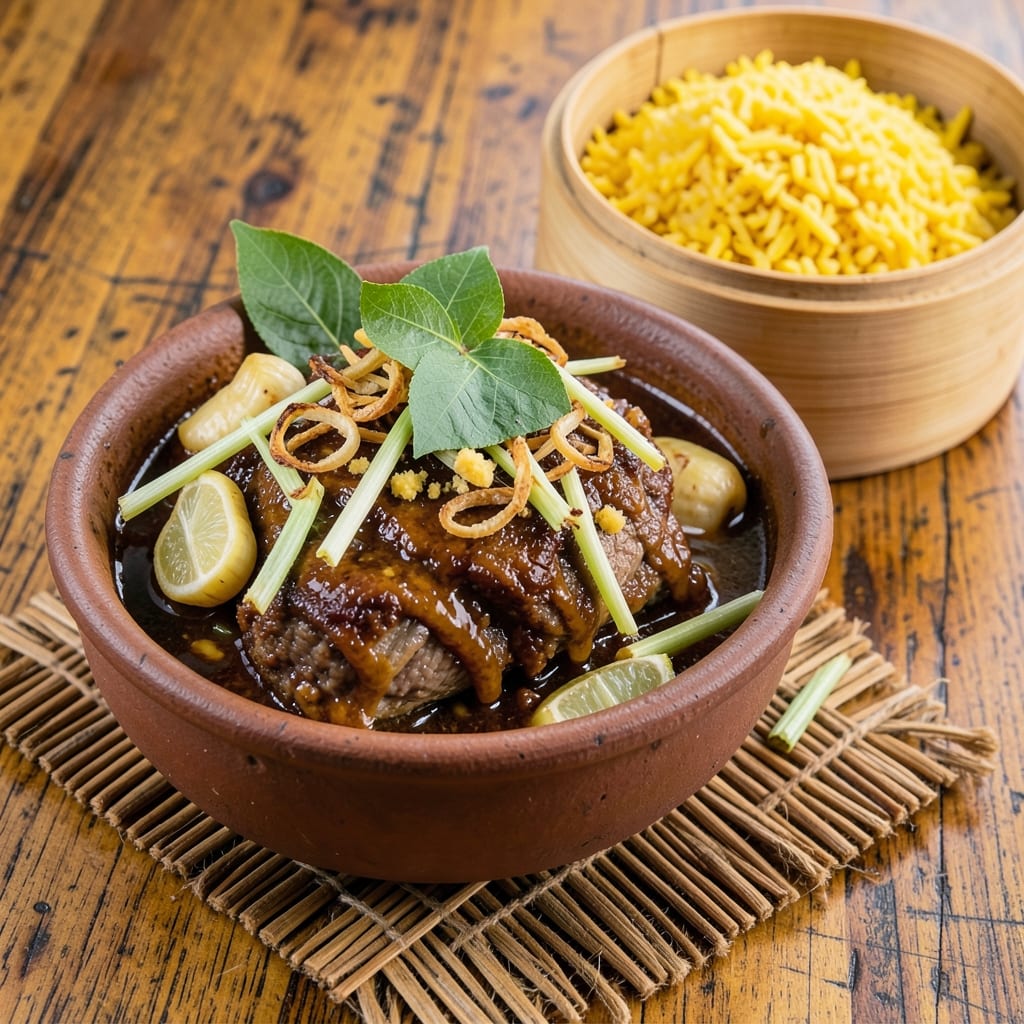
This authentic Indonesian beef rendang transforms tough cuts into melt-in-your-mouth perfection through slow caramelization with coconut milk and aromatic spices. 🌟 The traditional method—simmering for hours until the sauce reduces to a rich, glossy glaze—creates a dish so flavorful it’s often called "the king of Indonesian cuisine." What makes it special is the balance of sweet, spicy, and umami notes that develop over time, making every bite unforgettable.
The recipe begins with marinating beef in a paste of lemongrass, galangal, turmeric, and chili, which infuses the meat with deep, complex flavors. Coconut milk then cooks down slowly, reducing into a thick, fragrant sauce that clings to the beef like a second skin. The key to authenticity lies in patience—this isn’t a quick meal, but the reward is a dish that’s rich, tender, and bursting with layers of spice.
By the time it’s done, you’ll have a dish that’s as visually stunning as it is delicious—deep amber sauce clinging to dark, caramelized beef, served traditionally over steamed rice or with a side of sambal. The aroma alone will transport you to the streets of Padang, Indonesia, where rendang is a staple at celebrations and family gatherings. This is comfort food at its finest, a labor of love that delivers restaurant-quality results at home.
While the traditional method requires hours of simmering, modern adaptations—like using a pressure cooker—can cut the time without sacrificing flavor. Whether you follow the classic approach or adapt it to fit your schedule, the result is a dish that’s worth every minute of effort. Let’s get started on creating this Indonesian masterpiece.
Ingredients for authentic indonesian beef rendang
Sixteen ingredients transform tough beef into tender, aromatic perfection through slow caramelization.
| Ingredient | Amount | Notes |
|---|---|---|
| Beef Chuck Roast 🥩 | 3 lb | Cut into 1.5-inch cubes |
| Coconut Milk 🥥 | 2 cans | Full-fat, 13.5 oz each |
| Lemongrass 🌿 | 1 whole | White parts only, bruised |
| Galangal 🌿 | 1 piece | 3-inch, peeled and sliced |
| Turmeric 🧂 | 1 tbsp | Freshly grated or powdered |
| Ginger 🧄 | 1 tbsp | Freshly grated |
| Garlic Cloves 🧄 | 8 cloves | Crushed |
| Red Chili Peppers 🌶️ | 4 whole | Bird's eye or Thai chili |
| Shallots 🧅 | 4 whole | Peeled and sliced |
| Coconut Oil 🫒 | ½ cup | For sautéing |
| Brown Sugar 🍯 | ¼ cup | Packed |
| Salt 🧂 | 1 ½ tsp | Kosher or sea salt |
| Black Pepper 🌶️ | 1 tsp | Freshly ground |
| Coconut Cream 🥥 | 1 can | 13.5 oz, for finishing |
| Kaffir Lime Leaves 🍋 | 4 whole | Bruised, optional garnish |
The beef is non-negotiable—chuck roast is traditional, but brisket or short ribs work too. Look for cuts with good marbling at Asian markets or specialty butchers—they’ll often have the lemongrass, galangal, and kaffir lime leaves you need too. Fresh root ginger and galangal make all the difference (the dried versions just don’t cut it), so grab them while they’re fresh. Thai Kitchen or Trader Joe’s usually stock them if your local market doesn’t. For the chili peppers, bird’s eye or Thai chili gives the right heat—adjust to taste, but don’t skip them entirely.
No galangal? Double the ginger plus a pinch of nutmeg gets you close. Short on coconut milk? Light coconut milk plus a splash of heavy cream works in a pinch. The brown sugar is key for that signature caramelized depth—don’t substitute white sugar. For the shallots, red onions in a pinch, but they’ll add a different flavor profile. The lemongrass and kaffir lime leaves can be frozen if you’re prepping ahead—just thaw before using. And if you can’t find fresh turmeric, 1 tsp ground turmeric works, but it lacks that fresh earthiness.
This isn’t a dish you’ll want to reheat—it’s best served fresh from the pot. Store the leftovers in an airtight container with a layer of coconut cream on top to keep it moist for 4-5 days. Freezes beautifully for 3 months if you wrap it tightly in parchment and foil. The sauce gets even more concentrated after chilling, so it’s worth making extra. Serve over jasmine rice—the aroma combo is what makes this dish legendary.
Why You'll Love This Recipe
- One-Pot Magic: I swear by this—just toss the beef, coconut milk, and spices into one pot, then let it slow-simmer. No chopping, no fussing, and no extra dishes. That turmeric and galangal blend turns the oil golden and fragrant before you even add the meat.
- Deep Umami Bomb: The slow cook brings out the beef’s richness while the lemongrass and galangal infuse it with layers of earthy, citrusy warmth. Honestly, the first bite hits like a flavor revelation—sweet, spicy, and smoky all at once, with that caramelized beef you’d pay $30 for at a restaurant.
- Budget-Friendly Luxury: You’re getting restaurant-quality depth without breaking the bank. A chuck roast stretches far, and the spices (especially turmeric and galangal) add color and complexity for pennies. Between us, this is the kind of meal that makes grocery day feel like a win.
Step-by-step instructions for authentic Indonesian beef rendang
This slow-cooked masterpiece delivers rich, caramelized beef with layers of aromatic spices—just like West Sumatra's finest.
🔥 Step 1: Prepare the Spice Paste Foundation
In a food processor, combine the sliced galangal, white parts of lemongrass, shallots, crushed garlic cloves, red chili peppers, freshly grated ginger, and turmeric. Pulse until you get a smooth, thick paste—this is your flavor backbone. If it's too dry, add 1 tablespoon of coconut milk to help it blend properly.
Heat the 0.5 cup coconut oil in a heavy pot over medium heat until shimmering. Add the spice paste and cook for 8-10 minutes, stirring constantly, until it darkens slightly and releases its deep, fragrant aroma. You'll smell the earthy galangal and spicy chili—this is where the magic begins. Keep the heat at medium-low to prevent burning; you want the spices to caramelize, not scorch.
🍳 Step 2: Sear the Beef in the Spice Paste
Add the 3 lb beef chuck roast cubes to the pot, turning them to coat completely in the spice paste. Let them sear for 5 minutes until they develop a golden crust. This step is crucial—it locks in flavor and prevents the beef from becoming mushy during the long cook. Don't rush this; let each piece get properly browned on all sides.
Pour in 1 can of coconut milk and bring to a gentle simmer. The mixture will bubble vigorously at first, but once it settles, reduce the heat to low. Here's the thing—rendang needs patience. Cover the pot and let it cook for 1 hour, stirring occasionally to prevent sticking. You're building layers of flavor now, not just cooking the beef.
🥘 Step 3: Simmer Until Caramelized Perfection
After the initial hour, stir in the 0.25 cup brown sugar, 1.5 tsp salt, and 1 tsp black pepper. This is when the real transformation happens. The sugar will caramelize, creating that signature dark, glossy sauce. Pour in the second can of coconut milk and scrape up any browned bits from the bottom of the pot—those bits are packed with flavor.
Now comes the long cook: simmer uncovered for 2-2.5 hours over low heat, stirring every 30 minutes. The sauce should reduce significantly, becoming thick and syrupy. You'll see the beef darkening and shrinking slightly—that's normal. The goal is for the sauce to coat the back of a spoon and the beef to fall apart easily when pierced with a fork. If the sauce gets too dry, add 2-3 tablespoons of water at a time to maintain moisture.
⏰ Step 4: Finish with Coconut Cream and Rest
When the beef is fork-tender and the sauce has thickened to your desired consistency, stir in the can of coconut cream and the bruised kaffir lime leaves. Simmer for another 10-15 minutes—this adds a final layer of richness and aromatic depth. The kaffir lime leaves will infuse their citrusy note without overpowering the dish.
Remove from heat and let the rendang rest for 15 minutes. This resting period allows the flavors to meld completely and the sauce to thicken further. Serve with steamed jasmine rice to soak up every last bit of that caramelized goodness. The beef should be dark mahogany in color, with a glossy, sticky sauce that clings beautifully to each tender piece.
Pro Tips For Making Authentic Indonesian Beef Rendang
- Char the Spices First: Toss your ground spices (turmeric, coriander, cumin) in a dry pan over medium-high heat for 30 seconds until fragrant—this deepens their flavor. I used to skip this, and the rendang always tasted flat until I realized the spices needed a wake-up call. ---
- Use Two Coconut Milks: Start with 1 can of full-fat coconut milk for the initial simmer, then add a second can later—this prevents curdling and keeps the sauce rich. After burning through half the first can, I learned this trick from my neighbor’s Minangkabau aunt, and it changed everything. ---
- Don’t Rush the Low Heat: Once the beef is tender, drop the heat to the lowest setting and let it braise for at least 2 hours—no peeking, no stirring. I tried speeding it up once and ended up with a watery, underdeveloped sauce. Patience here is non-negotiable. ---
- Grate Galangal Fresh: Skip the jarred version—fresh galangal (even if it looks weird) adds a peppery bite that powder can’t replicate. Use about 2 inches, peeled and grated fine, or your rendang will taste like it’s missing something. (Yes, even if you’re impatient like me.)
Wine and beer pairings for authentic indonesian beef rendang
Bold Red Wine Pairings
Rendang’s rich, caramelized depth pairs beautifully with bold red wines that can stand up to its spicy-sweet complexity. A full-bodied Indonesian red like Bintan from Sumatra offers perfect harmony—its dark fruit notes and earthy undertones mirror the dish’s deep flavors. If you can’t find Bintan, try a Malbec from Argentina or a Syrah from Australia, both of which bring enough body and spice to complement the heat without overpowering it. 🍷
Light Beer Contrasts
For beer lovers, a crisp Indonesian lager like Bintang or Anker cuts through the richness with refreshing carbonation. The subtle citrus notes in these beers balance the rendang’s spice, while their light body prevent the dish from feeling too heavy. If you prefer craft options, a Belgian witbier (like Hoegaarden) adds a floral, peppery contrast that enhances the lemongrass and galangal flavors.
Sweet White Wine Balance
Surprisingly, a sweet white wine like Moscatel or Riesling works wonderfully with rendang. The natural sweetness in these wines helps tame the dish’s heat while complementing the caramelized sauce. Look for a late-harvest Riesling—its honeyed notes and slight acidity create a perfect balance against the spice and umami. Serve it slightly chilled to enhance its refreshing qualities. 🍷
Coconut-Inspired Cocktails
For a non-alcoholic option, try a coconut-mango mojito—muddle fresh mango, lime juice, and mint, then top with coconut water and a splash of rum (if desired). The tropical sweetness echoes the dish’s coconut milk base, while the mint adds a bright contrast. For a spicier twist, add a dash of Thai basil or a few drops of chili-infused honey to the drink. This pairing is especially refreshing during warm weather.
Herbal Tea Pairings
If you prefer tea, jasmine green tea or hibiscus tea are excellent choices. The floral notes of jasmine tea complement the lemongrass and galangal in the rendang, while the tartness of hibiscus tea cuts through the richness. Serve the tea lightly sweetened with honey to enhance the dish’s caramelized flavors. For a warming option, try chamomile tea—its earthy tones pair surprisingly well with the spice profile. ☕
Nutrition facts
Frequently asked questions
Can I use a pressure cooker to make this beef rendang faster?
A pressure cooker cuts the cooking time dramatically while keeping the flavors intact. After searing the beef and cooking the spice paste, add all ingredients (including both cans of coconut milk) and pressure cook for 60-75 minutes on high pressure. Release the pressure naturally, then simmer uncovered for 15-20 minutes to reduce the sauce. The result will be tender beef with that signature caramelized sauce—just be ready to stir occasionally to prevent sticking.
What's the difference between galangal and ginger?
Galangal has a more complex, citrusy, and slightly peppery flavor compared to ginger's warm, spicy kick. While they're both rhizomes, galangal is less pungent and adds a unique aromatic depth that's essential in authentic rendang. If you can't find galangal, double the ginger and add 1/4 tsp ground nutmeg for a close approximation, though the flavor won't be identical.
How do I know when the beef is done?
The beef is perfectly tender when it easily shreds with a fork and the sauce has thickened to coat the back of a spoon. Look for dark mahogany-colored meat and a glossy, syrupy sauce that clings to the beef. If the sauce reduces too quickly, add 2-3 tablespoons of water at a time to maintain moisture. The total cooking time should be 3-4 hours for traditional stovetop methods.
Can I make this dish less spicy?
Yes! Reduce the number of chili peppers—start with 2-3 instead of 4 and adjust to taste. You can also remove the seeds from the chilies before blending. For an extra mild version, strain out some of the spice paste before adding it to the beef. The good news is that the other spices (lemongrass, galangal, and turmeric) will still provide that authentic flavor without the heat.
What's the best way to reheat leftover rendang?
Reheat gently on low heat with a splash of water or coconut milk to prevent drying out. Never microwave it directly—this can make the sauce watery. For best results, warm in a pot over low heat for 10-15 minutes, stirring occasionally. If the sauce thickens too much, add a little water or coconut milk to restore its consistency. Leftovers actually taste better the next day as the flavors deepen!