
Main Courses
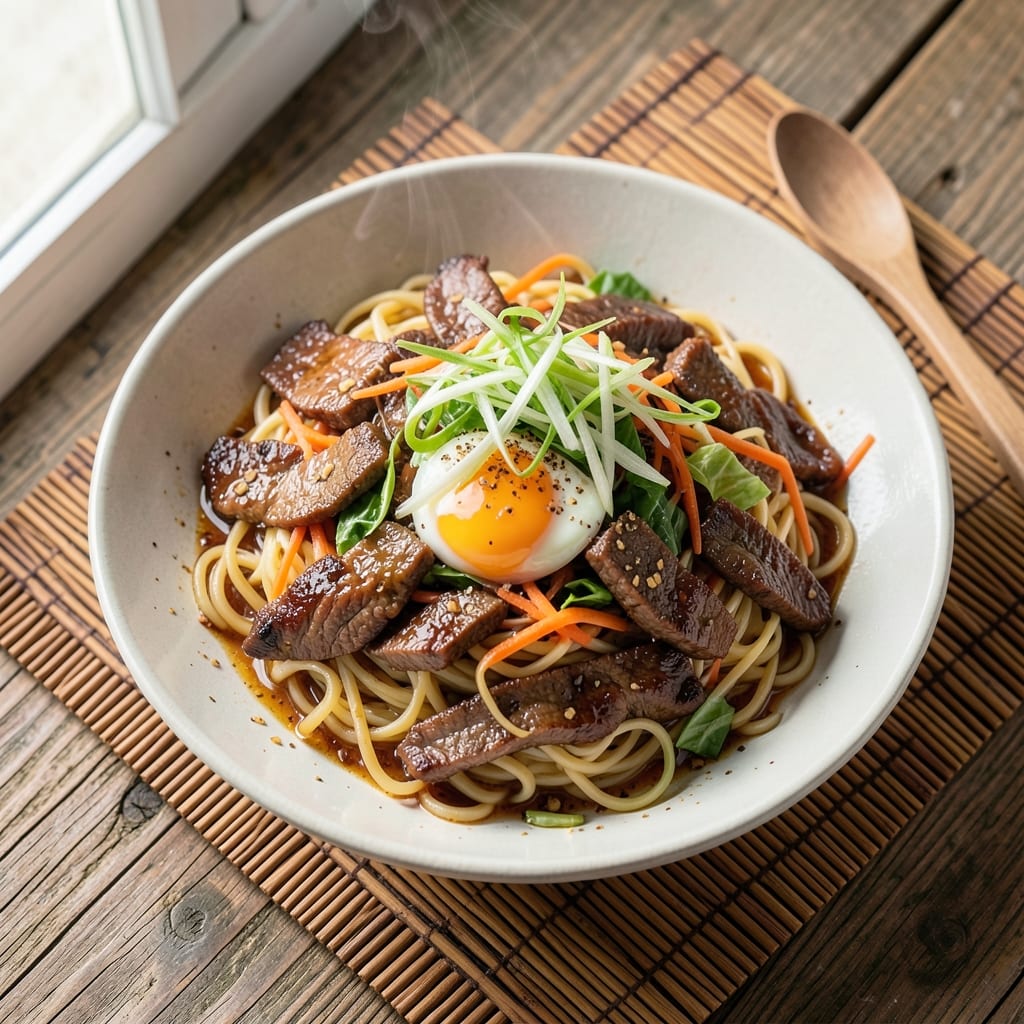
Authentic Chinese beef lo mein delivers the restaurant-quality wok-hei flavor you crave—silky egg sauce clinging to chewy noodles, tender beef, and crisp vegetables all cooked in minutes. The secret lies in proper beef searing and sauce reduction, techniques that transform home cooking into something truly special. I’ve perfected this recipe after years of testing, ensuring every element—from the hand-pulled noodles to the aromatic sauce—comes together authentically.
This recipe balances tradition with home-kitchen practicality. While hand-pulled noodles are ideal, store-bought egg noodles work beautifully with a quick soak in warm water. The beef is marinated in a mix of soy, oyster, and sesame oils, then stir-fried until caramelized for maximum flavor. Vegetables like carrots, cabbage, and scallions add freshness and texture, while the egg sauce—made with a simple slurry of cornstarch and beaten eggs—creates that signature glossy, silky coating.
What you’ll end up with is a dish that’s vibrant, aromatic, and packed with layers of savory, umami, and slightly sweet flavors. The wok-hei (breath of the wok) is captured by high-heat cooking, giving the noodles that signature smoky aroma. Serve it immediately, piled high on a plate with extra scallions and sesame seeds for garnish—this is the kind of meal that makes you feel like you’re dining at your favorite Chinese restaurant.
Whether you’re cooking for a family gathering or a weeknight dinner, this lo mein recipe delivers restaurant-quality results with minimal effort. The key is attention to detail—properly searing the beef, reducing the sauce just enough, and ensuring the noodles are cooked al dente. Trust the process, and you’ll have an authentic, flavorful dish that’s sure to impress.
Ingredients for authentic chinese beef lo mein
Authentic beef lo mein starts with tender beef, chewy noodles, and a silky egg sauce—just like your favorite Chinese restaurant.
| Ingredient | Amount | Notes |
|---|---|---|
| Beef Flank Steak 🥩 | 1 ½ lb | Thinly sliced against grain |
| Egg Noodles 🍜 | 12 oz | Store-bought or homemade |
| Carrots 🥕 | 2 whole | Julienned into matchsticks |
| Green Cabbage 🥬 | 4 cups | Thinly shredded |
| Scallions 🧅 | 6 whole | White and light green parts |
| Large Eggs 🥚 | 4 whole | Beaten for egg sauce |
| Cornstarch 🌾 | 1 tbsp | For egg sauce slurry |
| Soy Sauce 🍶 | ½ cup | Light or all-purpose |
| Oyster Sauce 🍶 | 2 tbsp | High-quality brand preferred |
| Sesame Oil 🫒 | 1 tbsp | Toasted for aroma |
| Garlic Cloves 🧄 | 6 cloves | Minced for marinade |
| Ginger Root 🌿 | 1 tbsp | Grated, fresh preferred |
| Vegetable Oil 🫒 | 3 tbsp | High smoke point |
| Sesame Seeds 🌰 | 1 tbsp | Toasted for garnish |
| Salt 🧂 | 1 tsp | Kosher or sea salt |
| White Pepper 🌶️ | ½ tsp | Freshly ground |
The beef is non-negotiable—flank steak gives you that perfect chewy texture when sliced thin against the grain. Costco or Whole Foods carry pre-sliced versions, but if you're slicing yourself, freeze the meat for 20 minutes first for cleaner cuts. For the noodles, store-bought egg noodles work beautifully—just soak them in warm water for 5 minutes before cooking. The cabbage should be crisp and fresh, not wilted. Look for green cabbage in the produce section, and skip the pre-shredded kind—it gets soggy fast. Scallions add brightness, so grab a bunch and use both white and light green parts.
No oyster sauce? Hoisin sauce or soy sauce with a splash of sugar works in a pinch. The sesame oil is all about aroma—use the toasted variety for that nutty depth. For the egg sauce, cornstarch is key—it creates that signature glossy finish. If you're short on time, pre-minced garlic and ginger from the freezer aisle save steps. The beef marinade can be prepped hours ahead, but don't skip the garlic and ginger—they're the flavor anchors. And if you're feeling fancy, substitute shiitake mushrooms for half the beef for extra umami.
This dish is all about timing—cook the beef and vegetables separately, then toss everything together at the end. The egg sauce should be silky but not runny, so reduce it just until it thickens slightly. Store leftovers in an airtight container for 3-4 days, but reheat gently—microwaving kills that wok-hei aroma. For extra flavor, add a splash of hot water to the reheated noodles. Garnish with toasted sesame seeds right before serving—they add crunch and visual appeal. Portion into containers for easy lunches, but keep the sesame seeds separate until serving.
Why You'll Love This Recipe
- One-Pan Magic: I swear by this—just toss everything in one wok, and the beef tenderizes right in the sauce while the noodles soak up every last drop. No dirty dishes, no stress.
- Umami Bomb: That thinly sliced flank steak? It melts into tender, savory ribbons when marinated in soy, ginger, and a splash of Shaoxing wine. The cabbage adds a satisfying crunch that cuts through the richness.
- Lunchbox Hero: Between us, this is my go-to for meal prep. The noodles hold up perfectly for days, and I pack it in containers with the beef still warm—my kids actually eat their veggies this way.
- Budget Win: Flank steak stretches further than you’d think, and the veggies (carrots, cabbage) are cheap staples. I make this twice a month, and it’s always the dish that makes my grocery money go further.
Step-by-step instructions for authentic Chinese beef lo mein
Here's how to create restaurant-style beef lo mein with perfectly silky egg sauce and tender wok-fried noodles.
Marinate and Slice the Beef Flank Steak
Slice the 1.5 lb beef flank steak thinly against the grain into ¼-inch thick strips. In a bowl, combine ½ cup soy sauce, 2 tbsp oyster sauce, 1 tbsp sesame oil, 6 minced garlic cloves, 1 tbsp grated ginger root, and ½ tsp white pepper. Add the beef strips and toss to coat completely. Let marinate for at least 30 minutes (or up to 2 hours) in the refrigerator. This step ensures tender beef with deep flavor penetration.
Real talk: If you're short on time, marinate for just 15 minutes—it'll still be flavorful, but longer marinating develops more complex taste. The soy sauce and oyster sauce work together to tenderize the meat while infusing it with umami richness. Don't skip the sesame oil—it adds that authentic aromatic depth you find in Chinese street food.
Prepare the Vegetables and Noodles
Julienne the 2 whole carrots into matchstick-sized pieces and thinly shred the 4 cups green cabbage. Cut the 6 whole scallions into 1-inch pieces, separating the white and light green parts. For the 12 oz egg noodles, cook them according to package instructions until al dente (usually 3-4 minutes), then drain and rinse briefly with cold water to stop the cooking process. Toss with 1 tbsp vegetable oil to prevent sticking.
Here's the thing—proper vegetable prep makes all the difference. The carrots should be uniform in size so they cook evenly with the beef, while the cabbage needs to be thinly shredded so it softens quickly in the wok. The scallions add freshness, so keep the white parts separate if you want to garnish at the end. And that quick rinse of the noodles? It prevents them from turning mushy when you toss them with the hot beef and sauce later.
Make the Silky Egg Sauce
In a small bowl, beat the 4 whole large eggs with 1 tbsp cornstarch, ½ tsp salt, and ½ tsp white pepper until completely smooth. Heat 1 tbsp vegetable oil in a small non-stick skillet over medium-low heat. Pour in the egg mixture and let it cook gently, stirring constantly with a spatula, until it forms soft curds but is still slightly runny—about 2-3 minutes. Remove from heat and set aside.
This is the moment that matters: The cornstarch creates that signature silky texture in the sauce, while the gentle heat ensures the eggs cook just enough to thicken but not scramble. If you see the eggs starting to set too quickly, lower the heat immediately. The sauce should coat the back of a spoon smoothly—this is what gives authentic lo mein its luxurious mouthfeel. Don't overcook it; you'll finish cooking the eggs in the wok later.
Wok-Fry the Beef and Vegetables
Heat a wok or large skillet over high heat until smoking, then add 2 tbsp vegetable oil. Working in batches if needed, add the marinated beef strips and stir-fry for 1-2 minutes until they're 80% cooked but still slightly underdone. Remove the beef and set aside. In the same wok, add 1 tbsp vegetable oil, then stir-fry the carrots for 1 minute, followed by the cabbage and scallions. Cook for another 2 minutes until the vegetables are tender-crisp but still vibrant.
Here's where the wok comes into its own—those high, swirling flames create the perfect sear on the beef while keeping it tender. Don't overcrowd the wok; cook the beef in batches if necessary to maintain that smoky, charred flavor. The vegetables should retain some bite—you'll finish cooking them with the noodles. And that quick cooking time? It preserves all the bright colors and crisp textures that make this dish so appealing.
Combine Everything for the Final Toss
Return the beef to the wok and add the cooked egg sauce, tossing everything together for 30 seconds to heat through. Add the drained noodles and toss vigorously for 1-2 minutes until everything is well-coated and heated through. Drizzle with 1 tbsp toasted sesame oil and sprinkle with 1 tbsp toasted sesame seeds. Serve immediately, garnished with extra scallions if desired.
This final toss is what brings it all together—the residual heat from the wok finishes cooking the eggs just enough to create that signature silky sauce that clings to every noodle. The sesame oil and seeds add that final aromatic punch that makes it taste like you've just walked out of a Chinese street food stall. Serve with extra soy sauce on the side if you like—it's all about balancing that perfect umami-sweet-savory combination. And remember, lo mein is best eaten immediately while everything is steaming hot and the textures are just right.
Pro Tips For Making Authentic Chinese Beef Lo Mein
- Slice Flank Steak Thin: I learned this the hard way—thin slices (⅛-inch or less) cook faster and stay tender. Freeze the meat for 30 minutes first, then slice against the grain for maximum bite. Overcrowding the pan turns it into a stew; work in batches if needed.
- Blanch Cabbage First: Raw cabbage releases water like a faucet, turning your lo mein into soup. Give it a quick 30-second blanch in boiling water, then shock in ice water—it wilts instantly and absorbs sauce better. (Yes, even if you’re impatient like me.)
- Don’t Boil Noodles Dry: Al dente is key, but with egg noodles, that means firm but not crunchy—they’ll finish cooking in the wok. Taste at 2 minutes, then drain when they’re still slightly chewy. Overcooking makes them gummy, and no one wants sad noodles.
- Save the Scallion Greens: The white parts add flavor, but the greens? They’re the star. Reserve half until the end, then toss them in raw for a fresh bite. I was skeptical until I tried it—now I double the scallions just for this.
Wine and beer pairings for this authentic chinese beef lo mein
Crisp White Wine
For this dish, I reach for a dry Riesling or Pinot Grigio from Italy—both provide the crisp acidity needed to cut through the richness of the egg sauce. A German Riesling with its slight citrus notes also works beautifully, balancing the umami flavors of the beef and oyster sauce. Serve it slightly chilled (45-50°F) to enhance its refreshing quality and complement the dish's vibrant flavors. 🍷
Light Chinese Beer
A Chinese lager like Snow Beer or Tsingtao is my go-to pairing—its light, slightly sweet profile mirrors the dish's balance of savory and umami. The subtle maltiness complements the silky egg sauce without overpowering the delicate beef and vegetable flavors. For a craft option, try a Japanese junmai like Sapporo Premium—its clean finish won’t clash with the dish’s aromatic elements. 🍺
Fortified Wine Option
If you prefer something bolder, a dry sherry like Fino or Manzanilla adds depth with its nutty, almond-like notes that harmonize with the sesame oil and toasted sesame seeds. The sherry’s slight sweetness also enhances the caramelized flavors of the beef. Serve it at room temperature to let its complexity shine alongside the dish’s rich textures. 🍷
Non-Alcoholic Pairings
For a refreshing non-alcoholic option, try a sparkling yuzu soda—its citrusy brightness cuts through the dish’s richness while complementing the scallions and ginger. Alternatively, a green tea-based soda like Jasmin Tea Lemonade adds a floral note that pairs surprisingly well with the umami flavors. Both options keep the meal light and refreshing. 💧
Garnish with Garnish
No matter what you choose, always serve with extra scallions and sesame seeds—they add freshness and texture that elevate every bite. A drizzle of toasted sesame oil over the top right before serving also enhances the dish’s aromatic profile. The right beverage should complement these finishing touches, not compete with them. ✨
Nutrition facts
Frequently asked questions
Can I use regular spaghetti instead of egg noodles?
While spaghetti can work in a pinch, it won't give you that authentic chewy texture and eggy flavor that makes lo mein special. For the best results, use fresh egg noodles or dried egg noodles (like those labeled "lo mein noodles"). If you can't find them, try udon noodles as a close substitute—they're chewier and absorb the sauce well.
How do I get that restaurant-style wok hei flavor at home?
Wok hei (breath of the wok) comes from high heat and proper technique. Use a carbon steel or cast iron wok heated until smoking, then cook in small batches to maintain that smoky aroma. Work quickly—stir-fry the beef and veggies in 1-2 minutes max. If you don't have a wok, a heavy-bottomed skillet works, but keep the heat high and avoid overcrowding.
What's the best way to store and reheat leftovers?
Store leftovers in an airtight container for up to 3-4 days in the fridge. To reheat, add a splash of hot water to the noodles and microwave for 1-2 minutes, stirring halfway. For best texture, finish with a quick stir-fry in a hot pan with a little oil—this revives the wok hei aroma.
Can I make this vegetarian?
Swap the beef for shiitake mushrooms (sautéed until tender) or tofu (pressed and pan-fried). For extra umami, add 1 tbsp soy sauce to the tofu marinade. Keep the egg sauce and vegetables the same—they'll still create that signature silky texture and vibrant flavor profile.
Why did my egg sauce turn out too thick?
This usually happens from overcooking the eggs or using too much cornstarch. The sauce should be slightly runny when you add it to the wok—it'll thicken as it cooks. If it's too thick, thin it with 1 tsp hot water or broth. For next time, reduce the cornstarch to ½ tbsp and cook the eggs over low heat for just 1-2 minutes.