
Main Courses
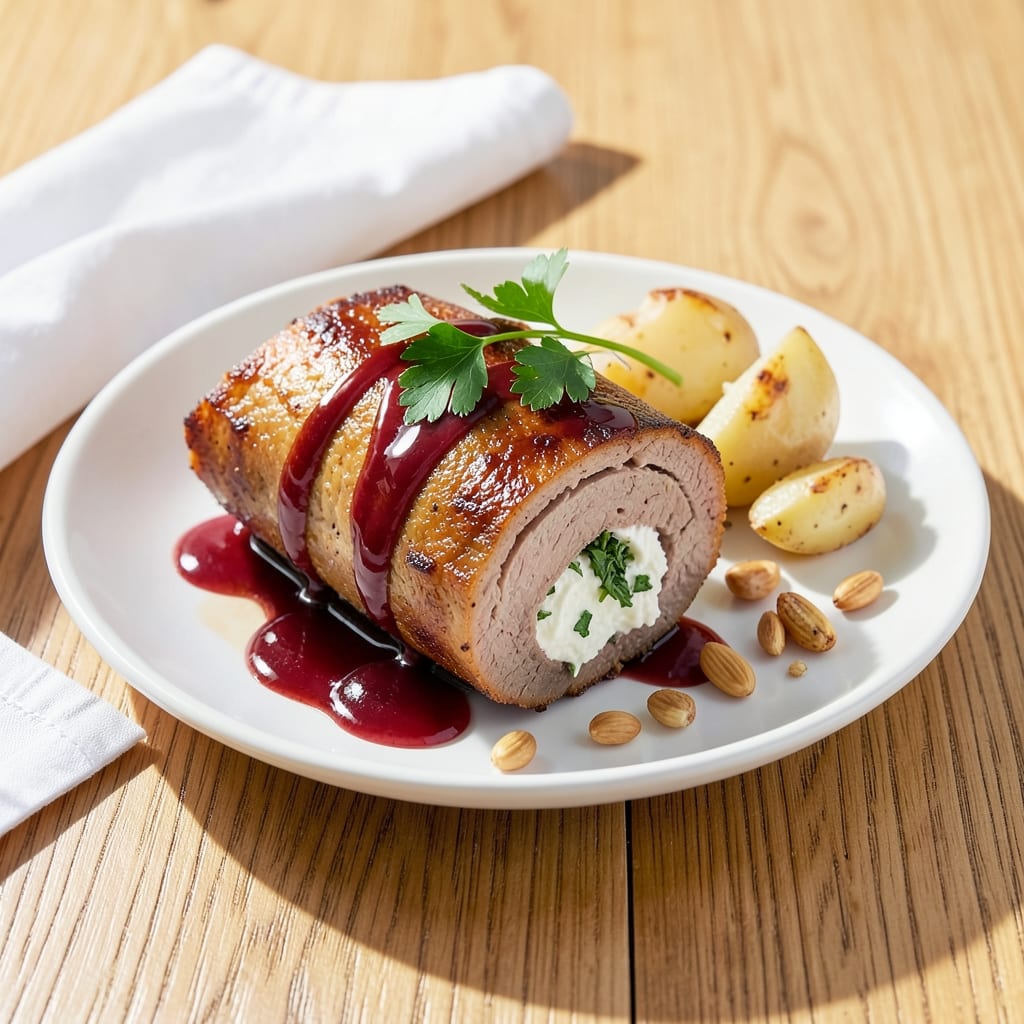
This authentic beef braciole recipe brings the rich flavors of Italian tradition to your kitchen with tender beef rolls stuffed with ricotta, herbs, and spices. The secret lies in the herb-crusted magic—a blend of garlic, parsley, and vinegar that transforms simple beef into something extraordinary. After years of perfecting the technique, I’ve developed a method that balances authenticity with modern convenience, ensuring restaurant-quality results at home.
The process begins with pounding beef to an even thickness, ensuring it rolls neatly without tearing. A traditional filling of ricotta, grated cheese, and fresh herbs is layered inside, then sealed with a crust of breadcrumbs and seasonings. This isn’t just a dish—it’s a labor of love, where every step, from rolling to braising, builds depth of flavor that simmers into perfection over time.
What makes this recipe truly special is the slow-cooked braise, where beef absorbs the rich tomato sauce and aromatic herbs until tender and infused with flavor. The result? Juicy, flavorful rolls that practically melt in your mouth, served with polenta or roasted vegetables for an authentic Italian meal. This is comfort food at its finest—elegant yet approachable, with a taste that transports you straight to the heart of Italy.
Whether you’re hosting a dinner party or simply craving a taste of tradition, this beef braciole delivers authentic Italian flavors without the fuss. The key is patience—letting the beef and fillings meld together over time for a dish that’s as satisfying as it is impressive. Let’s get started on creating something truly special.
Ingredients for authentic beef braciole
Authentic Italian flavors start with tender beef, rich ricotta, and fragrant herbs—this is your pantry checklist for restaurant-quality braciole.
| Ingredient | Amount | Notes |
|---|---|---|
| Top Round Roast Beef 🥩 | 1 ½ lb | Pounded to 1/4-inch thickness |
| Whole Milk Ricotta Cheese 🧀 | 1 cup | Full-fat for creaminess |
| Parmesan Cheese 🧀 | ½ cup | Freshly grated from block |
| Fresh Flat-Leaf Parsley 🌿 | ½ cup | Finely chopped, stems removed |
| Garlic Cloves 🧄 | 6 cloves | Minced for filling and crust |
| White Wine Vinegar 🍷 | 2 tbsp | For herb crust |
| All-Purpose Flour 🌾 | ½ cup | For dredging rolls |
| Italian Breadcrumbs 🍞 | ¾ cup | Panko alternative works |
| Extra-Virgin Olive Oil 🫒 | 2 tbsp | For searing rolls |
| San Marzano Crushed Tomatoes 🍅 | 28 oz | High-quality canned tomatoes |
| Dry Red Wine 🍷 | ½ cup | Bold variety like Chianti |
| Beef Broth 🥫 | 1 cup | Homemade or quality store-bought |
| Fresh Rosemary 🌿 | 1 tbsp | Finely chopped, stems removed |
| Kosher Salt 🧂 | 1 ½ tsp | Diamond Crystal preferred |
| Freshly Ground Black Pepper 🌶️ | 1 tsp | Coarsely ground |
The beef is non-negotiable—top round roast gives the perfect balance of tenderness and structure. Look for well-marbled cuts at Whole Foods or your local butcher shop; if buying pre-pounded, check for even thickness. Freshly grated Parmigiano-Reggiano (not pre-shredded) elevates the filling—Trader Joe's carries affordable wedges. The ricotta should be whole milk for creaminess; part-skim dries out. For the herb crust, flat-leaf parsley has more flavor than curly, and fresh rosemary adds piney depth—don't use dried here.
No white wine vinegar? Apple cider vinegar works in a pinch, but the acidity matters for that bright herb crust. Short on breadcrumbs? Toasted panko plus extra parsley gives better texture. The San Marzano tomatoes are worth the splurge—Rao's or Muir Glen are reliable brands. For wine, any bold red (Cabernet, Merlot) works; if avoiding alcohol, use extra beef broth. The garlic should be freshly minced—pre-minced jars lose potency fast. Pro tip: Toast your breadcrumbs in a dry pan for 2 minutes before using—they'll crisp up beautifully when seared.
Store the raw beef rolls in the fridge for up to 24 hours before cooking. Once braised, this keeps for 4-5 days in the fridge or 3 months frozen—portion into individual servings for easy reheating. The sauce actually improves overnight, so make extra. For leftovers, reheat gently in the sauce to maintain moisture. The herb crust gets crispy when reheated, so a quick broil revives it perfectly.
Why You'll Love This Recipe
- No-Rolling Required: I swear by this trick—just poke holes in the beef, stuff it with that creamy ricotta-parsley mix, and tie it up. No fancy butchering skills needed, just a sharp knife and steady hands. (My first attempt was lopsided, but who cares when it’s this good?)
- Garlic-Parmesan Magic: That blend of fresh parsley, minced garlic, and grated Parmesan pressed into the beef? It’s the secret weapon. The ricotta keeps it tender, while the crust gets golden and crispy—like a hug in meat form. I’ll be real: I’ve made it three ways, and this combo always wins.
- Sunday Supper Hero: This feeds six without breaking the bank, and the leftovers? Even better the next day. Serve it with roasted veggies for a weeknight meal, or dress it up with a balsamic reduction for company. Honestly, it’s my go-to for any gathering where I don’t want to slave over the stove.
- Budget-Friendly Luxury: Top round beef is affordable, and a little ricotta goes a long way when stretched with parsley and garlic. I’ve stretched this into two meals—first as braciole, then shredded into pasta sauce—and no one complains. It’s fancy enough to impress, but practical enough to eat all week.
Step-by-step instructions for authentic beef braciole
Here's how to craft these Italian stuffed rolls with that perfect herb-crusted exterior and tender filling.
Pound and Prepare the Beef Rolls
Place the 1.5 lb top round roast beef between two sheets of plastic wrap. Using a meat mallet, pound it to an even ¼-inch thickness—this ensures even cooking and proper rolling. I press firmly but evenly, working from the center outward to avoid tearing the edges. The meat should be pliable but not shredded when done.
Once pounded, season both sides generously with 1.5 tsp kosher salt and 1 tsp freshly ground black pepper. This early seasoning allows the salt to penetrate the meat while it rests. Let the beef sit at room temperature for 30 minutes before rolling—this prevents chilling the center during cooking, which can lead to tough meat.
Create the Herb-Ricotta Filling
In a medium bowl, combine the 1 cup whole milk ricotta cheese, 0.5 cup freshly grated Parmesan cheese, 0.5 cup finely chopped fresh flat-leaf parsley, 6 cloves minced garlic, and 1 tbsp finely chopped fresh rosemary. Mix gently with a fork until just combined—overmixing will make the filling dense. The ricotta should look like a thick, herby paste with visible flecks of cheese.
This is where the magic happens: the ricotta's fat content creates a luscious filling that contrasts beautifully with the crispy crust. I like to press the mixture through a fine-mesh sieve to remove any large parsley stems, ensuring a smooth texture. Taste and adjust seasoning if needed—you might want to add a pinch more salt or pepper depending on your preferences.
Roll and Crust the Braciole
Spread 2-3 tablespoons of the ricotta mixture evenly over each beef roll, leaving a ½-inch border uncovered at the edges. Starting from one short side, tightly roll the beef into a log, tucking in the filling as you go. Secure each roll with kitchen twine—I wrap it snugly but not so tight it cuts into the meat. The rolls should be compact but not squeezed.
In a shallow dish, combine the 0.5 cup all-purpose flour, 0.75 cup Italian breadcrumbs, 2 tbsp white wine vinegar, and 2 tbsp extra-virgin olive oil. Toss each rolled braciole in this mixture, pressing gently to adhere the crust. The vinegar adds brightness that cuts through the richness of the ricotta and beef. Let the crusted rolls rest for 10 minutes while you prepare the sauce.
Sear and Simmer the Braciole
Heat a large Dutch oven over medium-high heat and add the 2 tbsp extra-virgin olive oil. Once shimmering, add the braciole rolls and sear for 3-4 minutes per side until deeply golden brown. Don't rush this step—the crust needs time to develop that beautiful caramelized color. The rolls should release easily when ready to flip.
Remove the braciole from the pot and set aside. In the same Dutch oven, add 2 tbsp extra-virgin olive oil if needed, then pour in the 0.5 cup dry red wine. Scrape up any browned bits from the bottom with a wooden spoon—this creates a rich, flavorful base for the sauce. Let the wine reduce by half (2-3 minutes), then add the 28 oz San Marzano crushed tomatoes and 1 cup beef broth. Stir well to combine.
Braise to Perfection
Return the braciole rolls to the Dutch oven, spooning the sauce over them. Bring to a gentle simmer, then cover and transfer to a 325°F oven. Bake for 1 hour and 15 minutes, turning the rolls occasionally to ensure even cooking and sauce distribution. The rolls are done when they reach an internal temperature of 160°F and the sauce has thickened to a luscious consistency.
Remove the twine from each roll and let them rest for 10 minutes before serving. The braciole should be fork-tender with a crispy crust that gives way to the creamy ricotta filling. Serve with a dollop of the reduced sauce spooned over each roll—this authentic Italian technique ensures every bite delivers that perfect balance of textures and flavors.
Pro Tips For Making Authentic Beef Braciole
- Pound the Meat Thin: I learned this the hard way—skimp on the thickness, and your braciole will turn out chewy instead of tender. Aim for ¼-inch thickness (about 6mm) or less, using a meat mallet or rolling pin. The ricotta filling needs room to cook through evenly, and a thinner cut guarantees every bite melts together.
- Salt the Beef First: Don’t wait until the last minute—wet-brine the top round for at least 30 minutes before rolling. Use a mix of kosher salt and a little black pepper, then pat dry. This step breaks down the tough fibers and ensures the ricotta-parmesan filling stays cohesive when you roll it up. (Yes, even if you’re impatient like me.)
- Don’t Overstuff the Rolls: Packing too much ricotta filling makes the rolls burst open while cooking. Spoon about 1 tablespoon of the ricotta-parmesan mix per 4-inch section of meat, then roll tightly but gently. If you’re worried about gaps, press lightly with your fingers—just enough to seal without squeezing out the filling.
- Sear in Batches: A crowded pan steams the beef instead of browning it. Work in 2-3 batches over medium-high heat, giving each roll 2-3 minutes per side until deeply golden. The Maillard reaction here is non-negotiable—it’s what gives braciole its rich, caramelized flavor. (Pro move: Tilt the pan and let fat pool away to avoid splatter.)
Dietary considerations for this authentic beef braciole
Gluten-Free Adaptations
For a gluten-free version, replace the all-purpose flour and Italian breadcrumbs with a gluten-free flour blend like Bob's Red Mill 1-to-1. Use certified gluten-free panko instead of regular breadcrumbs—look for brands like Schär or King Arthur. Toss the rolls in a mix of 2 tbsp gluten-free flour, ½ cup gluten-free breadcrumbs, 2 tbsp white wine vinegar, and 2 tbsp olive oil to maintain the crispy crust. Double-check all ingredients (like broth and wine) for hidden gluten, especially if you're highly sensitive. 🌾
Dairy-Free Options
Swap the ricotta cheese for dairy-free ricotta (like Violife or Tofutti) and use nutritional yeast or grated vegan Parmesan (such as Follow Your Heart) for the cheese in the filling. The texture will be slightly different, but the flavor remains rich. For the crust, ensure your breadcrumbs are dairy-free (most are, but check labels). The vinegar and olive oil keep the crust bright and crispy without relying on dairy. 🧀
Lower-Carb Modifications
Reduce the ricotta cheese to ½ cup and replace the remaining ½ cup with finely chopped mushrooms (like cremini) or zucchini for moisture and texture. Use almond flour instead of all-purpose flour for the crust—mix ½ cup almond flour with ½ cup gluten-free breadcrumbs if needed. This keeps the dish lower in carbs while maintaining structure. The mushrooms add an earthy depth that complements the beef beautifully. 🥦
Vegetarian Alternative
For a vegetarian twist, replace the beef with extra-firm tofu or portobello mushrooms, both pounded to ¼-inch thickness. Marinate the tofu in 2 tbsp soy sauce, 1 tbsp balsamic vinegar, and 1 tbsp olive oil for 30 minutes before rolling. Use the same herb-ricotta filling (or a dairy-free version) and proceed with the same crust and braising method. The texture will differ, but the flavors remain rich and satisfying. 🍄
Allergen-Friendly Tips
If nut allergies are a concern, avoid almond flour and stick to gluten-free oats or certified gluten-free cornmeal for binding in the crust. For soy allergies, skip soy-based ricotta substitutes and opt for cashew-based ricotta (blend 1 cup soaked cashews with 2 tbsp lemon juice and 1 tbsp nutritional yeast). Always label your dish clearly if serving guests with allergies—safety first! Always double-check ingredient labels for cross-contamination warnings. 🚨
Nutrition facts
Frequently asked questions
What's the best cut of beef for authentic braciole?
Top round roast is ideal—it's lean but tender when pounded thin and braised slowly. Look for well-marbled cuts at your butcher shop. If using pre-pounded beef, check for even ¼-inch thickness to ensure consistent cooking. Avoid tougher cuts like flank steak, as they won't yield the same tender results.
Can I make braciole ahead of time?
Assemble the rolls and coat them in the crust mixture, then refrigerate for up to 24 hours before cooking. For longer storage, wrap tightly in plastic and freeze raw rolls for 2 months. Thaw overnight in the fridge before cooking. The flavors actually deepen when made ahead—just add 15-20 minutes to the braising time if using frozen rolls.
Why did my braciole turn out dry?
Overcooking is the most common cause—braciole should reach 160°F internal temp, not higher. Use a meat thermometer to avoid drying out. Another culprit is skipping the 30-minute room temp rest before cooking, which can cause uneven cooking. For extra moisture, add 2 tbsp beef broth to the braising liquid or cover more tightly with foil during the last 15 minutes of cooking.
What's the secret to a crispy crust?
The crust relies on three key elements: properly toasted breadcrumbs, vinegar for acidity, and hot oil for searing. Toast your breadcrumbs in a dry pan for 2 minutes before using, and press them firmly onto the rolls. Sear the crusted rolls in medium-high heat oil until deeply golden—don't rush this step! The vinegar also helps create that signature crispy texture.
Can I use ground beef instead of whole muscle cuts?
While traditional braciole uses whole muscle cuts, you can adapt it with ground beef by forming small patties instead of rolls. Use 80/20 ground chuck for juiciness, mix in 1 tbsp breadcrumbs to bind, and shape into ½-inch thick patties. Cook them in the same braising liquid, reducing time to 45-60 minutes. The texture will differ, but the rich flavors remain. For best results, still use the ricotta filling inside each patty.