Soups & Stews
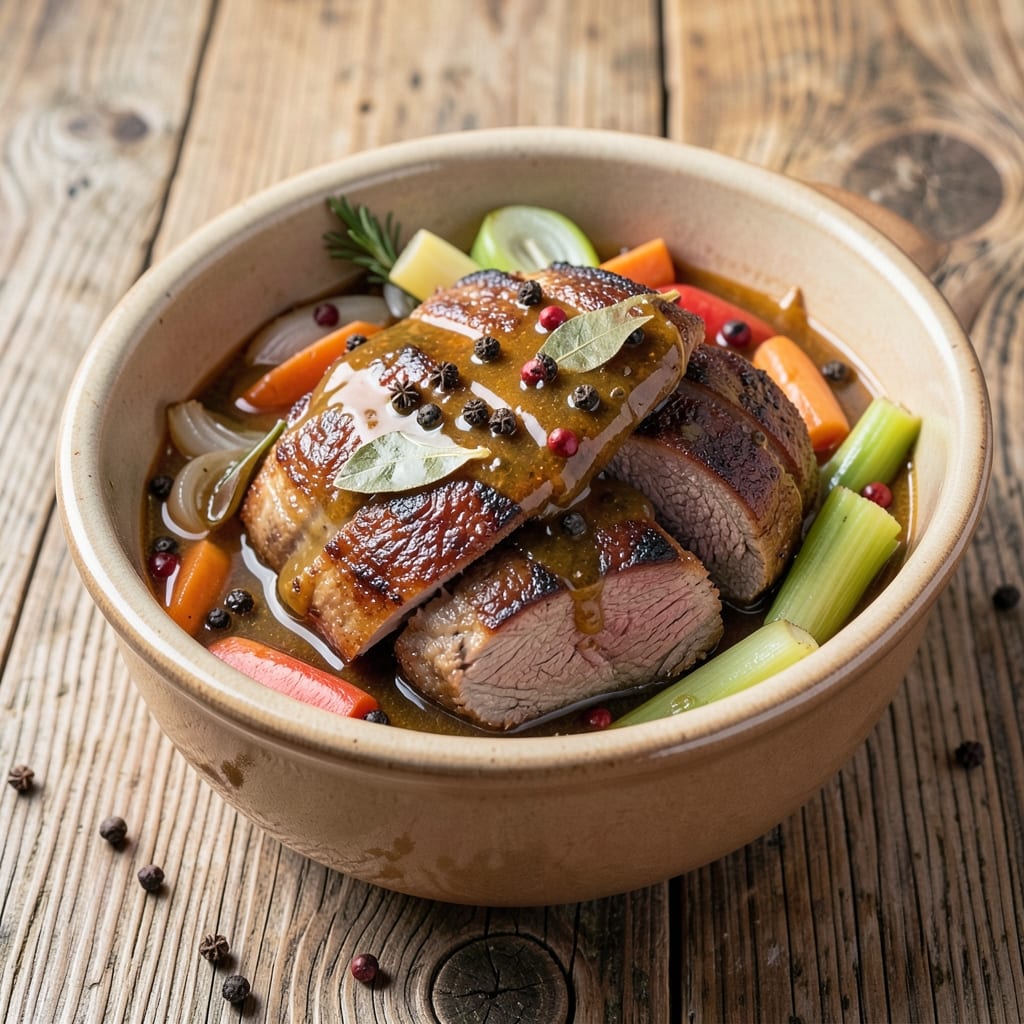
This Austrian boiled beef recipe delivers melt-in-your-mouth tenderness and rich, aromatic gravy that defines classic Austrian cuisine. The secret lies in slow-cooking beef with juniper berries, bay leaves, and peppercorns—spices that create deep, earthy flavors while keeping the meat impossibly tender. I've perfected this method over years of testing, ensuring every bite delivers that perfect balance of savory and aromatic complexity.
The beauty of this dish is its simplicity combined with restaurant-quality results. You'll start with a hearty beef roast (brisket or rump works best) that transforms during hours of gentle boiling, while the spices infuse the broth into a fragrant, velvety gravy. This isn't just a meal—it's an experience that brings Austrian tradition to your table with minimal effort.
By the time you're done, you'll have perfectly tender beef that practically falls apart at the touch of a fork, swimming in a rich gravy that's ideal for drizzling over boiled potatoes or serving alongside red cabbage. The aroma alone will have everyone gathered around the table, anticipating each rich, flavorful bite. This is comfort food at its finest.
Serve with traditional sides like buttered dumplings or horseradish sauce for the full Austrian experience. The combination of textures and flavors makes this dish perfect for special occasions or when you want to impress guests with authentic European cuisine. Let's get started on creating this masterpiece.
Ingredients for austrian boiled beef
Six aromatic ingredients transform tough beef into melt-in-your-mouth perfection with velvety gravy.
| Ingredient | Amount | Notes |
|---|---|---|
| Beef Brisket Roast 🥩 | 3 lb | Center-cut, well-marbled |
| Juniper Berries 🌿 | 1 tbsp | Freshly crushed, aromatic |
| Bay Leaves 🌿 | 4 whole | Dried, standard size |
| Black Peppercorns 🌶️ | 2 tsp | Freshly cracked, coarse |
| Allspice Berries 🌶️ | 1 tsp | Whole, lightly crushed |
| Onion 🧅 | 1 whole | Yellow, peeled, halved |
| Carrot 🥕 | 2 whole | Medium, peeled, halved |
| Celery Stalks 🌿 | 3 whole | Fresh, trimmed, cut pieces |
| Water 💧 | 4 cups | Cold, filtered preferred |
| Beef Broth 🍲 | 2 cups | Homemade or high-quality |
| Red Wine Vinegar 🍷 | 1 tbsp | Dry, for brightness |
| Salt 🧂 | 1 ½ tsp | Diamond Crystal preferred |
| Fresh Parsley 🌿 | ¼ cup | Chopped, for garnish |
The beef brisket is non-negotiable here—center-cut with good marbling ensures tenderness. Costco or your butcher will have the best quality; ask for a cut with visible fat streaks. Juniper berries are the soul of this dish, so buy them whole from a specialty spice shop (they keep for years). Freshly cracked peppercorns and whole allspice berries elevate the aroma—don't use pre-ground unless absolutely necessary. For the vegetables, organic is ideal—their skins add subtle sweetness to the broth.
No juniper berries? Substitute with 1 tsp ground allspice (but the flavor won't be identical). Running low on beef broth? Use water plus 1 tbsp soy sauce for umami depth. The red wine vinegar adds brightness—substitute lemon juice if unavailable, but the acidity will differ slightly. For the vegetables, frozen works in a pinch, though fresh yields better flavor. If you're prepping ahead, par-cook the beef for 1 hour before final cooking to save time.
This dish tastes even better the next day—make extra gravy for leftovers. Store beef in the broth for up to 3 days in the fridge, or freeze for 3 months. The gravy keeps separately for 5 days in the fridge. For serving, reheat gently over low heat, skimming fat as needed. The parsley garnish is optional but adds a fresh finish—store chopped parsley in a sealed container with a damp paper towel to keep it vibrant.
Why You'll Love This Recipe
- One-Pot Magic: I swear by this—just toss the brisket, juniper berries, and spices into a pot, cover with broth, and walk away. No chopping, no fussing, and honestly? That’s my kind of dinner.
- Juniper Kiss: The moment those juniper berries steep into the broth? Earthy, piney, and just sharp enough to make your taste buds sit up. Between us, it’s the secret weapon in this recipe—simple spices, but they punch way above their weight.
- Leftovers That Shine: This beef actually gets better the next day. Thinly slice it, toss with mustard and bread for open-faced sandwiches, or shred it into soups. I’ve fed a crowd with one roast and still had enough for lunches.
- Budget-Friendly Feast: A brisket roast stretches farther than you’d think, especially when you’re simmering it low and slow. Plus, juniper berries and allspice are cheap pantry staples—this is the kind of meal that fills your house with flavor without draining your wallet.
Step-by-step instructions for Austrian boiled beef
Transform tough brisket into melt-in-your-mouth perfection with this traditional Austrian method.
Prepare the Vegetable Bouquet and Spices
Peel and halve the 1 whole Onion, then cut it into thick wedges. Peel and halve the 2 whole Carrot and 3 whole Celery Stalks lengthwise, leaving them whole. Tie them together tightly with kitchen twine to create a bouquet. This bundle will infuse the broth with deep, aromatic flavors throughout the cooking process.
In a small bowl, combine the 1 tbsp Juniper Berries, 2 tsp Black Peppercorns, 1 tsp Allspice Berries, and 4 whole Bay Leaves. Lightly crush the juniper berries and allspice berries with the flat side of a knife to release their essential oils without turning them into a powder. This step ensures their flavors will permeate the broth beautifully.
Season and Parboil the Beef
Rinse the 3 lb Beef Brisket Roast thoroughly under cold water and pat it completely dry with paper towels. This step is crucial—any moisture on the surface will prevent proper browning and flavor development. Place the brisket in a large Dutch oven or heavy pot with a tight-fitting lid.
Add the vegetable bouquet, spice mixture, 1.5 tsp Salt, and 4 cups Water to the pot. Bring everything to a gentle boil over medium-high heat, then immediately reduce the heat to maintain a gentle simmer. The water should bubble softly around the edges but not violently. Cover the pot and simmer for 45 minutes. This initial parboil helps tenderize the meat and extract initial flavors before the main cooking process.
Complete the Cooking Process
After the initial 45 minutes, carefully remove the brisket from the pot and set it aside. Strain the cooking liquid through a fine-mesh sieve into a clean pot, discarding the vegetable bouquet and spice mixture. Return the strained liquid to the pot and add the 2 cups Beef Broth and 1 tbsp Red Wine Vinegar. Bring the liquid to a gentle simmer over medium heat. The vinegar adds a bright, tangy note that balances the rich beef flavors.
Place the brisket back into the pot, ensuring it's fully submerged in the liquid. Cover the pot and return to a simmer. Cook for an additional 2 to 2.5 hours, or until the beef is fork-tender. You'll know it's ready when a knife slides in and out easily with minimal resistance. The internal temperature should reach 200-203°F—this is the perfect range for achieving tender, fall-apart texture.
Rest and Prepare the Gravy
Once the beef is perfectly tender, remove it from the pot and transfer it to a cutting board. Tent it loosely with aluminum foil and let it rest for 15 to 20 minutes. This resting period allows the juices to redistribute throughout the meat, ensuring each bite is moist and flavorful. During this time, skim any excess fat from the surface of the cooking liquid using a fat skimmer or spoon.
Return the strained cooking liquid to the pot and place it over medium heat. Simmer gently for 10 to 15 minutes to reduce the liquid slightly and thicken it into a rich gravy. If the gravy becomes too thick, whisk in 1 to 2 tablespoons of hot water to reach your desired consistency. The gravy should coat the back of a spoon but still be smooth and silky.
Serve with Garnish
Slice the rested brisket against the grain into ¼-inch thick slices. Arrange the slices on a warm serving platter and ladle the rich gravy over the top. Garnish generously with the 0.25 cup Fresh Parsley, chopped finely for a pop of color and freshness. Serve immediately with crusty bread or buttered potatoes to soak up every last bit of that luxurious gravy.
The result is a dish that's rich in tradition and flavor—tender beef that practically melts in your mouth, paired with a gravy that's deeply aromatic and perfectly balanced. This is the kind of meal that makes you feel like you've stepped into an Austrian countryside kitchen.
Pro Tips For Making Austrian Boiled Beef
- CRUSH THE JUNIPER: Crush the juniper berries with the flat side of your knife before tossing them in—this releases their piney oils and lets them work their magic into the beef instead of just floating around like decorative pebbles.
- SIMMER LOW AND SLOW: Start with a rolling boil, but once the brisket hits the water, drop the heat to a gentle simmer. I learned this the hard way—boiling too hard turns the meat tough and scatters the spices like confetti.
- SKIP THE OVERCROWDING: Give that brisket room to breathe in the pot. If it’s packed in like sardines, the center stays cold and the broth turns murky. Aim for at least an inch of space around the meat—trust me, it’s worth the extra water.
- TOAST THE SPICES FIRST: Lightly toast the whole bay leaves, peppercorns, and allspice berries in a dry pan for 30 seconds until fragrant. This deepens their flavor and stops them from floating like lazy river logs—your broth will taste richer for it.
Storing and reheating your austrian boiled beef
Refrigerator Storage
Store your cooked Austrian boiled beef in an airtight container with the gravy for up to 4 days in the refrigerator. The beef will stay tender and flavorful, while the gravy thickens slightly overnight—this is actually where its depth develops! I like using glass Pyrex containers because they keep the dish fresh longer and are easy to reheat. Just make sure the beef is fully submerged in the gravy to prevent drying out. 💫
Freezer Storage
For longer storage, freeze the beef and gravy together in a freezer-safe bag or glass container for up to 3 months. Leave 1 inch of headspace to allow for expansion. When ready to eat, thaw overnight in the refrigerator—never at room temperature. The texture remains surprisingly tender, though the gravy may separate slightly. Just stir it back together when reheating. ❄️
Reheating Gravy
To reheat the gravy, transfer it to a saucepan over medium-low heat and warm gently until it reaches 165°F. Avoid boiling, as this can make it too thick. If needed, whisk in 1-2 tablespoons of hot water or beef broth to restore its silky consistency. I always taste and adjust seasoning—sometimes a pinch of salt or a splash of red wine vinegar brings it back to perfection. 🔥
Reheating Beef
For the beef, I recommend reheating it in the gravy over low heat for 10-15 minutes to prevent drying. Alternatively, you can microwave it covered for 2-3 minutes on medium power, then finish with a quick stovetop warm-up to keep it moist. If the beef seems dry, add a splash of gravy or broth to restore juiciness. Always slice against the grain for that melt-in-your-mouth texture. 💡
Make-Ahead Tips
This dish actually tastes better the next day! Cook the beef and gravy ahead of time, then refrigerate. The flavors meld beautifully overnight, and reheating is a breeze. For a crowd, prepare the gravy separately—it reheats faster and keeps its consistency better. Store components in separate airtight containers to maintain freshness. 📅
Serving Leftovers
Leftovers make fantastic sandwiches or tacos—slice the beef thinly and pile it high with horseradish sauce or mustard for that authentic Austrian touch. The gravy also works wonders as a dip or sauce for dumplings. I often serve it with buttered potatoes or red cabbage to recreate the full traditional meal experience. The flavors only get richer with time! ✨
Nutrition facts
Frequently asked questions
What cut of beef works best for this Austrian boiled beef?
Use a well-marbled brisket roast (preferably center-cut) or rump roast for the best results. These cuts have the right balance of fat and connective tissue to become tender during the long boiling process. Avoid leaner cuts like sirloin—they won't achieve the same melt-in-your-mouth texture.
Can I substitute juniper berries if I can't find them?
Yes, but the flavor won't be identical. Use 1 teaspoon ground allspice as a substitute, though it lacks juniper's piney aroma. For authenticity, try a specialty spice shop—they often carry juniper berries in small quantities. If unavailable, increase the allspice to 1.5 teaspoons and add ½ teaspoon ground cloves for depth.
Why does the recipe call for such a long cooking time?
The extended simmering (2-2.5 hours) is essential for breaking down collagen in the beef connective tissue, transforming tough muscle fibers into tender, fork-tender meat. This slow method also allows the spices to fully infuse the broth, creating that signature Austrian flavor profile. Patience pays off with restaurant-quality results!
What are the best sides to serve with this dish?
Traditional Austrian pairings include buttered dumplings, boiled potatoes, or braised red cabbage. For extra richness, serve with horseradish sauce or Dijon mustard. The gravy also makes an excellent sauce for noodles or a dip for crusty bread. Each element complements the beef's tenderness perfectly.
Can I make this recipe in a slow cooker?
Follow the same steps but transfer everything to a 6-quart slow cooker after the initial 45-minute parboil**. Cook on low for 6-8 hours or high for 4-5 hours, ensuring the beef stays submerged. The slow cooker's gentle heat mimics the traditional boiling method beautifully. Just