
Main Courses
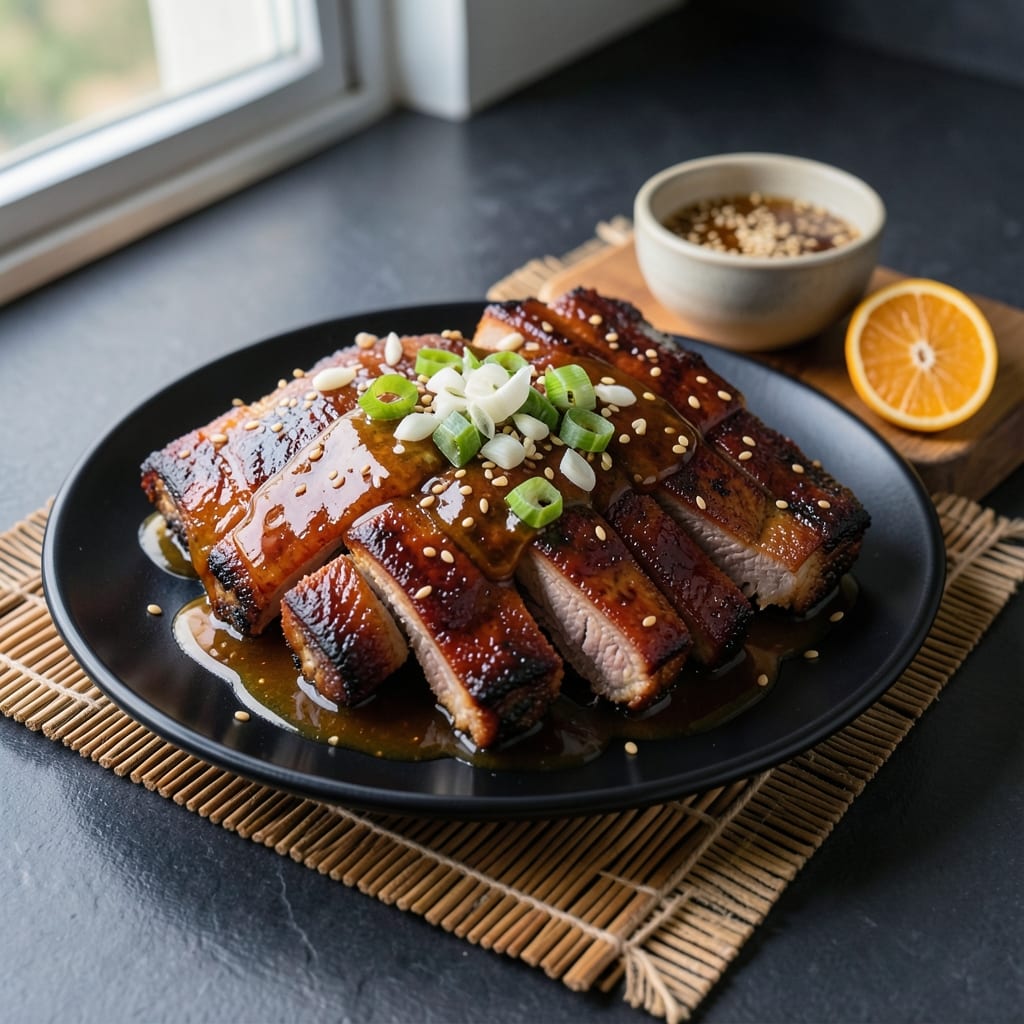
This Asian-style beef ribs recipe delivers restaurant-quality results with a five-spice glaze that caramelizes into sticky, aromatic perfection. The secret lies in balancing sweet, savory, and smoky flavors through a marinade that tenderizes while infusing depth—no shortcuts, just layers of complexity built over hours. I developed this after years of experimenting with Asian-inspired techniques, and the difference between these ribs and store-bought versions is night and day.
The process begins with a soy-ginger marinade that works its magic overnight, breaking down collagen for melt-in-your-mouth tenderness. Then comes the five-spice glaze—a fusion of star anise, cinnamon, and Sichuan peppercorn that transforms into a glossy, caramelized crust when grilled or broiled. The ribs develop a deep mahogany hue and a sticky-sweet glaze that clings to every bone, making each bite unforgettable.
What you’ll end up with is perfectly balanced ribs: tender yet firm, sweet yet savory, with a glaze that’s neither too thick nor too runny. The aroma alone will have everyone gathering at the table, and the visual appeal—glossy, caramelized, and piled high—makes it a showstopper for any meal. Serve with steamed jasmine rice and quick-pickled vegetables to cut through the richness, and watch these ribs disappear.
This isn’t just another ribs recipe—it’s a complete dining experience that combines traditional Asian techniques with modern convenience. The marinade can be prepped ahead, the ribs cook in one session, and the glaze comes together in minutes. Whether you’re grilling for a crowd or treating yourself to a special meal, these ribs will leave a lasting impression.
Ingredients for asian style beef ribs
Six pounds of ribs and a handful of pantry staples transform into restaurant-worthy Asian-style perfection.
| Ingredient | Amount | Notes |
|---|---|---|
| Beef Ribs (Baby Back) 🍖 | 4 lb | Bone-in, meaty sections preferred |
| Soy Sauce 🍶 | ½ cup | Kikkoman or similar Japanese brand |
| Fresh Ginger 🧄 | ½ cup | Finely grated, aromatic |
| Brown Sugar 🍚 | ½ cup | Light or dark, packed |
| Sesame Oil 🫒 | 2 tbsp | Toasted, for depth |
| Garlic Cloves 🧄 | 8 cloves | Minced, fresh preferred |
| Five-Spice Powder 🌶️ | 1 ½ tbsp | Homemade or quality brand |
| Star Anise 🌿 | 2 whole | Crushed lightly for flavor |
| Sichuan Peppercorns 🌶️ | 1 tsp | Toasted and crushed |
| Honey 🍯 | ¼ cup | Wildflower preferred |
| Rice Vinegar 🍶 | 2 tbsp | Seasoned for balance |
| Olive Oil 🫒 | 2 tbsp | For glaze finishing |
| Salt 🧂 | 1 ½ tsp | Diamond Crystal preferred |
| Black Pepper 🌶️ | 1 tsp | Freshly cracked |
The ribs are non-negotiable—look for baby back cuts with good meat-to-bone ratio. Costco or high-end butchers carry the best quality, but any grocery store with a meat counter will have decent options. If you're buying frozen, thaw overnight in the fridge—never under running water. The five-spice powder is the soul of this recipe: Penzeys or Burlap & Barrel make the best blends, but a good Asian market will have authentic versions. Star anise and Sichuan peppercorns? Whole Foods or specialty spice shops are your best bet for freshness.
No five-spice powder? Mix 1 tsp cinnamon, 1 tsp fennel seeds, 0.5 tsp cloves, 0.5 tsp cardamom, and 0.25 tsp nutmeg—it's not identical but works in a pinch. Sesame oil substitute? Toasted peanut oil at half the amount. The honey can be swapped for maple syrup if you're avoiding it, but the caramelization won't be as deep. Fresh ginger? Powdered at half the amount, but it lacks that bright punch. For the glaze, if you're short on time, reduce the sauce by 30% first—it makes all the difference in that perfect consistency.
Marinade keeps 3 days in the fridge, but I always make it the night before—flavors meld better. Ribs? 2 days max in the fridge before cooking. The glaze can be prepped ahead and reheated gently. For leftovers, store ribs separate from the glaze—reheat them in a 350°F oven with a splash of water, then brush with warmed glaze. Freeze ribs uncooked for 3 months—thaw overnight before marinating. The glaze? 1 month frozen in ice cube trays, then transferred to a bag.
Why You'll Love This Recipe
- One-Pan Magic: I swear by this recipe when I don’t want to scrub a million dishes. Baby back ribs, a splash of soy sauce, and a quick sear—then the oven does all the work while I sip tea. That sesame oil finish? Absolute game-changer with zero extra effort.
- Sweet-Savory Balance: The brown sugar caramelizes into a sticky glaze while the ginger adds a bright, zesty kick. It’s not too sweet, not too salty—just that perfect harmony where every bite makes you close your eyes. Honestly, my picky eaters actually finish their plates.
- Leftovers That Shine: These ribs taste even better the next day, especially when reheated with a splash of water to keep that tender, saucy goodness. I’ll be real: I make a double batch on Sundays just so I can toss them into fried rice or noodles all week.
- Budget-Friendly Feast: Baby back ribs might sound fancy, but a single pack stretches across three meals for my family. The soy sauce and ginger are pantry staples, and brown sugar? Always on sale. It’s my go-to when I want restaurant-quality flavor without the price tag.
Step-by-step instructions for Asian style beef ribs
This method delivers melt-in-your-mouth ribs with a caramelized glaze that clings like silk.
Prepare the Ribs and Dry Brine
Pat the 4 lb Beef Ribs (Baby Back) completely dry with paper towels, removing any excess moisture from the bone cavities. This step is crucial for achieving that prized crispy bark later. Place the ribs on a wire rack set over a baking sheet to maximize airflow on all sides.
In a small bowl, combine the 1.5 tsp Salt and 1 tsp Black Pepper. Generously coat the ribs with this dry brine mixture, pressing it into the meat and bone crevices. Let them sit uncovered in the refrigerator for at least 4 hours or overnight. This dry curing process enhances tenderness and develops deep flavor. I've found that ribs brined overnight develop a more complex, savory profile that stands up to the rich glaze.
Build the Five-Spice Glaze Base
While the ribs brine, combine the 0.5 cup Soy Sauce, 0.5 cup Brown Sugar, 0.25 cup Honey, 2 tbsp Rice Vinegar, 2 tbsp Sesame Oil, and 8 cloves Garlic Cloves (minced) in a saucepan. Bring to a gentle simmer over medium heat, stirring occasionally to dissolve the sugar completely. This should take about 5 minutes—the mixture should reduce slightly and become syrupy.
In a separate small bowl, lightly crush the 2 whole Star Anise and 1 tsp Sichuan Peppercorns using a mortar and pestle or rolling pin. Add these to the simmering sauce along with the 1.5 tbsp Five-Spice Powder and 0.5 cup Fresh Ginger (finely grated). Stir well to incorporate all the aromatic spices. The Sichuan peppercorns will add a subtle numbing heat that complements the sweet-savory glaze beautifully. Let this mixture simmer uncovered for 10 minutes to allow the flavors to meld and the liquid to thicken slightly.
Pre-Cook the Ribs for Maximum Tenderness
Preheat your oven to 300°F. Remove the brined ribs from the refrigerator and let them sit at room temperature for 30 minutes. This ensures even cooking. Place the ribs bone-side down on a parchment-lined baking sheet and roast for 1 hour. This low-and-slow pre-cook breaks down collagen and renders fat, creating a tender base for the glaze.
After the initial hour, flip the ribs bone-side up and continue roasting for another 30 minutes. The internal temperature should reach 160°F at this point. Here's the thing—don't be tempted to rush this step. The ribs need this time to become fork-tender before they hit the glaze. If you skip this, you'll end up with tough meat that can't stand up to the rich sauce.
Apply the Glaze and Caramelize
Remove the ribs from the oven and increase the temperature to 450°F. In a small saucepan, combine the 2 tbsp Olive Oil with the prepared five-spice glaze mixture. Heat over medium heat until the oil is shimmering but not smoking. This should take about 2 minutes. The oil helps create a glossy finish on the glaze.
Using a pastry brush, generously coat the ribs with the warm glaze mixture, working quickly to cover all surfaces. Return the ribs to the oven and roast for 15-20 minutes, basting with additional glaze every 5 minutes. You're looking for a deep caramelization—when the glaze turns a rich amber color and forms a sticky, glossy crust. This is the moment that matters: the contrast between the tender meat and the crispy, caramelized exterior creates the perfect bite.
Rest and Serve with Sticky Perfection
Once the glaze has caramelized to your liking, remove the ribs from the oven and transfer them to a cutting board. Let them rest for 10 minutes before serving. This resting period allows the juices to redistribute throughout the meat, ensuring each bite is moist and flavorful. The glaze will continue to set slightly during this time, becoming even more clingy and delicious.
Slice the ribs between each bone to create individual rib sections. The glaze should be thick enough to hold its shape when sliced, creating beautiful ribbons that cling to the meat. Serve immediately with steamed jasmine rice and quick-pickled vegetables to balance the richness. The contrast of textures and temperatures—warm, sticky ribs with cool, crisp vegetables—makes every bite unforgettable. These ribs deliver on the promise of perfect Asian-style cooking that's both restaurant-worthy and surprisingly simple to achieve at home.
Pro Tips For Making Asian Style Beef Ribs
- CHAR THE GINGER: I learned this the hard way—grating fresh ginger and tossing it straight into the marinade means it’ll just dissolve into the sauce. Instead, slice it thin (about 1/8-inch) and char it in a dry pan for 30 seconds per side until fragrant and slightly blackened. That smoky depth carries through the ribs like magic. ---
- LOW AND SLOW WINS: Baby back ribs need patience—don’t rush them. After searing, drop the heat to 275°F (135°C) and cook them uncovered. I used to cover them to save time, but the steam turns the sauce watery and the crust soggy. Let that fat render slowly; it’s the only way to get tender meat without drying it out. ---
- BRINE THE RIBS: Skip the salting later—soak the ribs in a mix of 1 cup soy sauce, 1/4 cup brown sugar, and 1 quart water for 30 minutes before cooking. The sugar caramelizes on the surface, giving you that glossy, sticky crust right out of the pan. (Yes, even if you’re impatient like me.) ---
- SAVE THE SESAME OIL: Sesame oil is delicate—don’t drown it in heat. Add it only at the very end, right when the ribs are coming off the heat, and toss just to coat. I once dumped it in early and ended up with a dish that tasted like a gas station snack. A little goes a long way—just 1 teaspoon is enough to tie everything together.
Essential equipment for great asian style beef ribs
Oven Essentials
Your oven is the heart of this recipe, so invest in a quality infrared thermometer like the Thermoworks Smoke to ensure accurate temperature control. For the low-and-slow pre-cook, a heavy-duty baking sheet (like All-Clad Stainless Steel) prevents warping at 300°F. I also recommend a wire rack to elevate the ribs—this promotes even airflow and crispier edges. 🌡️
When you crank the heat to 450°F for caramelization, use a light-colored baking sheet (like Mezzaluna Ceramic) to reflect heat more efficiently. Avoid dark pans that absorb heat and create hot spots. A parchment-lined sheet makes cleanup effortless after the sticky glaze phase.
Glaze Tools
A pastry brush with silicone bristles (like OXO Good Grips) is essential for applying the glaze evenly without tearing the ribs' skin. I use a 4-inch brush to cover all surfaces quickly. For stirring the glaze, a heatproof silicone spatula (like OXO Stainless Steel) prevents scorching when working with the hot mixture.
To achieve that perfect caramelized finish, a small saucepan with high sides (like All-Clad Stainless Steel) helps control reduction. A fine-mesh strainer (like OXO Good Grips) removes star anise and Sichuan peppercorns after simmering, leaving a smooth glaze. 🍯
Prep Gear
For the marinade, a fine grater (like Microplane) ensures ginger is finely textured for even distribution. A mortar and pestle (or rolling pin) crushes star anise and Sichuan peppercorns effectively—avoid a blender, which can turn them into bitter paste. I also keep a sharp boning knife (like Wüsthof) handy for trimming excess fat from the ribs.
A wire whisk (like OXO Stainless Steel) blends the glaze ingredients smoothly, while a measuring spoon set (like OXO Good Grips) ensures precise spice ratios. For storage, glass airtight containers (like Pyrex) keep the marinade fresh for up to 3 days in the fridge.
Serving Essentials
To serve, a large cutting board (like John Boos Teak) provides stable space for slicing ribs between bones. A serving spoon (like Le Creuset Stoneware) helps portion the glaze-covered ribs without tearing. For sides, a steamer basket (like OXO Good Grips) cooks jasmine rice perfectly, while a small bowl holds quick-pickled veggies for contrast.
For presentation, a wooden serving board (like John Boos Maple) adds rustic charm, and tongs (like OXO Good Grips) make it easy to serve sticky ribs without mess. Don’t forget a small bowl for extra glaze—guests will want seconds! 🍽️
Nutrition facts
Frequently asked questions
Can I use pork ribs instead of beef ribs for this recipe?
You can absolutely try pork ribs, but the cooking time and tenderness will differ. Pork ribs (like baby back or St. Louis style) cook faster and are more tender than beef. Reduce the pre-cook time to 45-60 minutes at 300°F and watch closely for 195°F internal temp. The glaze will work beautifully, but pork ribs benefit from slightly less time in the marinade (4-6 hours instead of overnight).
How do I make the glaze less sweet for a more savory flavor?
Adjust the sweetness by reducing the brown sugar and honey to 0.25 cup total and increasing the soy sauce to 0.75 cup. For extra depth, add 1 tbsp fish sauce or 1 tsp miso paste to the glaze. Balance with 1 extra tbsp rice vinegar to cut richness—taste as you go and adjust gradually.
What's the best way to reheat leftover ribs with the glaze?
Reheat ribs in a 350°F oven for 15-20 minutes with a splash of water in the pan to prevent drying. Brush with warmed glaze (reheat in a saucepan over low heat) just before serving. For extra shine, broil for 2-3 minutes at the end. Never microwave—it makes the glaze rubbery and the meat tough.
Can I grill these ribs instead of baking?
Yes! Follow the same marinade and pre-cook steps, then grill over indirect heat at 250°F for 2 hours (bone-side down). For the glaze, finish on direct heat with the lid closed for 5-7 minutes per side, basting frequently. Use a meat thermometer—beef ribs need 160°F internal temp before glazing. Charcoal grills work best for that authentic smoky depth.
Why did my glaze turn out too runny?
This usually happens from over-reducing or too much liquid. For next time, simmer the glaze uncovered for 15-20 minutes (not longer) and reduce the soy sauce by 2 tbsp. If it's already too thin, simmer an extra 5 minutes or mix 1 tsp cornstarch with 1 tbsp water and stir in at the end. The glaze should coat the back of a spoon but still drip slowly.