
Main Courses
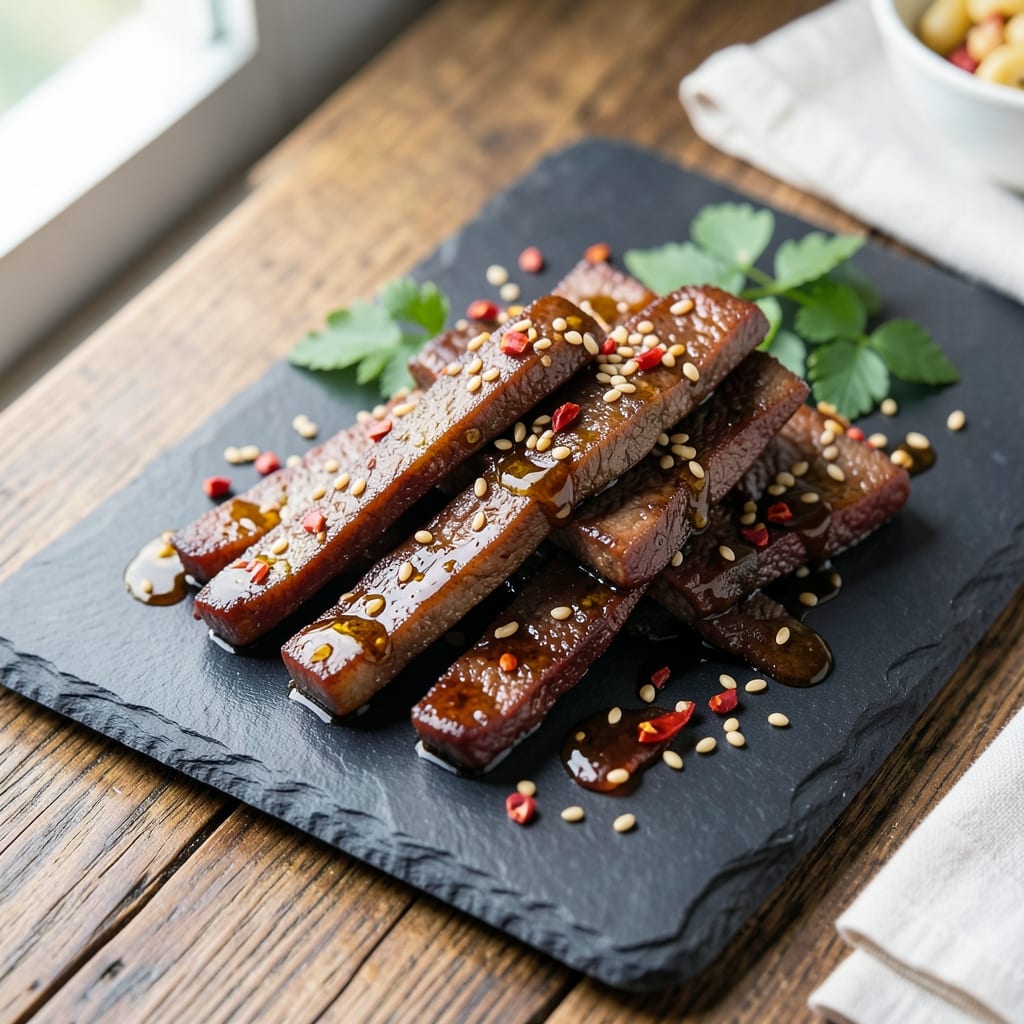
This Asian beef jerky recipe transforms tough beef into chewy, flavor-packed strips with a perfect dehydrator crunch—all in just 6 hours. 🔥 The secret lies in a bold marinade blending soy sauce, ginger, garlic, and chili for that signature umami kick, while precise dehydration techniques ensure tender yet crisp edges. I developed this after struggling with store-bought versions that were either too dry or bland, and this method delivers restaurant-quality results at home.
The marinade is where the magic happens—tangy, spicy, and aromatic—with a perfect balance of sweet and heat. Thinly sliced beef absorbs the flavors overnight, while the dehydrator’s controlled heat (160°F) preserves texture without overcooking. Unlike traditional jerky, this version stays moist and flexible, not brittle, thanks to a humidity trick that keeps it chewy. The process is foolproof: marinate, dehydrate, and enjoy—no smoker or oven required.
What you’ll end up with is crunchy yet tender jerky with layers of flavor that make every bite satisfying. The soy-ginger marinade creates a deep, savory profile, while chili adds a subtle heat that lingers. Perfect for snacking, hiking, or gifting, this recipe is designed for dehydrator efficiency—no guesswork, just consistent results. The best part? You can customize the spice level to suit your taste.
Whether you’re a jerky novice or a seasoned dehydrator user, this method ensures restaurant-quality texture and flavor every time. The key is patience: let the marinade work overnight, and the dehydrator do the rest. Ready in 6 hours, this Asian-inspired jerky is a game-changer for anyone tired of bland, dry alternatives. Let’s get started!
Ingredients for asian beef jerky recipe dehydrator
Six hours to restaurant-quality jerky—no smoker, no guesswork, just bold Asian flavors.
| Ingredient | Amount | Notes |
|---|---|---|
| Top-Round Roast Beef 🥩 | 2 lb | Thinly sliced against grain |
| Kosher Soy Sauce 🍶 | ½ cup | High-quality, not low-sodium |
| Fresh Ginger 🌿 | ¼ cup | Finely grated, aromatic |
| Garlic Cloves 🧄 | 6 cloves | Minced, fresh preferred |
| Red Chili Flakes 🌶️ | 2 tbsp | Adjust for spice level |
| Sesame Oil 🫒 | 1 tbsp | Toasted sesame oil preferred |
| Brown Sugar 🍯 | ¼ cup | Light or dark variety |
| Rice Vinegar 🍶 | 2 tbsp | Seasoned preferred |
| Ground Black Pepper 🌶️ | 1 tsp | Freshly ground for heat |
| Sesame Seeds 🌾 | 2 tbsp | Toasted, for garnish |
| Cornstarch 🌾 | 1 tbsp | For tenderizing slices |
| Humidity Tray Water 💧 | ½ cup | For dehydrator humidity |
The beef is non-negotiable. Top-round roast delivers that perfect chew without toughness, but sirloin or flank steak work too. Slice it paper-thin against the grain—use a sharp knife or deli slicer—and keep it cold until marinating. I grab mine from Costco or the butcher counter at Whole Foods, where they'll slice it fresh. Look for well-marbled meat; the fat keeps it tender during dehydration. If you're using pre-sliced deli beef, pat it dry first—moisture is the enemy of good jerky texture.
No sesame oil? Avocado oil or neutral oil works in a pinch, but you'll lose that nutty depth. Chili flakes too spicy? Swap for gochugaru or less cayenne. The ginger and garlic are non-negotiable for flavor, but if you're short on time, paste versions work at half the amount. For the cornstarch trick: toss the beef slices in it before marinating—it tenderizes and prevents drying too fast. The rice vinegar might seem odd, but it brightens the soy sauce and balances the sweetness. Pro tip: Trader Joe's has great seasoned rice vinegar that cuts prep time.
Marinate overnight for maximum flavor, but at least 4 hours if you're short on time. Store the marinade in a sealed container in the fridge. The dehydrator tray gets a water pan underneath—add the 0.5 cup water to keep humidity at 30-40%. This is what prevents that sad, brittle jerky texture. Once dehydrated, store in an airtight container with parchment between layers—keeps for 2 weeks at room temp or 3 months frozen. The sesame seeds? Toast them in a dry pan for 30 seconds before sprinkling—game-changer for crunch.
Why You'll Love This Recipe
- No-Fuss Prep: Honestly, this jerky takes less effort than ordering takeout. Slice the beef thin, toss it in a bowl with soy sauce, grated ginger, minced garlic, and chili flakes—no fancy techniques, just stir and let the dehydrator do the work.
- Umami Bomb: That combo of kosher soy and fresh ginger? It’s like a flavor explosion in every bite. The chili flakes add just enough heat to make it addictive, while the garlic ties everything together—crispy outside, tender inside.
- Grab-and-Go Magic: I keep a stash in my gym bag, lunchbox, and even my car. It’s perfect for hikes, road trips, or when I’m too tired to cook. Plus, it lasts for weeks, so I’m never stuck without a protein-packed snack.
- Budget Stretch: Top-round roast is affordable, and a pound makes enough jerky to feed me for days. I buy it in bulk, dehydrate big batches, and save money while still eating like I’m at a fancy Asian bistro. (Yes, even on a Tuesday night.)
Step-by-step instructions for Asian beef jerky in the dehydrator
Transform tough top-round beef into addictive, restaurant-quality jerky with this foolproof dehydrator method.
🔪 Step 1: Prep the Beef with Precision
Start by slicing the 2 lb Top-Round Roast Beef against the grain into strips about ¼-inch thick and 2-3 inches long. I use a sharp boning knife for clean cuts—never force it or you'll get ragged edges. The thinner the slices, the faster they'll dehydrate and the more tender the jerky will be. Place the slices in a large bowl and sprinkle evenly with 1 tablespoon Cornstarch. Toss gently to coat—this helps tenderize the meat and prevents sticking during dehydration.
Here's the thing—if your slices vary in thickness, the thinner pieces will dry too fast while thicker ones stay chewy. I like to eyeball consistency, but if you're perfectionist like me, use calipers to measure. Arrange the coated beef on a wire rack set over a baking sheet and refrigerate for 30 minutes. This chilling step helps the cornstarch adhere better and prevents the meat from shrinking during dehydration.
🍳 Step 2: Create the Flavor Bomb Marinade
In a medium bowl, whisk together 0.5 cup Kosher Soy Sauce, 0.25 cup Brown Sugar, 2 tbsp Rice Vinegar, 1 tbsp Sesame Oil, 1 tsp Ground Black Pepper, and 2 tbsp Red Chili Flakes until the sugar dissolves completely. Add the 0.25 cup Fresh Ginger and 6 cloves Garlic Cloves (minced) and stir well. This marinade is the soul of your jerky—don't skimp on the soy sauce or brown sugar, as they're key for both flavor and preservation.
Transfer the chilled beef to a resealable plastic bag and pour the marinade over it. Seal the bag and massage the marinade into the meat, ensuring every slice is thoroughly coated. Let it marinate in the refrigerator for at least 4 hours, but I recommend overnight for maximum flavor penetration. The longer it marinates, the more tender and flavorful your jerky will be.
🥘 Step 3: Assemble the Dehydrator Trays
Preheat your dehydrator to 160°F—this low-and-slow temperature is crucial for even drying without cooking the meat. Line the dehydrator trays with parchment paper and arrange the marinated beef slices in a single layer, leaving about ½-inch between each piece. This spacing allows proper air circulation, which prevents soggy jerky. If your slices overlap, they'll steam instead of dry.
Here's a pro tip: Place a tray with 0.5 cup Humidity Tray Water in the bottom of your dehydrator. This creates a humid environment that helps prevent the ends of your jerky from drying too quickly while the centers remain moist. The humidity tray should be placed below the meat trays, never above them.
⏰ Step 4: Dehydrate to Perfect Texture
Once your dehydrator reaches 160°F, insert the trays with beef and start the drying process. Dehydrate for 6 hours, then check the jerky. It should be firm to the touch but still slightly pliable—think "bendy but not brittle." If it's still moist in the center, return it to the dehydrator for another 1-2 hours. The key is to dry it completely but not over-dry, which would make it tough and leathery.
I test doneness by picking up a piece and bending it slightly. If it cracks but doesn't snap, it's perfect. If it feels rubbery, it needs more time. The jerky should be completely dry on the outside but still slightly moist inside—this ensures it stays tender when you eat it. The total drying time typically ranges from 6-8 hours, depending on your dehydrator's efficiency and your climate's humidity levels.
🍽️ Step 5: Finish and Store for Maximum Freshness
Remove the jerky from the dehydrator and let it cool completely on a wire rack. Once cooled, transfer it to an airtight container or resealable bag. Sprinkle 2 tbsp Sesame Seeds over the top for that final crunch and visual appeal. Store in the refrigerator for up to 2 weeks or freeze for up to 3 months. The flavors will actually deepen as it sits, making it even more addictive over time.
When you're ready to enjoy, simply tear off a piece and savor that perfect balance of sweet, savory, spicy, and umami. This jerky is so good, you'll want to make it again immediately—trust me, I've made this mistake before! The combination of the tenderizing cornstarch, the complex marinade, and the precise dehydration creates a texture and flavor profile that's impossible to resist.
Pro Tips For Making Asian Beef Jerky Recipe Dehydrator
- Freeze First: Pop the beef strips in the freezer for 30 minutes before dehydrating—this prevents them from shrinking into hockey pucks. I learned this the hard way after making jerky that looked like chewed-up leather.
- Blend the Marinade: Puree the ginger, garlic, and chili flakes into a smooth paste with a splash of soy sauce—it clings better than chopped bits and makes every bite flavor-packed. Sounds weird, but it works: no more dry, flavorless patches.
- Rotate Trays Mid-Dry: Swap dehydrator trays after 6 hours to ensure even drying, especially if your machine has hot spots. I used to ignore this, and half my batch would end up gummy while the other half turned to dust.
- Test for Doneness: Check flexibility by bending a strip—it should crack but not snap like a pretzel. If it’s still pliable after 12 hours at 160°F, keep it going. Overlooking this means jerky that’s either raw or brittle.
Common mistakes when making your asian beef jerky recipe dehydrator
Uneven Drying Risks
Skipping the humidity tray is the fastest way to ruin your jerky. Without it, the ends dry too quickly while the centers stay moist, creating a sad, rubbery texture. I learned this the hard way—my first batch looked perfect but tasted like chewy leather. The 0.5 cup water in the bottom tray maintains 30-40% humidity, ensuring even drying. Place the tray below the meat trays, never above, or you'll trap moisture. 💧
Marinating Too Short
Rushing the marinade time means bland jerky. The 4-hour minimum is non-negotiable, but overnight is ideal for maximum flavor penetration. I once made jerky after just 2 hours—it tasted like seasoned beef, not the complex Asian profile we want. The soy sauce and ginger need time to tenderize the meat and develop depth. Pro tip: Reserve 2 tbsp marinade, brush it on after dehydration, then sprinkle with sesame seeds for extra flavor.
Overcrowding Trays
Packing slices too closely causes steaming instead of drying. The ½-inch gap between pieces is crucial for air circulation. I've seen home cooks stack jerky like lasagna—big mistake! Overcrowding creates uneven drying and potential bacterial growth. Use a second tray if needed, but never overlap. Arrange slices in a single layer like tiles for perfect results. 🔥
Temperature Fluctuations
Dehydrators without precise temperature control can ruin your jerky. The 160°F setting must stay consistent—even a 10°F swing can make the difference between perfect and tough. I recommend a dehydrator with digital controls like the Nesco FD-75A. If your machine fluctuates, add 1 extra hour to the drying time to compensate. Always preheat for 10 minutes before adding meat.
Skipping the Cornstarch
The 1 tbsp cornstarch isn't just for tenderizing—it prevents sticking during dehydration. Without it, slices may clump together or stick to trays. I've seen jerky batches where pieces fused into one sad mass. Toss the beef gently after slicing, then chill for 30 minutes to help the starch adhere. This simple step makes the difference between clean slices and a sticky mess. 🌾
Testing Doneness Wrong
Many cooks rely on time alone, but humidity levels vary by climate. Instead of guessing, test by bending a piece—it should crack slightly but not snap. Rubbery jerky means it needs more time; brittle jerky means it's overdone. I keep a piece on a plate during the final hour to monitor texture. The perfect jerky has a chewy center with crisp edges—this balance is what makes it addictive. 💫
Nutrition facts
Frequently asked questions
Can I use a different cut of beef besides top-round?
Yes! Sirloin, flank steak, or even lean ground beef (formed into strips) work well. The key is to slice against the grain for tenderness. For ground beef, shape into ¼-inch thick strips and pat dry before marinating. Avoid fatty cuts like ribeye—the extra fat can make the jerky greasy during dehydration.
How do I adjust the spice level?
Start by reducing the red chili flakes to 1 tbsp for mild heat, or swap them for ½ tsp cayenne for a stronger kick. For no heat, omit chili entirely and add 1 tsp five-spice powder instead. Always taste the marinade before applying—you can't adjust flavor after dehydration!
My dehydrator doesn't have a humidity tray—what now?
Place a shallow dish of 0.5 cup water on the bottom rack, then add a wire rack above it. Keep the meat trays 2 inches above the water to maintain 30-40% humidity. Check the jerky after 4 hours—if the edges dry too fast, cover them with a paper towel (remove after 1 hour). This mimics the humidity tray's effect.
Can I make this jerky without a dehydrator?
Use an oven at 175°F with the door slightly open for airflow. Place beef on a wire rack over a baking sheet and bake for 4-6 hours, flipping halfway. For a smoky flavor, add wood chips to the oven. Alternatively, use a smoker at 165°F for 3-4 hours. Monitor closely—oven methods dry faster!
Why does my jerky turn out tough?
Over-dehydration or skipping the cornstarch are the most common causes. Always test doneness by bending—it should crack but not snap. If using thicker slices (⅛-inch), add 1 extra hour to drying time. For extra tenderness, marinate for 24 hours and use 1 tbsp cornstarch per pound of beef.