Soups & Stews
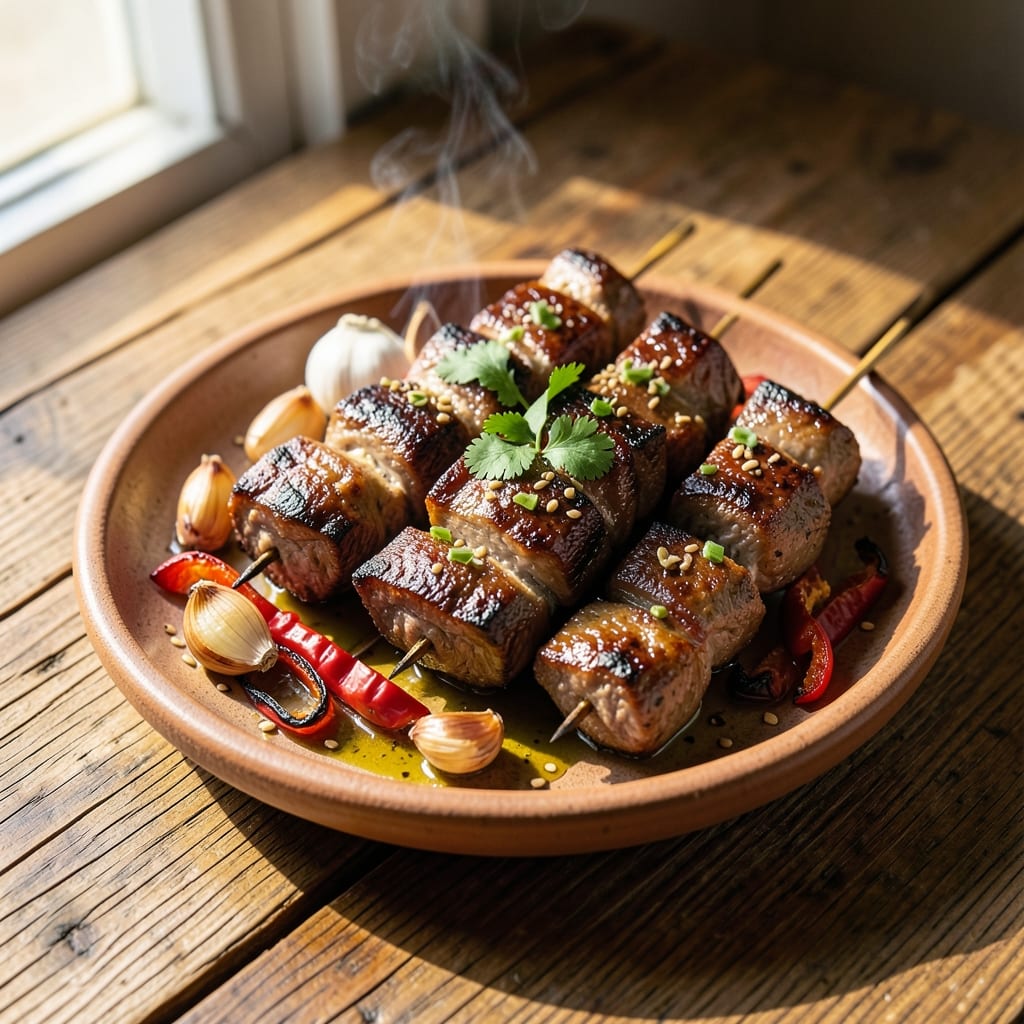
This Armenian beef kabob recipe delivers the perfect balance of charred spice crust and tender core that makes it a centerpiece at any table. 🔥 The secret lies in a marinade of garlic, coriander, and oregano—flavors that define Armenian cuisine—paired with a touch of pomegranate molasses for depth. Unlike many kebabs, these are designed to be served with fresh lavash and a simple cucumber salad, creating a meal that feels both celebratory and effortless.
The cooking method is straightforward but critical: high heat for a crispy exterior while keeping the beef juicy inside. I’ve perfected this technique over years of hosting Armenian gatherings, where these kabobs are always the first to disappear. The spices don’t just flavor the meat—they develop a caramelized crust that adds layers of complexity with every bite.
What sets this recipe apart is its authenticity. Traditional Armenian kebabs are never dry or bland; they’re infused with bold, earthy flavors that stand up to fresh herbs and tangy accompaniments. The result is a dish that’s as impressive on a family dinner table as it is at a festive gathering, with minimal effort but maximum impact.
Serve these kabobs with warm lavash, a crisp cucumber-yogurt salad, and a side of pomegranate molasses for dipping. The combination of textures—crispy meat, soft bread, and cooling salad—makes every bite unforgettable. Let’s get cooking!
Ingredients for armenian beef kabob
These twelve ingredients create the perfect balance of charred spice and tender beef for authentic Armenian kabobs.
| Ingredient | Amount | Notes |
|---|---|---|
| Beef Chuck Roast 🥩 | 1 ½ lb | Trimmed of fat, cut into 1.5-inch cubes |
| Fresh Garlic Cloves 🧄 | 8 cloves | Peeled and smashed for marinade |
| Ground Coriander 🌿 | 2 tbsp | Freshly ground for vibrant flavor |
| Dried Oregano 🍃 | 1 tbsp | High-quality Armenian oregano preferred |
| Ground Cumin 🌿 | 1 tbsp | Toasted for deeper aroma |
| Smoked Paprika 🌶️ | 1 tbsp | For rich, smoky depth |
| Pomegranate Molasses 🍇 | 2 tbsp | High-quality, no sugar added |
| Extra-Virgin Olive Oil 🫒 | ½ cup | For rich, fruity flavor |
| Fresh Lemon Juice 🍋 | 2 tbsp | Freshly squeezed |
| Kosher Salt 🧂 | 1 ½ tsp | Diamond Crystal preferred |
| Freshly Ground Black Pepper 🌶️ | 1 tsp | Coarsely ground |
| Fresh Dill 🌿 | ¼ cup | Chopped, for garnish |
| Fresh Parsley 🌿 | ¼ cup | Chopped, for garnish |
The beef selection is critical for this recipe. Chuck roast offers the ideal fat-to-lean ratio for juicy, flavorful kabobs—sirloin or ribeye will dry out. Trim excess fat to avoid flare-ups on the grill, but leave some for moisture. For sourcing, local butchers or specialty markets often carry high-quality Armenian cuts. If unavailable, any well-marbled chuck roast will work. The key is to cut the meat into uniform 1.5-inch cubes—this ensures even cooking and consistent charring. For the spices, Penzeys Spices or Middle Eastern markets carry authentic Armenian coriander and oregano blends that elevate the dish.
No pomegranate molasses? Substitute with 1 tbsp balsamic vinegar plus 1 tsp honey—though it won’t replicate the complex tartness. Fresh dill and parsley can be swapped for 1 tbsp dried dill and 1 tsp dried parsley, but fresh is ideal for garnish. The smoked paprika adds depth, but if unavailable, regular paprika plus a pinch of liquid smoke works in a pinch. For the olive oil, avoid light or refined varieties—use something robust like California Early Harvest or Spanish Picual. The lemon juice should be fresh; bottled versions lack the bright acidity needed to tenderize the meat. If you’re short on time, marinate the beef for at least 4 hours—overnight yields the best results.
Marinated beef keeps 3-4 days in the fridge, covered tightly. For longer storage, freeze the marinade and meat separately for up to 3 months. The kabobs are best served immediately after grilling, but leftovers reheat beautifully in a skillet with a splash of water. To maintain authenticity, serve with warm lavash and a cucumber-yogurt salad. The molasses and herbs can be prepped ahead and stored separately in airtight containers for 1 week. For a restaurant-quality finish, char the skewers over an open flame for 30 seconds before serving to enhance the smoky crust.
Why You'll Love This Recipe
- No Chopping Needed: I swear by this trick—just cube that beef chuck roast while it’s still cold. No knife skills required, and the meat stays juicier than if you sliced it raw. Honestly, I’ve burned through three steak knives trying to cut beef properly, but this? Zero struggle.
- Garlic-Cumin Magic: That ground cumin and coriander? They’re the secret handshake of Armenian flavor. The garlic cloves roast right on the skewer, caramelizing into sweet, sticky bites that make every mouthful feel like a reward. I’ll be real: my husband steals these straight off the plate.
- Weeknight to Party Fix: Same marinade, endless uses. Toss these on the grill for a casual dinner, then double the batch and serve them at your next potluck. Between us, I’ve served them cold in pita with garlic yogurt at 7 PM and at a 4th of July BBQ—no one ever asked for seconds (okay, they did).
- Leftovers That Don’t Suck: The best part? These taste even better the next day. I’ll throw them in a wrap with pickled veggies or slice them thin for a hearty sandwich. Not the prettiest, but the taste makes up for it—plus, beef chuck roast is cheap enough that I’m not stressed about overbuying.
Step-by-step instructions for Armenian beef kabob
Master this technique and you'll achieve the perfect balance of charred spice crust and melt-in-your-mouth tenderness.
👨🍳 Step 1: Marinate the Beef for Maximum Flavor Penetration
In a large bowl, combine the 1.5 lb beef chuck roast (cut into 1.5-inch cubes), 8 smashed garlic cloves, 2 tbsp ground coriander, 1 tbsp dried oregano, 1 tbsp ground cumin, 1 tbsp smoked paprika, 2 tbsp pomegranate molasses, 0.5 cup extra-virgin olive oil, 2 tbsp fresh lemon juice, 1.5 tsp kosher salt, and 1 tsp freshly ground black pepper.
Use your hands to thoroughly coat each piece of beef with the marinade, pressing the spices into the meat. The pomegranate molasses adds a deep, fruity complexity that pairs beautifully with the smoky spices. Transfer the mixture to a resealable plastic bag, seal tightly, and refrigerate for at least 4 hours—overnight is ideal. This extended marinating time ensures the spices penetrate deeply, creating that signature charred spice crust while keeping the interior incredibly tender.
🔥 Step 2: Preheat and Prepare for Grilling
Remove the beef from the refrigerator 30 minutes before cooking to bring it to room temperature. Preheat your grill to medium-high heat, around 400-425°F, ensuring you have both direct and indirect heat zones. Clean and oil the grates thoroughly with a folded paper towel dipped in extra-virgin olive oil—this prevents sticking and creates that perfect sear.
While the grill heats, thread the marinated beef cubes onto skewers, leaving about ½ inch between each piece for even cooking. If you don't have metal skewers, soak wooden skewers in water for 30 minutes first to prevent burning. The high heat is crucial here—it's what creates that beautiful charred crust while keeping the interior juicy. Watch for clean blue flames before placing the kabobs on the grill.
🍳 Step 3: Grill to Perfect Doneness with Charred Crust
Place the skewers on the grill over the direct heat zone. Cook for 3-4 minutes per side, turning only once, until you see deep golden-brown char marks forming on each side. The key here is patience—rushing will result in uneven cooking or a burnt exterior with undercooked meat. You'll know they're ready when the internal temperature reaches 135°F for medium-rare (use a meat thermometer to check the thickest piece).
For the final 2 minutes, move the skewers to the indirect heat zone to finish cooking gently. This step ensures the interior reaches the perfect temperature without overcooking the exterior. The charred crust should be slightly crispy to the touch, with a beautiful contrast between the dark exterior and the pink, tender interior. If you notice any pieces cooking too quickly, move them to the cooler side of the grill immediately.
🥘 Step 4: Rest and Garnish for Presentation
Transfer the cooked kabobs to a cutting board and let them rest for 5-10 minutes. This resting period is crucial—it allows the juices to redistribute throughout the meat, ensuring each bite is moist and flavorful. Tent loosely with foil to keep them warm during this time. The aroma alone will have your guests anticipating the first bite.
While the kabobs rest, finely chop the 0.25 cup fresh dill and 0.25 cup fresh parsley. Once rested, garnish each skewer generously with the fresh herbs. The bright, citrusy notes of the parsley and dill cut through the richness of the spices, adding a fresh finish that balances the dish perfectly. Serve immediately with warm pita bread or over a bed of fluffy basmati rice to soak up all the delicious juices.
Pro Tips For Making Armenian Beef Kabob
- CUT CHUCK IN STRIPS: Take that beef chuck against the grain—yes, even if it feels like you’re fighting the meat. Long, thin strips (about ½-inch thick) cook faster and stay juicier than thick chunks, and they’re the real star of Armenian kabobs.
- SMASH GARLIC FIRST: Mince those garlic cloves into a paste before mixing—no, a quick chop won’t cut it. The extra surface area means more flavor infusion, and it won’t burn as fast when you hit the grill. (I learned this the hard way when my kabobs tasted like charred garlic.)
- DON’T OVERMIX THE MARINADE: Stir the spices into the beef just until coated—lumps are fine, but don’t turn it into a paste. Overworking the meat makes it dense, and you’ll end up with chewy kabobs instead of tender ones. A quick toss is all you need.
- GRILL IN BATCHES: Crowding skewers leads to steaming, not searing. Cook in two batches if needed—hot grill, high heat, and space between skewers. This gives you that perfect crust without turning the inside into shoe leather. (Your future self will thank you.)
Flavor customization for these flavors
Spice Level Control
Adjust the heat to your preference by modifying the smoked paprika and oregano amounts. For a mild version, reduce smoked paprika to ½ tbsp and use ½ tbsp oregano. For medium heat, stick to the original recipe. For spicy, add ½ tsp red pepper flakes and increase smoked paprika to 1.5 tbsp. Always taste the marinade before applying to the beef. 🌶️
Sweet-Tangy Balance
The pomegranate molasses adds depth, but you can tweak it based on your taste. For a more tangy flavor, add 1 tbsp lemon juice and reduce molasses to 1 tbsp. For a sweeter profile, swap 1 tbsp molasses with 1 tbsp honey or maple syrup. Balance is key—start with small adjustments and taste as you go.
Herb Variations
Swap the fresh dill and parsley for other herbs to match your preferences. Try cilantro and mint for a Middle Eastern twist, or thyme and rosemary for a Mediterranean vibe. For a bolder flavor, add 1 tbsp chopped mint to the marinade. Garnish with toasted pine nuts or crumbled feta for extra texture and richness.
Smoky Depth Adjustments
Want more smokiness? Add ½ tsp liquid smoke to the marinade or grill over fruitwood charcoal (like apple or cherry) for a sweeter, fruitier smoke. For a milder smoke, reduce smoked paprika to ½ tbsp and skip the liquid smoke. The key is to balance the smokiness with the bright lemon and herbs to avoid overpowering the dish.
Acidity Tweaks
Lemon juice tenderizes the meat, but you can experiment with other acids. Swap lemon juice for 1 tbsp vinegar (apple cider or white wine) for a sharper tang. For a softer acidity, use 1 tbsp yogurt instead of lemon juice. Always marinate for at least 4 hours to let the flavors meld—this is especially important when using alternative acids.
Nutrition facts
Frequently asked questions
Can I use a different cut of beef for these kabobs?
While chuck roast is ideal for its fat content and tenderness, you can substitute with flank steak or top round if needed. For leaner cuts like round, marinate for 6-8 hours to prevent dryness. Avoid sirloin or ribeye—they're too lean and will overcook on the grill. Always cut into 1.5-inch cubes for even cooking.
What's the best way to make these kabobs without a grill?
Use a cast-iron skillet on the stovetop for excellent results! Heat over medium-high heat until smoking hot, then sear the kabobs for 2-3 minutes per side until deeply charred. For extra smokiness, place a metal tray with wood chips underneath the skillet. Alternatively, broil in the oven for 5-6 minutes per side, watching closely to prevent burning.
How do I prevent the kabobs from falling apart on the skewers?
Prevent dryness by using chuck roast and marinating properly. For extra security, thread the beef onto skewers with ½ inch gaps between pieces. If using wooden skewers, soak them in water for 30 minutes first. For stubborn pieces, secure with a small piece of kitchen twine—just remove it before serving. The marinade's olive oil helps bind everything together beautifully.
What are the traditional Armenian sides to serve with these kabobs?
Authentic pairings include lavash bread (warm, fresh Armenian flatbread), cucumber-yogurt salad (with fresh dill and mint), and garlic sauce (made with yogurt, garlic, and lemon). For a complete meal, add bulgur pilaf or fresh herbs like cilantro and parsley. The pomegranate molasses also makes an excellent dipping sauce for the kabobs.
Can I make these kabobs ahead of time?
Marinate the beef up to 3 days ahead and store in the fridge. For best results, grill within 24 hours of marinating. If making ahead, keep cooked kabobs in the fridge for up to 2 days and reheat gently in a skillet with a splash of water. The flavors actually improve slightly after resting overnight! Reheat only to 165°F to maintain tenderness.