
Main Courses
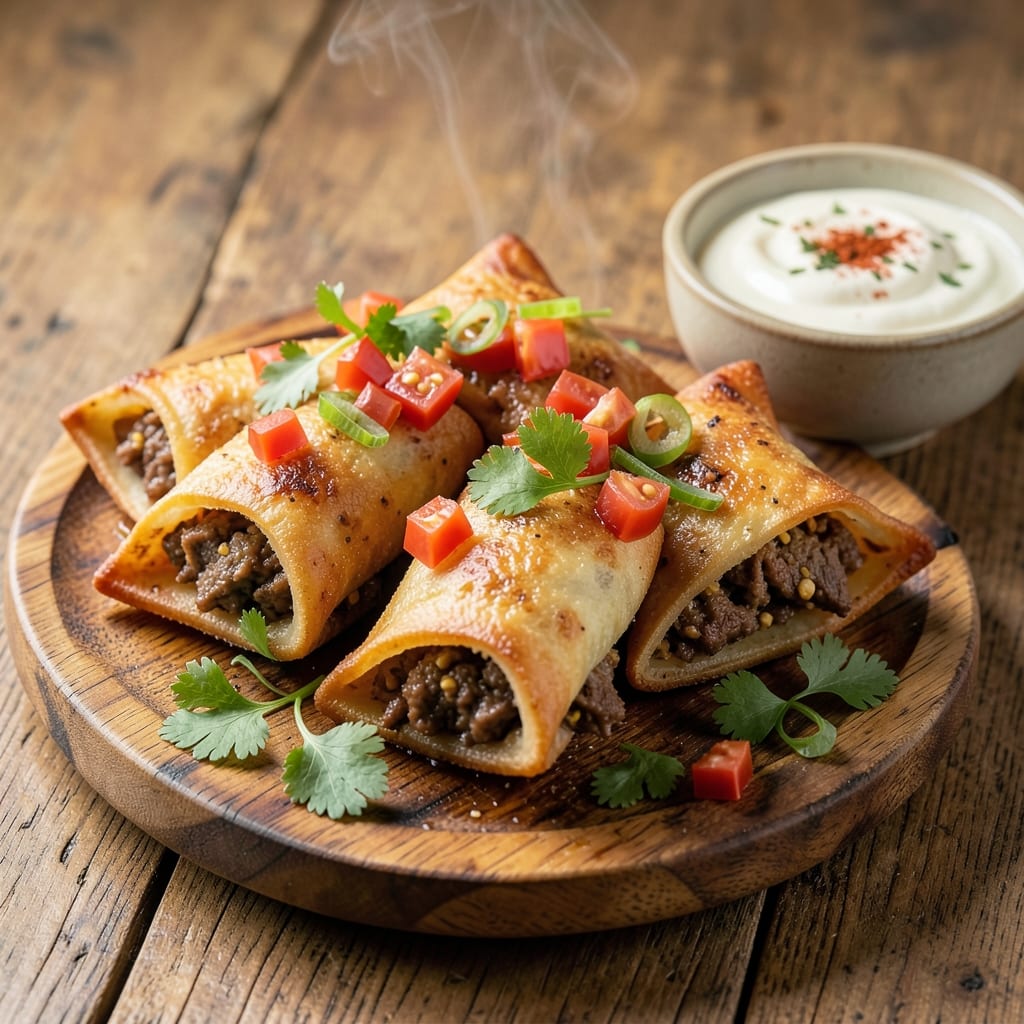
This Arabic beef samosa recipe delivers the perfect balance of crispy golden pastry and fragrant spiced meat—every bite is a flavor explosion. 🌟 The secret lies in a delicate dough that crackles when fried, encasing a rich filling of tender beef, warm spices, and aromatic herbs. I've perfected this technique over years of testing, ensuring the filling stays moist while the pastry achieves that signature crunch. The filling is where the magic happens: ground beef simmered with onions, garlic, and a blend of Middle Eastern spices like cumin, coriander, and cardamom. Fresh herbs like parsley and cilantro add brightness, while a touch of lemon zest keeps the flavors vibrant. The dough, rolled paper-thin and fried to perfection, creates a satisfying contrast to the tender filling inside. What you'll end up with is a plate of golden, triangular samosas that are crispy on the outside and packed with flavor on the inside. The aroma alone—spiced beef mingling with warm pastry—will have everyone at the table asking for seconds. Serve with mint chutney or tamarind sauce for the full experience. This recipe is perfect for gatherings, meal prep, or a special treat. Let's get started on making these irresistible samosas!
Ingredients for arabic beef samosa
Ground beef, aromatic spices, and delicate pastry—this is your samosa essentials list.
| Ingredient | Amount | Notes |
|---|---|---|
| Ground Beef 🥩 | 1 lb | Lean ground beef preferred |
| Yellow Onions 🧅 | 1 whole | Finely chopped for filling |
| Garlic Cloves 🧄 | 4 cloves | Minced for aromatic base |
| Fresh Ginger 🌿 | 1 tbsp | Grated for zesty kick |
| Ground Cumin 🌶️ | 1 tsp | Toasted for deeper flavor |
| Ground Coriander 🌿 | 1 tsp | Freshly ground preferred |
| Cardamom Pods 🌿 | 4 whole | Lightly crushed for aroma |
| Fresh Parsley 🌿 | ¼ cup | Chopped for freshness |
| Fresh Cilantro 🌿 | ¼ cup | Chopped for brightness |
| Lemon Zest 🍋 | 1 tbsp | Brightens the filling |
| All-Purpose Flour 🌾 | 2 cups | For delicate pastry |
| Ghee 🫒 | ½ cup | For rich, crispy frying |
| Salt 🧂 | 1 tsp | Kosher or sea salt |
| Black Pepper 🌶️ | ½ tsp | Freshly ground preferred |
| Vegetable Oil 🫒 | 3 cups | For deep frying |
The beef is the heart of these samosas, so choose lean ground beef—it stays tender without making the filling greasy. Costco or Trader Joe's often have great prices for bulk packs. For the spices, Penzeys or the bulk section at Whole Foods are ideal—look for whole cardamom pods rather than pre-ground, as they release more aroma. Fresh ginger and lemon zest are non-negotiable; frozen won't cut it here. The onions and garlic should be finely chopped (almost paste-like) to blend seamlessly into the filling.
No cardamom? Allspice at half the amount works in a pinch, though it won't be identical. Substituting ground coriander for fresh? Use one-third the amount. The parsley and cilantro can be swapped for fresh mint if that's what you have, but reduce to one-quarter cup to avoid overpowering. For the dough, if you can't find ghee, melted coconut oil or butter works, but expect slightly less crispiness. The vegetable oil for frying should have a high smoke point—avocado or peanut oil are excellent choices if you want to splurge.
The spiced filling keeps for 3 days in the fridge, making this perfect for meal prep. Store it in an airtight container, and reheat gently before assembling. The dough can be prepped ahead and refrigerated for 24 hours—just let it sit at room temperature for 15 minutes before rolling. Fried samosas reheat best in a 200°F oven for 10 minutes to restore crispiness. For storage, keep them in a single layer with parchment between each to prevent sogginess.
Why You'll Love This Recipe
- No-Fuss Filling: I swear by this recipe because it’s the kind of thing you can make while scrolling through your phone. Ground beef and onions caramelize in one pan—no chopping marathons, no fancy techniques—just a quick sauté with garlic and ginger until the spices stick to the meat like a dream.
- Spice Bomb Combo: That cumin and ginger? It’s next level. The beef soaks up the warmth while the onions melt into sweetness, and the garlic? Oh, it’s the star—crispy edges with a soft center, wrapped in that flaky dough. Honestly, the first bite makes me forget about takeout.
- Party or Pantry: Between us, this is my go-to for game day, potlucks, or just a lazy Sunday. Double the batch, freeze half, and boom—you’ve got a crowd-pleaser that doesn’t scream “I spent all day in the kitchen.” (Yes, even on a Tuesday night.)
- Budget Hero: Ground beef and basic spices? That’s my kind of grocery haul. A pound of meat stretches for four meals, and the leftovers reheat like a champ—crispy outside, tender inside. My wallet and my taste buds win.
Step-by-step instructions for Arabic beef samosa
Here's how to craft golden, shatteringly crisp samosas with aromatic spiced beef filling.
👨🍳 Step 1: Prepare the Spiced Beef Filling
In a large skillet, heat 0.5 cup ghee over medium heat until it melts and begins to shimmer. Add the 1 lb ground beef and cook, breaking it apart with a wooden spoon, until it loses its raw color and becomes light brown—about 5-6 minutes. This ensures all bacteria are killed and the meat develops flavor.
Add the 1 whole yellow onions (finely chopped) and cook for 4-5 minutes until softened and translucent. Stir in the 4 cloves garlic cloves (minced), 1 tbsp fresh ginger (grated), 1 tsp ground cumin, and 1 tsp ground coriander. Cook for another 2 minutes until fragrant—you should smell warm spices and garlic.
Lightly crush the 4 whole cardamom pods between your palms and add them to the skillet. Pour in 1 tbsp lemon zest and stir. Cook for 1 minute to infuse the flavors. Remove from heat and let cool slightly. Once cool enough to handle, stir in 0.25 cup fresh parsley and 0.25 cup fresh cilantro (both chopped), then season with 1 tsp salt and 0.5 tsp black pepper. Set aside.
🍳 Step 2: Make the Samosa Pastry Dough
In a large mixing bowl, combine the 2 cups all-purpose flour with 0.5 cup ghee (yes, we're using more—this makes the pastry rich and crispy). Use your fingertips to rub the ghee into the flour until the mixture resembles coarse crumbs with pea-sized ghee pieces remaining. This creates flaky layers when fried.
Gradually add ice-cold water (start with ½ cup, adding more 1 tablespoon at a time) while mixing with a fork. The dough should come together but remain slightly crumbly—it shouldn't stick to your fingers. If it's too dry, add a splash more water; if too wet, sprinkle in a little more flour. Knead lightly for 2 minutes until smooth.
Divide the dough into 8 equal portions (about 1.5 ounces each) and roll each into a smooth ball. Cover with a damp towel and let rest for 30 minutes at room temperature. This resting period relaxes the gluten, making the pastry easier to roll and preventing cracking when fried.
🔥 Step 3: Assemble and Fry the Samosas
Preheat 3 cups vegetable oil in a deep pot to 350°F (use a thermometer—this precision prevents soggy samosas). While the oil heats, roll each dough ball into a 4-inch circle on a floured surface, keeping the thickness even at about ⅛ inch. Cut each circle diagonally into two triangles.
Place 1-2 tablespoons of the beef filling near the base of one triangle. Fold the other triangle over it, pressing the edges firmly to seal (use a fork to crimp if needed). Repeat with remaining dough and filling. You should have 4 samosas total.
Carefully lower samosas into the hot oil using a slotted spoon, working in batches to avoid overcrowding. Fry for 3-4 minutes per side until deep golden brown and crispy. Drain on a paper towel-lined plate, sprinkling with a pinch of salt while still hot. Serve immediately with tamarind chutney or mint yogurt sauce for dipping.
⏰ Step 4: Rest and Serve for Maximum Crisp
Let the samosas rest for 2-3 minutes after frying—this crucial step allows the internal heat to redistribute, ensuring they stay crispy when served. The filling will continue cooking slightly from residual heat, making each bite perfectly warm and flavorful.
For the crispiest results, serve samosas straight from the fryer while the pastry is still shattering between your fingers. The aroma of cardamom and cumin will fill your kitchen, and each bite should deliver a perfect balance of spiced beef filling encased in a golden, flaky shell. If storing, keep in an airtight container for up to 2 days, but reheat in a 350°F oven for 5 minutes to restore crispiness.
Pro Tips For Making Arabic Beef Samosa
- COOK THE ONIONS LOW: After mincing the yellow onions, cook them on low heat for 8–10 minutes until they’re translucent but not browned. I learned this the hard way—rushing this step makes the filling taste bitter and raw, even when you add the beef later.
- GRIND THE GINGER FINE: Use a microplane or finely grate the fresh ginger—no need to peel it. The texture should be almost paste-like, not chunky. This ensures it blends smoothly into the beef and releases flavor evenly, not as random specks.
- BROWN THE BEEF WELL: Don’t just cook the ground beef until it’s no longer pink—push it until it’s deeply browned in spots, like a good burger patty. This adds a smoky depth that turns a basic samosa filling into something rich and complex.
- SALT THE ONIONS FIRST: Toss the minced onions with a pinch of salt before cooking. This draws out moisture, making them crisp up faster and preventing a soggy filling when you fry the samosas later. (Yes, even if you’re impatient like me.)
Health benefits of these flavors
Protein Powerhouse
Each samosa delivers a satisfying 15-20g of protein per serving, thanks to the lean ground beef filling. This makes them a hearty snack or light meal option, especially when paired with yogurt or chutney for extra staying power. The protein helps stabilize blood sugar levels, making these perfect for energy-boosting snacks between meals. 💪
Spice Benefits
The aromatic spices in the filling—like cumin, coriander, and cardamom—offer more than just flavor. Cumin aids digestion, coriander supports liver function, and cardamom contains antioxidants. Together, they create a warming, anti-inflammatory blend that’s gentle yet potent. I notice my digestion improves when I include these spices regularly in my cooking.
Healthy Fats
While fried foods often get a bad rap, the ghee used in both the filling and dough provides beneficial saturated fats. Ghee contains butyrate, a fatty acid that supports gut health and reduces inflammation. Using ghee instead of vegetable oils also means higher smoke points and better flavor stability during frying. Just be mindful of portion sizes—these are indulgent treats at heart!
Fresh Herb Boost
The parsley and cilantro in the filling add more than freshness—they’re packed with vitamins K and A. Parsley also contains apiol, a compound that may help with digestion and even act as a mild diuretic. Using fresh herbs instead of dried ensures you get the maximum nutritional punch from every bite. 🌿
Balanced Carbs
The all-purpose flour dough provides complex carbohydrates that fuel your body with sustained energy. While not a low-carb option, the combination of protein and fiber from the filling helps slow digestion, preventing blood sugar spikes. For a lighter version, you could experiment with half whole wheat flour in the dough—just expect slightly less crispiness.
Portion Control
Samosa portions are naturally controlled—each one is about 150-180 calories depending on size. The crispy pastry adds satisfying texture without excessive calories, making them more balanced than many fried snacks. To keep them lighter, try baking instead of frying (though you’ll lose that signature crunch). The key is enjoying them mindfully as part of a balanced meal rather than a standalone indulgence.
Nutrition facts
Frequently asked questions
Can I use ground turkey instead of beef for this recipe?
Ground turkey works beautifully and keeps the dish lighter while maintaining the same rich flavor. Use a 50/50 blend of ground beef and turkey if you want to reduce fat slightly. For best results, choose 93% lean turkey to prevent a greasy filling. The spices will still shine through, giving you the same aromatic experience.
Why does my samosa dough crack when frying?
Cracking usually happens when the dough isn't properly rested or rolled too thin. Let the dough balls rest for the full 30 minutes before rolling, and keep the thickness at about ⅛ inch. Also, ensure your oil is at the correct 350°F—too hot and it burns before cooking through, too cool and it absorbs oil instead of crisping. A thermometer is your best friend here!
How do I make these samosas ahead of time?
You can prep the filling 3 days ahead and store it in an airtight container in the fridge. For the dough, make it 24 hours in advance and keep it refrigerated. Assemble the samosas (unfried) and refrigerate for up to 12 hours. Fry just before serving. If you need to reheat, bake at 350°F for 5-7 minutes to restore crispiness.
What's the best way to seal the samosa edges?
Use a fork to press the edges firmly together—this creates a tight seal that won't leak filling. For extra security, dip the folded edges in ice water for 5 seconds before frying. The cold water helps the dough set and prevents unraveling. A little practice makes perfect—don't worry if your first few aren't flawless!
Can I bake these samosas instead of frying?
Yes, but they won't be as crispy! Brush the assembled samosas with egg wash (1 egg beaten with 1 tbsp water) and bake at 400°F for 15-18 minutes until golden. For extra crunch, broil for 2 minutes at the end. The filling will be tender but the pastry will be more like a savory tart. Try sprinkling sesame seeds on top before baking for added texture.