
Main Courses
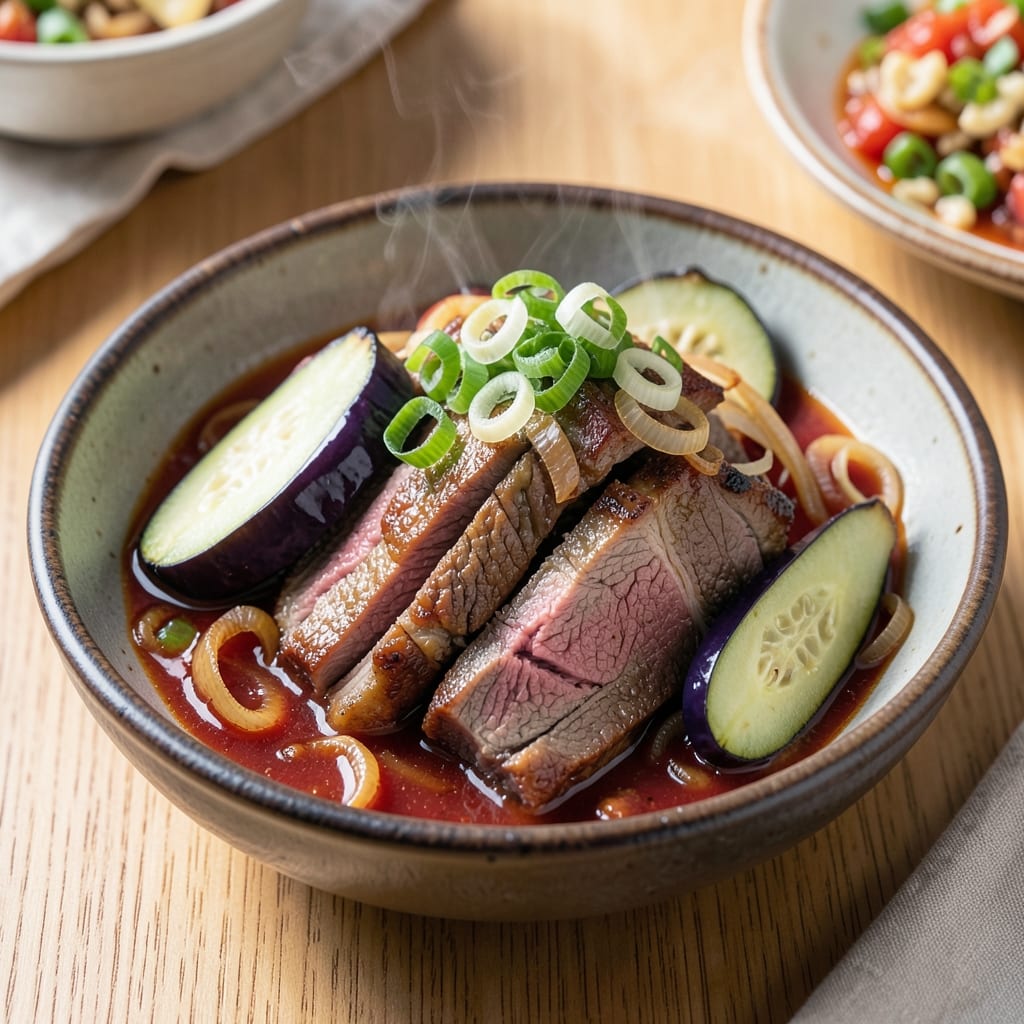
Ampalaya with beef is a pinoy recipe that delivers the comforting warmth of Filipino home cooking in every hearty spoonful. This classic Pinoy stew transforms bitter eggplant into tender, flavorful bites through slow simmering with rich tomato sauce and savory beef. The secret lies in balancing the dish's signature bitterness with just the right amount of sweetness and umami—creating a harmony that makes this stew a staple in Filipino households.
What sets this recipe apart is the traditional technique of first sautéing the beef until deeply browned, which builds a rich, caramelized foundation for the sauce. The eggplant is cooked just until tender-crisp, preserving its texture while absorbing the deep flavors of garlic, onions, and tomatoes. This method ensures every bite delivers that perfect balance of meaty richness and vegetable tenderness.
The result is a hearty stew with a velvety tomato base that coats every ingredient, making it a satisfying meal on its own or paired with steamed rice. The dish's depth of flavor comes from slow simmering, allowing all the components to meld together into a cohesive, comforting dish that feels like a warm embrace in a bowl.
Perfect for family gatherings or cozy weeknight dinners, this recipe stays true to its roots while being adaptable to modern kitchens. The combination of tender beef, tender eggplant, and aromatic spices creates a dish that's both nostalgic and deeply satisfying—exactly what makes Filipino comfort food so beloved.
Ingredients for ampalaya with beef pinoy
Filipino home cooking essentials transformed into a rich, aromatic beef and eggplant stew.
| Ingredient | Amount | Notes |
|---|---|---|
| Beef Chuck Roast 🥩 | 1 ½ lb | Pre-soaked in salted water for 30 mins |
| Ampalaya (Filipino Eggplant) 🍆 | 2 medium | Whole, unpeeled, cut into 1-inch pieces |
| Onions 🧅 | 1 whole | Yellow or red, sliced into half-moons |
| Garlic Cloves 🧄 | 8 cloves | Minced finely for aromatic base |
| Fresh Ginger 🌿 | ½ inch | Thinly sliced lengthwise (about 2 pieces) |
| Canned Tomato Sauce 🍅 | 1 cup | San Marzano preferred for sweetness |
| Tomatoes 🍅 | 4 medium | Roma or vine-ripened, diced |
| Bay Leaves 🌿 | 2 whole | Dried, for deep aromatic notes |
| Soy Sauce 🥄 | 2 tbsp | Filipino or Japanese preferred |
| Sugar 🍚 | 1 tbsp | White granulated, balances acidity |
| Black Peppercorns 🌶️ | 10 whole | Crushed for heat and aroma |
| Salt 🧂 | 1 ½ tsp | Diamond Crystal preferred |
| Olive Oil 🫒 | 2 tbsp | Extra-virgin for high smoke point |
| Water 💧 | 2 cups | For initial beef simmer |
The beef is non-negotiable—chuck roast delivers that melt-in-your-mouth tenderness when slow-cooked. Look for cuts with good marbling at Filipino markets or well-stocked Asian grocery stores like 99 Ranch or H Mart. Ampalaya (Filipino eggplant) is key—its unique bitterness mellows beautifully during cooking. If you can't find it, regular eggplant works in a pinch, but the texture and flavor won't be identical. The ginger should be fresh and fibrous—avoid powdered substitutes as they lack depth. For the tomatoes, San Marzano cans provide the sweetness Filipino recipes rely on, but any high-quality canned tomatoes will do.
No soy sauce? Coconut aminos or tamari work as substitutes, though the flavor profile shifts slightly. Short on sugar? Maple syrup or brown sugar can replace at a 1:1 ratio. The bay leaves are traditional but optional—if you skip them, add an extra pinch of ground allspice or cloves for warmth. For the tomatoes, fresh Roma tomatoes are ideal, but canned crushed tomatoes in a pinch will save time. The black peppercorns should be freshly crushed—pre-ground loses its aromatic punch. If you're using pre-minced garlic from a jar, add an extra clove as it loses potency during processing.
This stew develops deeper flavor over time—reheat gently in the sauce rather than microwaving. Keeps for 4-5 days in the fridge, though it tastes best within 24 hours. Freezes beautifully for up to 3 months. For meal prep, portion into containers with rice—the sauce reheats perfectly and coats each grain. Leftovers make excellent lunches, especially when paired with Filipino atchara (pickled papaya) for that authentic tangy contrast.
Why You'll Love This Recipe
- One-Pot Magic: I swear by this—just toss everything into one pot, and the beef melts into tender perfection while the ampalaya soaks up all that savory ginger-garlic goodness. No fancy steps, no extra dishes.
- Umami Bomb: That beef chuck roast? Slow-cooked until it’s fall-apart tender, then simmered with onions and garlic until the house smells like a lazy Sunday lunch. The ampalaya adds this weirdly addictive bite—slightly crisp, slightly creamy—that makes it impossible to stop eating.
- Leftovers That Win: Between us, this dish begs for seconds—and thirds. The flavors only get richer overnight, so I always make double. Pack it for work, freeze portions, or just reheat it for a no-stress dinner. (Yes, even on a Tuesday night.)
- Budget Hero: Beef chuck roast stretches forever in this recipe, and ampalaya is cheaper than regular eggplant. Honestly, it’s my go-to when I need a hearty, filling meal without breaking the bank. Plus, the ginger and garlic are pantry staples—minimal extra cost.
Step-by-step instructions for ampalaya with beef Pinoy recipe
Transform tough beef chuck into melt-in-your-mouth tenderness with this Filipino classic.
Prepare and Sear the Beef Chuck Roast
Pat the 1.5 lb Beef Chuck Roast thoroughly dry with paper towels—this ensures maximum browning. In a large Dutch oven, heat 2 tbsp Olive Oil over medium-high heat until shimmering. Place the beef in the pot and sear on all sides for 4-5 minutes total, turning occasionally, until deeply browned. This caramelization builds rich flavor that infuses the stew.
Remove the beef and set aside. In the same pot, add the 1 whole Onions sliced into half-moons and cook for 3-4 minutes until softened and lightly golden. This step develops the onion's natural sweetness, which balances the stew's acidity later. Add the 8 cloves Garlic Cloves and 0.5 inch Fresh Ginger sliced lengthwise, cooking for 30 seconds until fragrant—this releases their aromatic oils into the base.
Build the Tomato-Ginger Base
Add the 4 medium Tomatoes diced and the 1 cup Canned Tomato Sauce to the pot. Stir in the 2 tbsp Soy Sauce, 1 tbsp Sugar, 10 whole Black Peppercorns (lightly crushed), and 2 whole Bay Leaves. Pour in the 2 cups Water and bring to a gentle simmer. The sugar helps balance the acidity from the tomatoes while the soy sauce adds umami depth.
Return the seared beef to the pot, ensuring it's fully submerged. Add the remaining 1.5 tsp Salt and bring to a rolling boil. Once boiling, reduce heat to low and cover partially. Simmer for 1 hour, stirring occasionally, until the beef is fork-tender. The liquid should reduce slightly, creating a thick, flavorful base. Here's the thing—don't peek under the lid during this time, as opening it releases steam and lengthens cooking time.
Cook the Ampalaya Until Tender
After the beef has simmered for 1 hour, add the 2 medium Ampalaya (Filipino Eggplant) cut into 1-inch pieces. The eggplant's unique texture and mild bitterness make this dish special. Stir gently to distribute the pieces evenly throughout the stew. Return to a simmer and cook uncovered for an additional 20-25 minutes until the eggplant is fork-tender but still holds its shape.
Taste the stew and adjust seasoning if needed—you may need a pinch more salt or sugar to balance the flavors. The eggplant should absorb the rich tomato-ginger broth while maintaining its integrity. If the stew appears too thin, simmer uncovered for an additional 5-10 minutes to reduce the liquid to your desired consistency. The key is achieving a balance where the eggplant is tender but not mushy, and the beef is falling-apart tender.
Rest and Serve for Maximum Flavor
Once the eggplant is perfectly tender and the stew has reached your desired thickness, remove the pot from heat. Let the stew rest for 10 minutes before serving. This resting period allows the flavors to meld and the beef to reabsorb any juices that may have escaped during cooking. Skim off any excess fat that has risen to the surface if desired.
Serve the Ampalaya With Beef hot, ladled over steamed white rice. The combination of tender beef, slightly bitter eggplant, and rich tomato-ginger sauce creates a harmonious balance of flavors. For an authentic touch, garnish each serving with a sprinkle of freshly cracked black pepper and a drizzle of the cooking juices. This dish is best enjoyed fresh, as the flavors continue to develop even after serving.
Pro Tips For Making Ampalaya With Beef Pinoy
- Sear the Beef First: I learned this the hard way—skipping the sear means flavor hiding in plain sight. Get that chuck roast screaming hot in a dry pan for 3-4 minutes per side until it’s deep brown, then pull it out. The crust locks in juices and carries the ginger-soy punch through every bite.
- Slice Ampalaya Thinly: Thick chunks stay tough; thin slices melt into the sauce. Cut the ampalaya into ¼-inch strips (yes, even the fibrous ends—just trim the woody core) and blanch for 2 minutes first. This softens them without turning to mush later.
- Deglaze with Soy-Ginger Mix: Don’t just splash water after searing—use a 1:1 mix of soy sauce and freshly grated ginger (about 2 tablespoons each) to scrape up the browned bits. The ginger’s heat builds as it cooks, while the soy cuts through the beef’s richness. (Pro move: Add a splash of vinegar at the end for brightness.)
- Simmer Low and Slow: After adding the beef back to the pot, drop the heat to a bare simmer—no boiling, no rushing. Ampalaya needs 45-60 minutes to absorb flavors, not 20. Cover loosely and let the steam work its magic; the beef will fall apart on its own. (I know, I know—you’re used to fast meals, but this dish rewards patience.)
Essential equipment for ampalaya with beef pinoy
Dutch Oven Essentials
A large Dutch oven is non-negotiable for this recipe—it needs to handle the beef's deep sear and the stew's long simmer. I recommend a 5-6 quart enameled cast iron Dutch oven like the Le Creuset Signature or Lodge Pre-Seasoned for even heat distribution. The deep sides prevent spills during stirring, and enameled coating makes cleanup easier. If you don’t own one, a heavy-bottomed stainless steel pot with similar capacity works too. 🔥
Knife and Cutting Board
For the ampalaya (Filipino eggplant), a sharp 8-inch chef’s knife is ideal—its size lets you cut through the eggplant’s tough skin while maintaining control. I use a Wüsthof Classic for precision. Pair it with a cutting board that won’t warp under wet ingredients (a bamboo or plastic board works best). Prep all aromatics—onions, garlic, and ginger—on the same board to keep your workspace organized. A microplane for ginger ensures fine, even slices that dissolve into the sauce beautifully.
Measuring Tools
Filipino cooking relies on precise balances of salt, sugar, and soy sauce, so accurate measuring is key. Use a stainless steel measuring spoon set for the 2 tbsp soy sauce and 1 tbsp sugar, and a digital kitchen scale for the 1.5 lb beef (if your recipe calls for precise cuts). For liquids, a clear glass measuring cup lets you gauge the 2 cups water without spills. Pro tip: Keep a small bowl nearby to catch excess liquid when measuring wet ingredients like tomato sauce.
Wooden Spoon and Ladle
A heat-resistant wooden spoon (like OXO Good Grips) is perfect for stirring the stew without scratching the Dutch oven’s surface. Its flat bottom helps scrape up browned bits from the seared beef and onions, maximizing flavor. For serving, a long-handled ladle (I prefer Mercer Culinary) lets you scoop the stew directly over rice without spilling. Avoid metal utensils—they can react with the acidic tomato base and alter the dish’s delicate balance of flavors.
Instant-Read Thermometer
While not strictly necessary, an instant-read thermometer (like the Thermoworks ThermoPop) ensures the beef reaches fork-tender perfection at 203°F internal temperature. Insert it into the thickest part of the beef—if it pulls apart easily, it’s ready. This tool also helps gauge the eggplant’s doneness: aim for 185°F for tender-crisp texture. Skipping this step risks overcooking the beef or leaving the eggplant underdone, which ruins the dish’s harmony. 💡
Steamer Basket and Rice Cooker
Serving this stew with steamed white rice is traditional, and a steamer basket (like Farberware) fits perfectly over your Dutch oven’s lid. For hands-off rice, a multi-functional rice cooker (such as Zojirushi NS-LAC10) doubles as a warmer for leftovers. Preheat the rice cooker to steam the rice while the stew simmers—this keeps your kitchen workflow smooth. Garnish the rice with a sprinkle of toasted garlic or a drizzle of calamansi juice for that authentic Pinoy touch.
Nutrition facts
Frequently asked questions
Can I substitute regular eggplant for ampalaya?
Yes, but expect some differences! Regular eggplant lacks ampalaya's unique bitterness and firmer texture. For best results, choose a long, dark purple eggplant and cut it into similar 1-inch pieces. Add a pinch of 1/4 tsp baking soda to the water when boiling to reduce bitterness. The flavor won't be identical, but it'll still taste delicious with the rich tomato-beef sauce.
How do I make this stew less sour?
The acidity comes from tomatoes and soy sauce. To balance it, add 1 extra tbsp sugar or 1 tsp honey when building the sauce. For a more traditional approach, stir in 1/2 cup coconut milk at the end to mellow the flavors. Taste as you go—Filipino cooking relies on balancing sour, sweet, and salty, so adjust gradually.
Can I make this recipe in an Instant Pot? Sear the beef first in a skillet, then transfer to your Instant Pot with all ingredients except the ampalaya. Cook on high pressure for 30 minutes, then add the eggplant and cook an additional 5 minutes. The pressure cooking time is shorter, but the flavors develop beautifully. Just
What's the best way to store leftovers?
Store in an airtight container in the fridge for up to 4-5 days. The flavors actually improve overnight! For reheating, warm gently on the stove over medium-low heat with a splash of water to prevent drying. Avoid microwaving—it can make the eggplant mushy. Freeze for up to 3 months by portioning into containers with rice for easy reheating.
Why does my ampalaya turn bitter?
Bitterness comes from undercooking or using unripe ampalaya. Always choose firm, glossy eggplants with no soft spots. Cut into 1-inch pieces and simmer uncovered for the full 20-25 minutes—this ensures the bitterness mellows completely. If needed, add a pinch of sugar or a splash of vinegar to counteract any lingering bitterness at the end.