
Main Courses
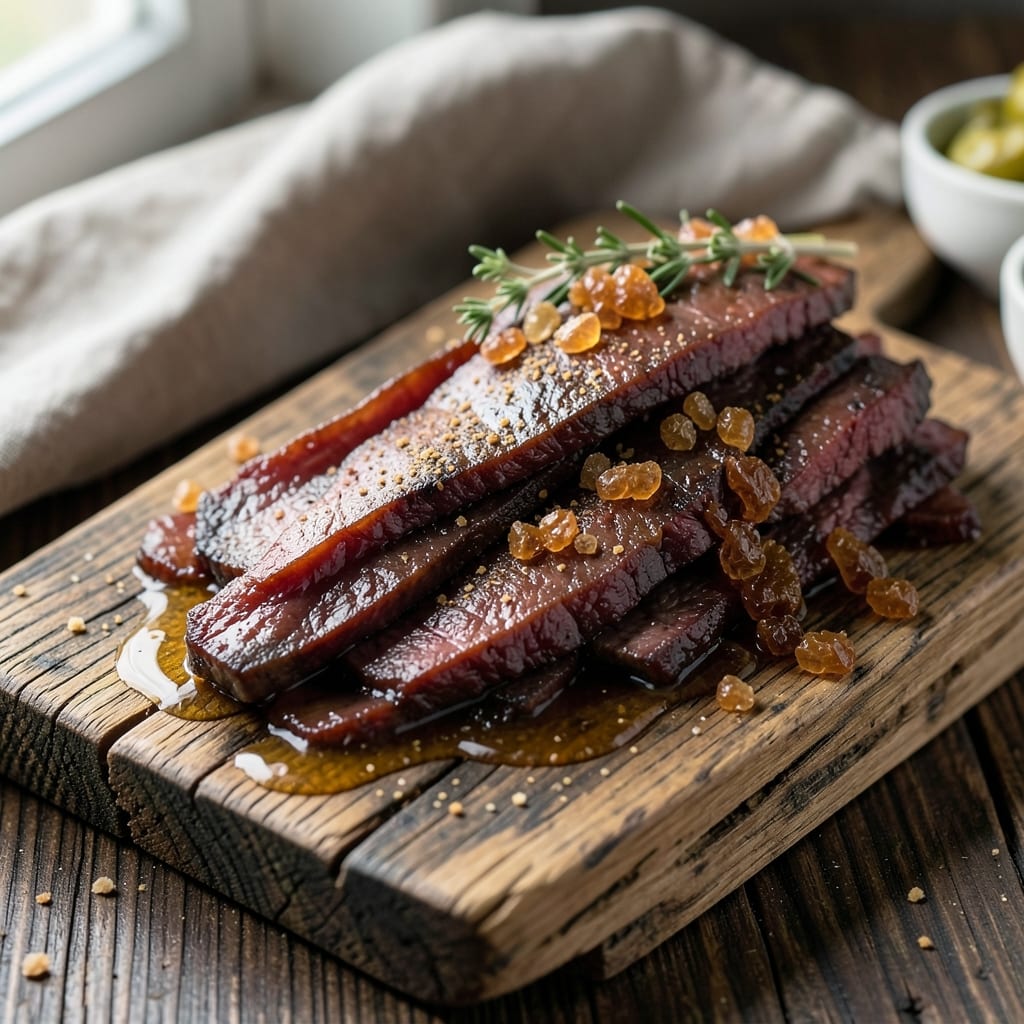
This amazing beef jerky recipe transforms tough cuts into melt-in-your-mouth strips with smoke-infused tenderness—no guilt, no regrets. The secret lies in selecting the right cut (top round or flank steak) and marinating for 24 hours to tenderize while building deep flavor. Whether you smoke it low-and-slow or dehydrate for crispiness, the result is restaurant-quality jerky you can make at home.
What sets this recipe apart is the balance of zero-guilt ingredients: lean protein, natural preservatives (like Worcestershire and vinegar), and bold spices that keep it safe to store for months. The marinade—sweet, savory, or spicy—penetrates every fiber, ensuring each bite delivers complex flavor without sacrificing texture. No shortcuts here; this is jerky made the way it should be.
By the time you’re done, you’ll have tender, chewy strips with a perfect snap—no rubbery aftertaste, no blandness. The key is controlling moisture loss during the drying process, whether you use a smoker, dehydrator, or even your oven. This isn’t just jerky; it’s a foolproof method that turns a simple protein into a snack you’ll crave.
From trail mix to camping fuel, this jerky keeps for months in the pantry, making it the ultimate make-ahead snack. Ready to master the art? Let’s get started—your taste buds (and hiking trips) will thank you.
Ingredients for amazing beef jerky
Lean protein meets bold flavors—here's what transforms tough beef into restaurant-quality jerky.
| Ingredient | Amount | Notes |
|---|---|---|
| Top Round Roast Beef 🥩 | 2 lb | Tough cut, trimmed of fat |
| Apple Cider Vinegar 🍎 | ½ cup | Natural preservative, tangy base |
| Worcestershire Sauce 🍶 | ¼ cup | Umami depth, fermented flavor |
| Brown Sugar 🍚 | ½ cup | Sweetness, caramelization |
| Smoked Paprika 🌶️ | 2 tbsp | Smoky depth, essential flavor |
| Garlic Powder 🧄 | 2 tsp | Savory punch, aromatic |
| Onion Powder 🧅 | 2 tsp | Sweet base, depth of flavor |
| Ground Black Pepper 🌶️ | 1 tbsp | Freshly ground for heat |
| Salt 🧂 | 1 tbsp | Kosher salt, enhances flavor |
| Black Coffee ☕ | ½ cup | Natural tenderizer, bold flavor |
| Granulated Sugar 🍬 | ¼ cup | Balances sweetness, caramelizes |
| Liquid Smoke 🌫️ | 1 tbsp | Smoky aroma, essential for depth |
The beef is non-negotiable here. Top round or flank steak is ideal—lean enough for jerky but still packed with flavor. Costco or local butchers often carry top round pre-cut into strips, saving you time. If buying whole, freeze the roast and slice it yourself against the grain for that signature chewy texture. Look for cuts with good marbling, but trim any visible fat—it’ll make your jerky greasy. The 24-hour marinade is where the magic happens, so don’t rush this step.
No Worcestershire? Soy sauce plus a splash of balsamic can mimic that umami punch, though it won’t be identical. Swapping brown sugar for coconut sugar keeps it vegan-friendly, though the flavor will be slightly less caramelized. Trader Joe’s has great bulk spices if you’re stocking up—just check the expiration dates, as old spices lose their kick. The liquid smoke is optional but adds that authentic campfire aroma. If you skip it, boost the smoked paprika to 3 tbsp instead. And yes, the coffee is intentional—it tenderizes the meat and adds a subtle bitterness that balances the sweetness.
Marinade keeps for 5 days in the fridge if you’re prepping ahead, though fresh is always better. The beef strips should be 1/4-inch thick for even drying—thicker slices need longer drying time. Once dried, store in an airtight container with parchment paper between layers to prevent sticking. Properly made, this jerky stays good for up to 6 months in the pantry. For extra shelf life, vacuum-seal portions—game-changer for camping trips or long hikes.
Why You'll Love This Recipe
- No-Fuss Prep: Honestly, this jerky takes less effort than ordering takeout. Slice the top round thin, toss it in a marinade of apple cider vinegar and Worcestershire, and let the oven do the work—no fancy slicers or hours of drying required.
- Sweet-Smoky Magic: That balance of brown sugar and smoked paprika? It’s what turns tough beef into something dangerously addictive. The vinegar keeps it tender, while the paprika gives it that deep, campfire-like flavor that sticks with you.
- Snack Attack Ready: Between us, this is my go-to for road trips, tailgates, or just keeping the kids happy after school. It’s shelf-stable, portable, and—let’s be real—way better than store-bought jerky that’s basically cardboard.
- Budget Winner: A pound of top round costs less than a fancy cut, and the marinade ingredients are pantry staples. I’ve made batches for a week of lunches, and it’s still cheaper than buying pre-packaged jerky that’s half the size. Win.
Step-by-step instructions for smoke-infused beef jerky
Here's how to transform tough beef into melt-in-your-mouth jerky using these bold flavors.
Prepare the Beef for Maximum Tenderness
Begin by trimming all visible fat from the 2 lb Top Round Roast Beef using a sharp boning knife. The lean cut needs this prep to ensure even cooking and proper flavor penetration. Cut the beef into ¼-inch thick strips against the grain—this creates shorter muscle fibers that chew more tenderly. Arrange the strips on a rimmed baking sheet and let them sit uncovered in the refrigerator for 24 hours to dry slightly. This drying step is crucial; it helps prevent a gummy texture in the final jerky.
While the beef dries, make your marinade by combining the 0.5 cup Apple Cider Vinegar, 0.25 cup Worcestershire Sauce, 0.5 cup Brown Sugar, 2 tbsp Smoked Paprika, 2 tsp Garlic Powder, 2 tsp Onion Powder, 1 tbsp Ground Black Pepper, 1 tbsp Salt, 0.5 cup Black Coffee, 0.25 cup Granulated Sugar, and 1 tbsp Liquid Smoke in a large bowl. Mix thoroughly until the brown sugar and granulated sugar dissolve completely. The coffee and vinegar work together as natural tenderizers while the smoked paprika and liquid smoke deliver that signature campfire flavor.
Marinate for Deep Flavor Infusion
Transfer the dried beef strips to a resealable plastic bag and pour the marinade over them. Seal the bag tightly, removing as much air as possible, then massage the bag gently to ensure every strip is coated. Place the bag in the refrigerator and marinate for 12-24 hours. This long soak breaks down tough muscle fibers and allows the marinade to penetrate deeply. I like to turn the bag over halfway through to ensure even coating—this prevents any strips from staying pale or underseasoned.
Here's the thing—don't skip this step. The combination of acid (vinegar and coffee) and sugar creates a chemical reaction that tenderizes the beef while building complex flavors. You'll notice the beef absorbs most of the marinade, becoming rich and aromatic. If you're short on time, you can marinate for just 4 hours, but the texture and flavor won't be as impressive.
Pre-Dry the Beef for Perfect Texture
After marinating, remove the beef from the refrigerator and let it sit at room temperature for 30 minutes. This equalizes the temperature for even cooking. Line two rimmed baking sheets with parchment paper and arrange the beef strips in a single layer, ensuring they don't overlap. Place the baking sheets in a 200°F oven for 2-3 hours, flipping the strips once after 1 hour. You're looking for the beef to become dry and slightly leathery to the touch—this pre-drying prevents a chewy final product.
Check the beef periodically. It's ready when the surface feels firm and slightly tacky, not sticky. The edges should begin to curl slightly, indicating moisture loss. This step is often overlooked, but it's what separates store-bought jerky from restaurant-quality. If you rush it, your jerky will end up gummy; if you overdo it, it'll be too brittle. Aim for that perfect balance where it's dry but still flexible.
Bake to Smoky Perfection
Increase your oven temperature to 175°F—this low-and-slow approach ensures even cooking without drying out the jerky. Place the pre-dried beef strips back on the baking sheets and bake for 3-4 hours, flipping them every 30 minutes. The jerky is done when it's completely dry to the touch, slightly firm, and no longer sticky. You'll know it's ready when it snaps cleanly when bent and the internal temperature reaches 160°F in the thickest piece.
Watch closely during the final hour. The jerky should darken to a rich amber color with a glossy sheen from the caramelized sugars. If it starts to darken too quickly, tent it loosely with foil to prevent burning. The smoky aroma should fill your kitchen—this is where all those flavors come together. Let the jerky cool completely on the baking sheets before handling, as it will continue to firm up as it cools.
Rest and Store for Maximum Flavor
Once completely cooled, transfer the jerky to an airtight container or resealable bag. Store it in the refrigerator for up to 2 weeks or freeze for 3 months for maximum freshness. The flavors actually improve over time as the spices meld together. When ready to eat, let the jerky come to room temperature for 10-15 minutes before serving—this enhances the texture and makes each bite more satisfying.
This jerky delivers on the promise of tenderness with that perfect smoky depth. Each piece should be flexible but not brittle, with a rich umami flavor from the Worcestershire and coffee, a touch of sweetness from the caramelized sugars, and that essential smokiness from the paprika and liquid smoke. Cut into ¼-inch strips for easy snacking, and enjoy the guilt-free protein boost anytime.
Pro Tips For Making Amazing Beef Jerky
- Freeze the Meat First: Pop that top round into the freezer for 24 hours before slicing—thin, even strips are non-negotiable for perfect jerky. I learned this the hard way when my first batch came out thick and chewy, no matter how long I cooked it. ---
- Marinate Overnight: Don’t rush the soak—let the beef sit in the apple cider vinegar and Worcestershire mix for at least 12 hours, ideally 24. The acid tenderizes the meat while the sugar and paprika penetrate deeper, giving you that deep, smoky flavor that’s worth the wait. ---
- Dry the Strips Well: Pat those slices dry with paper towels before hitting the dehydrator or smoker—moisture is the enemy of crisp jerky. I used to skip this, and my jerky always turned out soggy, no matter how long I cooked it. ---
- Start Hot, Finish Low: Kick the dehydrator or oven up to 160°F for the first hour to drive off surface moisture fast, then drop to 140°F until it’s firm but not brittle. I was skeptical until I tried it—now my jerky has that perfect chewy snap without drying out.
Pro cooking tips for this recipe
Cut Consistency Matters
Slice your beef strips to exactly ¼-inch thickness—no thicker, no thinner. Use a sharp boning knife or mandoline slicer for precision. Thicker slices take longer to dry and may end up chewy, while thinner ones can over-dry and turn brittle. I swear by my OXO Good Grips mandoline for uniform cuts—it’s a game-changer for jerky texture. 🔪
Marinate Like a Pro
Massage the marinade into the beef strips by hand—don’t just pour it over and walk away. The friction helps break down fibers faster. I like to use a resealable vacuum bag (like FoodSaver) to remove excess air, ensuring maximum flavor penetration. If you’re short on time, 4 hours is the absolute minimum, but 24 hours delivers restaurant-quality results. Pro tip: Turn the bag every 6 hours for even coating.
Pre-Drying is Non-Negotiable
Skipping the 200°F pre-drying step is the fastest way to end up with gummy jerky. The goal here is to remove surface moisture before the final drying phase. Use a wire rack on a baking sheet to allow air circulation on all sides—this prevents soggy spots. If your kitchen gets humid, prop the oven door open 1 inch to help evaporate moisture faster. 🌡️
Low-and-Slow Wins
Never rush the 175°F final drying phase. This is where jerky goes from "edible" to "restaurant-quality." Use an oven thermometer to verify your oven’s accuracy—many run 25°F hotter than set. Flip strips every 30 minutes to ensure even drying. If your jerky starts darkening too quickly, tent it with foil to prevent burning while maintaining moisture control.
Test for Doneness
The 160°F internal temperature check is your best friend. Use a meat thermometer inserted into the thickest strip—jerky is done when it snaps cleanly when bent and feels dry to the touch. Over-drying leads to brittleness, while under-drying results in a sticky, gummy mess. Trust the thermometer, not the color—some batches darken faster than others. ✨
Storage Secrets
Store jerky in airtight containers with parchment paper between layers to prevent sticking. For long-term storage, vacuum-seal portions—this extends shelf life to 6 months in the pantry. If you notice any strips feeling damp after opening, toss them immediately. The flavors actually deepen over time, but only if stored properly. Pro move: Label containers with the date for easy tracking.
Nutrition facts
Frequently asked questions
Can I use flank steak instead of top round?
Flank steak works perfectly—it's even more flavorful due to its natural marbling. Just be sure to trim excess fat first, as it can make the jerky greasy. The key is slicing against the grain for maximum tenderness, just like with top round.
How do I fix jerky that's too chewy?
Chewy jerky usually means it wasn't dried long enough or the strips were too thick. For future batches, extend drying time by 1-2 hours at 175°F or try a dehydrator set to 160°F for better moisture control. If you already have chewy jerky, there's no fixing it—just use it in soups or stews where texture doesn't matter.
Can I make this recipe without a dehydrator?
Yes! Your oven works great—just use the 200°F pre-drying step followed by 175°F for the final drying. Place wire racks on baking sheets for even airflow. For extra safety, prop the oven door open 1 inch in humid climates to help evaporate moisture faster.
What's the best way to store homemade jerky?
For short-term storage (2 weeks), keep it in an airtight container in the fridge. For long-term storage (up to 6 months), vacuum-seal portions in Mylar bags with oxygen absorbers. Label containers with dates—properly stored jerky actually tastes better over time as flavors meld!
Can I add fruit to make it sweeter?
Try adding ¼ cup pineapple juice or 2 tbsp orange juice to the marinade for extra sweetness. For tropical flavors, marinate with 1 tbsp grated ginger and 1 tsp cinnamon**. Just remember—fruit juices contain natural sugars that can caramelize during drying, so monitor closely to prevent burning.