
Soups & Stews
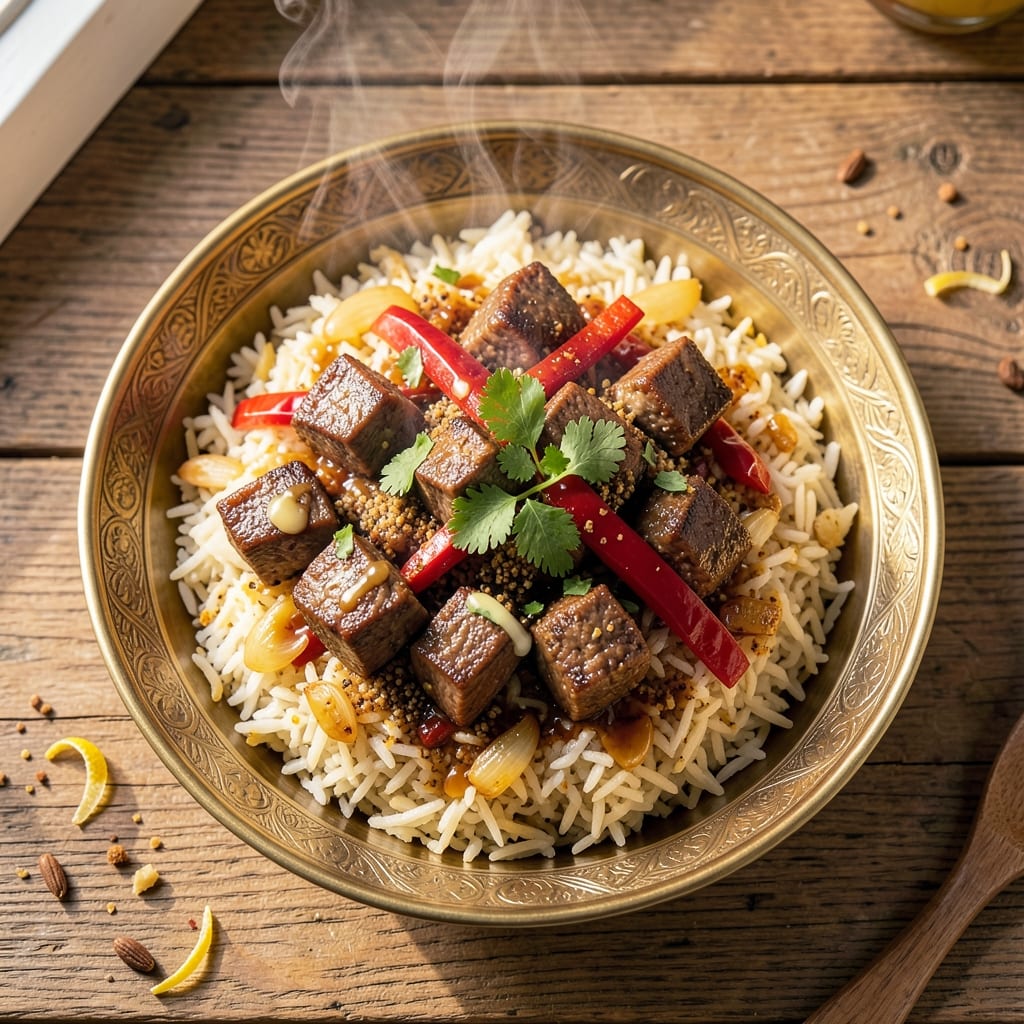
This Afghani beef pulao recipe brings the rich, aromatic flavors of Central Asian cuisine to your kitchen with tender beef and fragrant saffron-infused rice. The secret lies in slow-cooking the beef with warm spices until melt-in-your-mouth tender, then layering it with partially cooked rice—just like in traditional Afghan homes. Every bite delivers a perfect balance of savory, spiced meat and delicate, floral rice.
The dish starts with caramelized onions and garlic as the flavor foundation, where spices like cumin, cardamom, and cinnamon bloom to create deep, complex aromas. Raisins add a touch of sweetness that contrasts beautifully with the savory beef, while saffron transforms the rice into a golden, fragrant masterpiece. This method ensures the rice absorbs all the rich flavors without becoming mushy.
What makes this pulao truly special is the technique of parboiling the rice before layering it with the beef and broth. As it steams in the oven, the rice finishes cooking perfectly while soaking up the beef’s juices and spices. The result is a dish that’s elegant enough for gatherings but simple enough for weeknight dinners, with every component harmonizing in a single, satisfying bite.
Serve this pulao with a cooling cucumber raita or a fresh green salad to balance the richness. The leftovers reheat beautifully, making it an ideal meal for busy families or special occasions. Let’s bring the warmth of Afghan hospitality to your table with this fragrant, hearty dish.
Ingredients for afghani beef pulao
Rich spices, tender beef, and fragrant saffron rice—this pulao delivers authentic Afghan flavors with just 15 ingredients.
| Ingredient | Amount | Notes |
|---|---|---|
| Beef Chuck Roast 🥩 | 2 lb | Cut into 1.5-inch cubes |
| Basmati Rice 🌾 | 2 cups | Uncooked, long-grain preferred |
| Yellow Onions 🧅 | 2 whole | Medium size, thinly sliced |
| Garlic Cloves 🧄 | 6 cloves | Peeled and minced finely |
| Saffron Threads 🌼 | ¼ tsp | High-quality, soaked in 2 tbsp warm water |
| Ground Cumin 🌿 | 1 tbsp | Freshly toasted preferred |
| Ground Coriander 🌿 | 1 tbsp | Freshly ground preferred |
| Cardamom Pods 🌿 | 6 whole | Lightly crushed, not powdered |
| Cinnamon Sticks 🌿 | 2 whole | 2-inch pieces for infusion |
| Black Peppercorns 🌶️ | 1 tsp | Crushed lightly |
| Raisins 🍇 | ½ cup | Plumped in warm water |
| Ghee or Clarified Butter 🧈 | ½ cup | For caramelizing onions |
| Chicken or Beef Broth 💧 | 3 cups | Low-sodium preferred |
| Salt 🧂 | 1 ½ tsp | Adjust to taste |
| Fresh Cilantro 🌿 | ¼ cup | Chopped, for garnish |
The beef is the heart of this dish, so chuck roast is your best bet—it stays tender while absorbing all those warm spices. Look for well-marbled cuts at Whole Foods or your local butcher shop; the extra fat keeps the meat juicy. If you're short on time, most grocery stores carry pre-cubed chuck. For the basmati rice, Indian or Pakistani brands like India Gate or Tilda are ideal—they have that perfect long-grain texture. If you can't find them, any high-quality long-grain white rice works, but don't use short-grain varieties like jasmine, or the pulao will turn out sticky. The saffron? Buy threads, not powder—it's more potent and less likely to be adulterated. A little goes a long way, so don't skimp here.
No cardamom pods? Ground cardamom at half the amount works, but the whole pods infuse more flavor into the broth. Running short on ghee? Olive oil or butter will do, though ghee has a higher smoke point for caramelizing onions. Raisins too expensive? Dried apricots chopped fine add sweetness without breaking the bank. For the broth, homemade is best, but store-bought low-sodium works in a pinch. The spices should be toasted lightly before grinding if possible—this deepens their flavor. If you're using pre-ground spices, check the date; they lose potency quickly. For the rice, rinse it thoroughly before cooking to remove excess starch, which keeps the grains separate.
This pulao tastes even better the next day as the flavors meld, so make extra if you're feeding a crowd. Store leftovers in an airtight container in the fridge for up to 5 days, or freeze for 3 months by portioning into individual containers. The rice will dry out if reheated too aggressively, so add a splash of broth or water when warming. For serving, garnish with fresh cilantro and a sprinkle of saffron threads for that restaurant-quality touch. The dish reheats beautifully in the oven at 350°F (175°C) for 20 minutes, covered with foil.
Why You'll Love This Recipe
- One-Pot Magic: I swear by this recipe when I’m too tired to deal with multiple pans. Sear the beef chuck with onions and garlic, then just layer in the rice and broth—no stirring, no stress. The saffron infuses the rice as it steams, turning it golden without extra work.
- Saffron Magic: That tiny pinch of saffron threads? It’s the secret weapon. The rice gets this delicate golden hue and a floral aroma that makes every bite feel special. (Yes, it’s pricey, but a little goes a long way—trust me, it’s worth it.)
- Weeknight Crowd-Pleaser: This dish feeds a family of four or six without breaking the bank. The beef stays tender, the rice fluffy, and even picky eaters usually dig it. I’ve served it at potlucks, family dinners, and lazy Sundays—no one ever complains.
- Budget-Friendly Leftovers: Beef chuck roast is affordable, and this recipe stretches it perfectly. The leftovers reheat like a dream—just add a splash of water and a minute in the microwave. Honestly, I make it twice a month just for that.
Step-by-step instructions for Afghani beef pulao
This traditional dish combines tender beef with fragrant basmati rice—here's how to achieve perfect balance.
Prepare the Beef and Aromatics
Cut the 2 lb beef chuck roast into 1.5-inch cubes and set aside. In a small bowl, combine 1 tbsp ground cumin, 1 tbsp ground coriander, 1 tsp crushed black peppercorns, and 1.5 tsp salt. Toss the beef cubes thoroughly with this spice mixture until evenly coated.
In a separate bowl, soak the 0.25 tsp saffron threads in 2 tbsp warm water for 10 minutes to release their vibrant color and aroma. Lightly crush the 6 whole cardamom pods and 2 whole cinnamon sticks with a mortar and pestle—this releases their essential oils without turning them into powder.
Caramelize Onions and Cook the Beef
Heat 0.5 cup ghee or clarified butter in a heavy-bottomed pot over medium heat. Add the 2 whole thinly sliced yellow onions and cook for 15-20 minutes, stirring occasionally, until they turn deep golden brown. This slow caramelization builds rich flavor—don't rush this step.
Push the onions to the sides of the pot and add the spiced beef cubes. Cook for 5-6 minutes, stirring occasionally, until the beef develops a light brown crust. Add the 6 minced garlic cloves and cook for another 30 seconds until fragrant. This quick sear locks in juices and deepens the flavor.
Layer the Rice and Simmer
Rinse the 2 cups basmati rice under cold water until the water runs clear, then drain well. Spread the rice evenly over the beef and onions in the pot. Pour in the 3 cups chicken or beef broth and the soaked saffron with its water. Bring to a gentle boil, then reduce heat to low and cover tightly with a lid.
Let the pulao simmer for 20 minutes without disturbing it. The rice should absorb the liquid gradually—you'll know it's ready when the rice is tender and the liquid has been absorbed. If you notice liquid remaining after 20 minutes, cover and cook for another 5 minutes.
Add Raisins and Rest
Drain the 0.5 cup raisins and add them to the pot. Stir gently to distribute them evenly. Remove from heat and let the pulao rest, covered, for 10 minutes. This resting period allows the flavors to meld and the rice to steam perfectly.
Fluff the pulao gently with a fork, then garnish with 0.25 cup chopped fresh cilantro. Serve immediately while hot, ensuring each serving gets both the beef and rice. The saffron-infused rice should be fragrant with a delicate golden hue, while the beef remains tender and flavorful.
Pro Tips For Making Afghani Beef Pulao
- Sear the Beef in Batches: Beef chuck roast releases a ton of liquid when seared—too much at once will steam instead of brown. Cut the roast into 2-inch chunks first, then work in two batches over medium-high heat. This guarantees a deep, caramelized crust that stays intact even when simmered in the pulao.
- Bloom the Saffron Right: Skip the direct-to-rice shortcut—soak the saffron threads in 2 tablespoons warm water for 10 minutes first. Then strain it into the broth. This extracts every bit of flavor without clumping, and the water won’t turn your rice an unnatural yellow.
- Layer Onions Like a Pro: Thinly slice the onions (⅛-inch thick) and fry them in oil until they’re golden and almost crispy—this takes 8–10 minutes, not 3. They’ll caramelize into the base of your pulao, adding sweetness that balances the beef’s richness. (Yes, it’s worth the wait.)
- Parboil the Rice Separately: Cook the basmati rice in salted water until just tender (about 60% done), then drain it. This lets you layer it into the beef broth at the end without turning the pulao into a mushy rice stew. The grains stay distinct, and the beef stays juicy. (Trust me, it’s non-negotiable.)
Troubleshooting your afghani beef pulao
Rice Too Dry?
If your pulao ends up dry, it’s usually because the rice absorbed too much liquid during cooking. Next time, reduce broth by ½ cup—start with 2.5 cups instead of 3 cups. Also, check your rice-to-liquid ratio: basmati rice typically needs 1.5 cups liquid per 1 cup rice. If using older rice, add ¼ cup extra broth to compensate for its increased starch content. 🌾
Beef Too Tough?
Overcooking is the #1 reason for tough beef. Use a meat thermometer—remove beef when it hits 195°F (it’ll rise to 203°F while resting). For extra tenderness, marinate the beef for 4-6 hours in yogurt with 1 tbsp lemon juice and 1 tsp garam masala. This breaks down fibers naturally. Also, avoid stirring the beef too often during cooking—let it develop a crust. 🥩
Spices Overpowering?
Start with half the recommended spices and adjust to taste. Toast whole spices (like cardamom and cinnamon) in a dry pan for 1-2 minutes before grinding—they’ll release aroma without dominating. For heat-sensitive flavors, add raisins and saffron only in the last 5 minutes of cooking. If using store-bought spice blends, check for salt content—many pre-mixed blends contain hidden sodium. 🌶️
Rice Mushy?
Mushy rice happens when rice grains break down too much. Rinse basmati rice 3 times before cooking to remove excess starch. Use a heavy-bottomed pot (like a Dutch oven) to distribute heat evenly. If rice still turns out mushy, reduce simmering time by 5 minutes and let it steam uncovered for the last 2 minutes. For extra insurance, spread rice on a tray to dry slightly before layering. 🍚
Broth Too Salty?
If your broth tastes too salty, dilute it with ½ cup warm water before adding to the pulao. For future batches, reduce salt in the beef marinade by ½ tsp and taste the broth before combining with rice. If using store-bought broth, opt for low-sodium versions or add 1 extra cup water to balance flavors. Remember, you can always add more salt at the end—it’s harder to fix oversalting later. 🧂
Saffron Not Vibrant?
Saffron’s color fades if not soaked properly. Always soak threads in warm (not hot) water for 10-15 minutes before adding to the pulao. Use high-quality threads (not powder)—brands like Kashmiri saffron or Spanish saffron yield the best color. For extra potency, steep the soaked saffron in 2 tbsp warm broth for 5 minutes before adding to the rice. 🌼
Nutrition facts
Frequently asked questions about Afghani beef pulao
What makes this Afghani beef pulao different from other rice dishes?
This recipe uses a layered cooking method where partially cooked rice steams with tender beef in a flavorful broth, creating a perfect balance of textures. The key ingredients—saffron-infused rice, caramelized onions, and whole spices like cardamom and cinnamon—give it a distinct aromatic profile that sets it apart from simple rice pilafs. The raisins add a subtle sweetness that complements the savory beef beautifully.
Can I substitute beef with another protein?
Yes! You can use lamb shoulder (great for slow cooking) or chicken thighs (for a lighter version). For seafood lovers, try firm white fish like cod or halibut, but reduce cooking time to 10 minutes after adding to the pot. If using pork, ensure it's halal or properly cooked to 165°F for safety. The technique works best with proteins that hold moisture well.
How do I make this pulao ahead of time for gatherings?
This dish actually tastes better the next day as flavors meld! Cook it fully, then refrigerate in an airtight container for up to 3 days. To reheat, cover with foil and warm in a 350°F (175°C) oven for 20 minutes, adding 2 tbsp broth to prevent drying. For freezing, portion into individual containers and freeze for up to 3 months. Thaw overnight in the fridge before reheating.
What sides pair best with Afghani beef pulao?
Traditional pairings include cucumber raita (yogurt with grated cucumber and mint) to cool the rich flavors, or a simple green salad with lemon vinaigrette. For extra authenticity, serve with mirchi ka salan (spicy chili curry) or naan bread. If you prefer lighter options, a mango lassi or sherbet makes a refreshing contrast.
Why does my pulao turn out mushy or dry?
Mushy rice usually means overcooking—reduce simmering time by 5 minutes and rinse rice 3 times before cooking. For dry pulao, use 2.5 cups broth instead of 3, and check your rice-to-liquid ratio (1.5 cups liquid per 1 cup rice). Always use a heavy-bottomed pot like a Dutch oven to distribute heat evenly. The beef should be cooked to 195°F (not overcooked) to stay tender.