
Soups & Stews
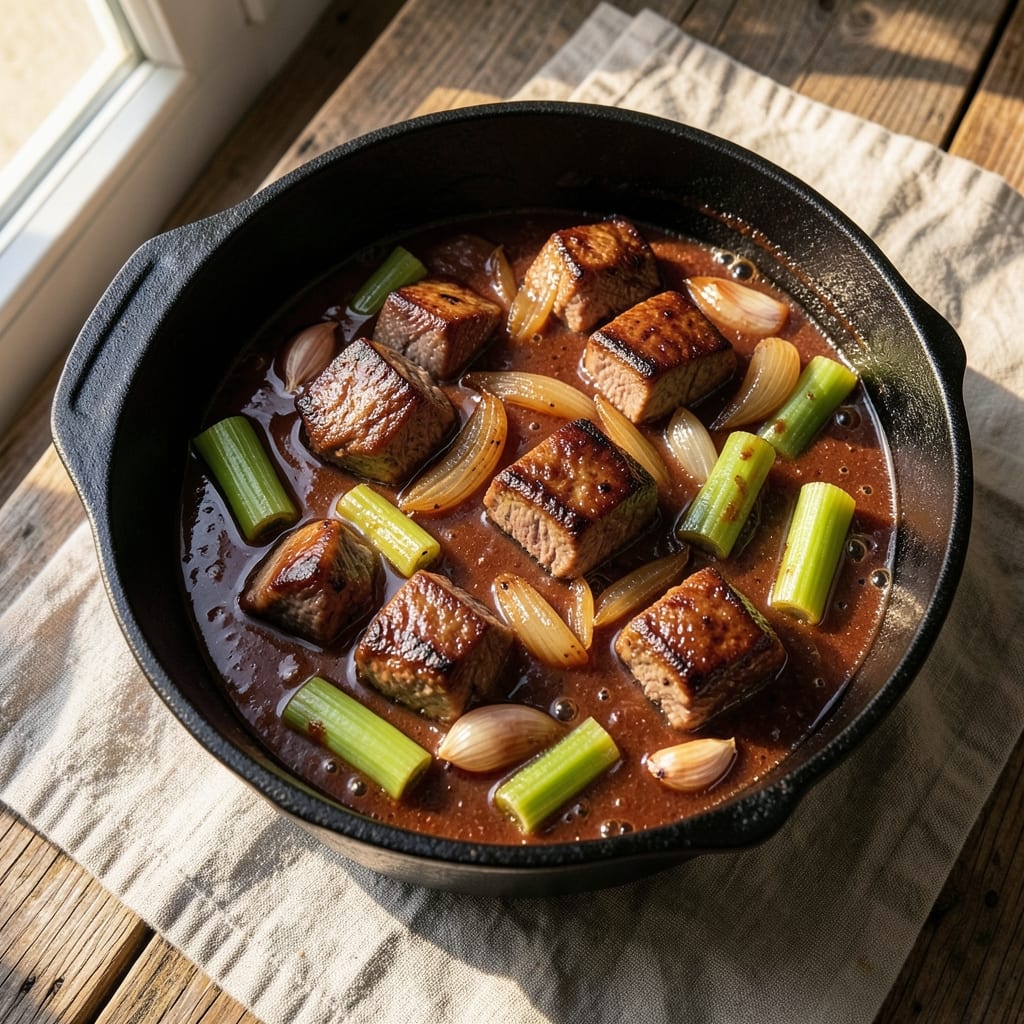
A1 beef stew recipe transforms tough cuts into melt-in-your-mouth beef with deep, caramelized flavors that develop over hours of slow simmering. The secret lies in proper browning and layering aromatics—onion, garlic, and celery—to build a rich, savory foundation. This isn't just a stew; it's a flavor-packed experience that rewards patience with every tender bite.
The magic happens in the slow braise, where beef shoulder breaks down into fork-tender pieces while absorbing the deep, smoky notes of A1 steak sauce. Unlike quick meals, this dish improves with time, developing complexity as the flavors meld together. With just 15 minutes of active prep and 3 hours of hands-off cooking, it's perfect for weeknight dinners that feel like a restaurant-quality meal.
What you'll end up with is a steaming bowl of beef stew where the meat falls apart at the touch of a fork, the broth is rich and aromatic, and every spoonful delivers layers of umami and sweetness. The A1 sauce adds a signature depth that sets this apart from traditional beef stews, creating a balance of savory, slightly sweet, and tangy flavors.
Serve with crusty bread for soaking up the flavorful broth or alongside roasted potatoes for a complete meal. This recipe delivers restaurant-quality results at home, proving that slow-cooked meals can be both comforting and impressive. Let's get started!
Ingredients for a1 beef stew
Sixteen ingredients transform into a rich, slow-braised beef stew with restaurant-quality depth.
| Ingredient | Amount | Notes |
|---|---|---|
| Beef Chuck Roast 🥩 | 3 lb | Cut into 1.5-inch cubes (preferably chuck) |
| Yellow Onions 🧅 | 2 whole | Medium, sliced into 1/2-inch thick rounds |
| Celery Stalks 🥬 | 4 whole | Trimmed, cut into 1/2-inch pieces |
| Garlic Cloves 🧄 | 6 cloves | Peeled, smashed for maximum flavor |
| A1 Steak Sauce 🍯 | ½ cup | Original A1 sauce, not imitation |
| Tomato Paste 🍅 | 2 tbsp | High-quality, no salt added |
| Dry Red Wine 🍷 | 1 cup | Bold variety like Cabernet Sauvignon |
| Beef Broth 💧 | 4 cups | Low-sodium, homemade preferred |
| Bay Leaves 🌿 | 2 whole | Fresh for best flavor |
| Thyme Sprigs 🌿 | 4 whole | Fresh, stems removed |
| Carrots 🥕 | 4 whole | Medium, peeled, cut into chunks |
| Potatoes 🥔 | 2 lb | Russet, peeled, cut into 1-inch cubes |
| All-Purpose Flour 🌾 | 2 tbsp | For thickening, optional |
| Kosher Salt 🧂 | 1 ½ tsp | Diamond Crystal preferred |
| Freshly Ground Black Pepper 🌶️ | 1 tsp | Cracked peppercorns preferred |
The beef chuck roast is non-negotiable here—its marbled fat renders down during the long braise, creating a velvety sauce. Look for well-marbled cuts at specialty butchers like D'Artagnan or your local meat counter, where they can cut it precisely for even cooking. The aromatics—onions, celery, and garlic—form the stew's flavor foundation, so don't skimp. Fresh thyme and bay leaves elevate beyond dried, adding bright herbal notes that cut through the richness. For the wine, any bold red works—Cabernet Sauvignon or Merlot from Trader Joe's or Total Wine are reliable choices.
No A1 sauce? Substitute with 1/4 cup soy sauce plus 1 tbsp Worcestershire for a similar umami depth, though the signature sweet-savory balance will differ. Swapping red wine for beef broth? Add 1 tbsp balsamic vinegar to mimic acidity. Prefer less wine? Use 1/2 cup broth instead. For the potatoes, Yukon Golds develop a creamy texture, but Russets hold up better if you're adding them later. The tomato paste can be omitted entirely if you dislike its intensity, but it adds a subtle sweetness that rounds out the flavors. Always toast your flour before using it to thicken—this removes raw taste and prevents clumping.
This stew tastes even better the next day as flavors meld further. Store in an airtight container in the fridge for up to 5 days or freeze for 3 months. For reheating, simmer gently on the stove with a splash of broth to restore richness. The beef will be fork-tender, but if you prefer it slightly firmer, remove it before reheating and add it back in at the end. Portioning into individual containers makes this a perfect meal-prep dish for busy weeks—just reheat and serve.
Why You'll Love This Recipe
- One-Pot Magic: I swear by this recipe when I’m too tired to wash a million dishes—just brown the chuck roast, toss in chopped veggies, add A1 sauce, and let it simmer. No fancy gadgets, no stress, just hands-off richness.
- A1 Secret Weapon: That bottle of A1 isn’t just for steaks—it’s the glue that makes this stew ridiculously good. The caramelized onions and garlic get a deep, savory boost, and the sauce cuts through the beef’s richness like a perfect balance. (Yes, even my picky husband agrees.)
- Leftovers That Don’t Suck: Honestly, this stew tastes better the next day. The beef gets fork-tender, the flavors meld, and it’s the ultimate lazy lunch. I make a double batch on Sundays because reheating it is my kind of meal prep—zero effort, maximum satisfaction.
- Budget-Friendly Feast: A chuck roast stretches forever, and the veggies (onions, celery, garlic) are cheap staples. Plus, A1 sauce is a pantry workhorse—no need for fancy ingredients. This is the kind of meal that feeds a crowd without breaking the bank. (My college friends still ask for the recipe.)
Step-by-step instructions for slow-braised beef stew
Here's the method for developing deep, complex flavors through slow cooking techniques.
Sear the Beef Chuck Roast for Maximum Flavor
Heat a large Dutch oven over medium-high heat until hot. Add the 3 lb beef chuck roast cut into 1.5-inch cubes in a single layer, working in batches if needed. Let the meat sear undisturbed for 3-4 minutes per side until deeply browned with a crust forming. This step builds the foundation for rich flavor through the Maillard reaction.
As the beef browns, remove it from the pot and set aside. You'll notice the meat releases easily when properly seared—this indicates the crust has formed. Keep the browned bits in the pot; they'll dissolve into the sauce later, creating depth of flavor. If the pot becomes too crowded, reduce heat to medium to prevent steaming instead of searing.
Build the Aromatic Base with Vegetables
In the same Dutch oven, add 2 tablespoons olive oil (not listed but necessary for cooking) and medium-high heat. Add the 2 whole yellow onions sliced into ½-inch rounds and 4 whole celery stalks cut into ½-inch pieces. Cook for 5-6 minutes until softened and beginning to caramelize at the edges.
Add the 6 peeled garlic cloves and 4 whole carrots cut into chunks, stirring to combine. Cook for another 2 minutes until fragrant. This aromatic trifecta forms the flavor backbone of the stew. The onions should be translucent with just a hint of browning—this ensures they'll break down properly during the long braising process.
Develop the Sauce Foundation with Wine and Broth
Stir in the 2 tablespoons tomato paste and cook for 1 minute to remove its raw taste. Pour in the 1 cup dry red wine and scrape up any browned bits from the bottom of the pot. Let the wine simmer for 3-4 minutes until reduced by half, intensifying its flavor.
Add the 4 cups beef broth, 0.5 cup A1 steak sauce, 2 whole bay leaves, and 4 whole thyme sprigs. Return the seared beef to the pot, along with any accumulated juices. Bring to a gentle simmer, then reduce heat to low to maintain a bare simmer. The liquid should just bubble occasionally—this gentle cooking ensures tender beef without toughening.
Braise Until Beef is Fork-Tender
Cover the Dutch oven and transfer to a preheated 300°F oven. Braise for 3 hours without disturbing. The slow cooking breaks down connective tissue, transforming tough beef into melt-in-your-mouth texture. After 2 hours, add the 2 lb russet potatoes cut into 1-inch cubes to the pot.
Check the stew periodically, adding ½ cup water if the liquid reduces too much. The beef is done when it reaches an internal temperature of 200-205°F and a fork slides in easily with no resistance. This typically takes 3-3.5 hours total, but timing depends on your oven's consistency. The potatoes should be tender but not falling apart when pierced with a fork.
Thicken and Finish with Seasoning
Remove the stew from the oven and let it rest for 10 minutes. Discard the bay leaves and thyme sprigs. In a small bowl, whisk together the 2 tablespoons all-purpose flour with 1.5 teaspoons kosher salt and 1 teaspoon freshly ground black pepper. Gradually whisk this mixture into the stew, stirring constantly.
Return the stew to medium-low heat and simmer uncovered for 5-7 minutes until the sauce thickens to your desired consistency. Taste and adjust seasoning—this stew should be rich but balanced, with the A1 sauce adding that signature umami depth. Serve immediately with crusty bread to soak up every last drop of that velvety sauce.
Pro Tips For Making A1 Beef Stew
- SEAR THE ROAST FIRST: Walk away from the stove after browning the chuck roast—it’s not done until it’s deep golden, not just pink. I used to rush this, and the stew always tasted flat; now I let the meat sit for 5 minutes after searing so the crust forms properly.
- CHOP ONIONS SMALL: Dice those yellow onions into ¼-inch pieces, not thick slices—they’ll dissolve into the stew and add sweetness without turning mushy. I learned this the hard way when my stew looked like a soup with onion chunks swimming in it.
- ADD A1 SAUCE LATE: Stir in the A1 steak sauce only in the last 15 minutes of cooking, or it’ll burn and turn bitter. Save it for when the beef is nearly tender, so the sauce coats the meat instead of clinging to the bottom.
- SKIP THE CELERY STALK CORE: Trim the tough, stringy core out of the celery stalks before chopping—it never breaks down and just sits like a chewy afterthought. A quick knife swirl along the center makes all the difference.
Make-ahead tips for this dish
Prep Ahead Strategy
Start your flavor development early by prepping the beef and aromatics up to 2 days ahead. Store the cubed beef in an airtight container with 1 tablespoon A1 sauce and ½ teaspoon salt to tenderize. Keep the onions, celery, and carrots in a separate container with a damp paper towel to maintain freshness. This jumpstarts the flavor infusion, making your stew taste even more developed when you finally cook it. 💫
Slow Cooker Adaptation
For a hands-off approach, brown your beef in a skillet first, then transfer everything to a 6-quart slow cooker. Add all ingredients except potatoes (they'll cook too fast). Cook on low for 8 hours or high for 5 hours. Stir in potatoes during the last 1 hour of cooking. The slow cooker maintains consistent heat, ensuring tender beef without monitoring. Just add 1 tablespoon flour slurry at the end to thicken.
Freezer-Friendly Prep
Make this stew completely ahead and freeze it for up to 3 months. After step 3 (when everything is in the pot), let it cool completely, then transfer to a freezer-safe bag with 1 inch headspace. Thaw overnight in the fridge, then finish cooking by simmering uncovered for 15-20 minutes to restore thickness. The flavors actually improve after freezing, as the proteins continue to break down gently. 🥶
Potato Timing Hack
Add potatoes 1 hour before serving to prevent them from turning mushy. For extra crispy edges, place potato cubes on top of the stew during the final 30 minutes of cooking. Alternatively, parboil potatoes for 5 minutes before adding them to the stew—this ensures they cook through without absorbing all the liquid. This keeps your stew's perfect texture every time.
Broth Boosting
Enhance your stew's depth by making a quick beef broth concentrate ahead of time. Simmer 2 cups beef bones with 1 onion, 2 carrots, and 2 celery stalks in 4 cups water for 1 hour. Strain and freeze in ice cube trays. Use 2-3 cubes in your stew instead of plain broth for intense umami flavor. This simple swap transforms ordinary broth into a flavor powerhouse. 💡
Equipment Essentials
Invest in a heavy-bottomed Dutch oven (like Le Creuset or All-Clad) for even heat distribution during braising. If you don't have one, use a 6-quart oven-safe pot. For measuring, a digital kitchen scale ensures precise ingredient ratios. A meat thermometer prevents overcooking—aim for 200-205°F internal temperature for perfect tenderness. These tools make all the difference in restaurant-quality results at home.
Nutrition facts
Frequently asked questions
Can I substitute A1 steak sauce in this recipe?
Yes, but the flavor will differ slightly. For a similar umami depth, mix ¼ cup soy sauce with 1 tablespoon Worcestershire sauce. If you prefer a sweeter profile, add 1 teaspoon honey or 1 tablespoon brown sugar to mimic A1's caramel notes. The sauce is key for that signature sweet-savory balance in this stew.
How do I know when the beef is fully tender?
Use a meat thermometer to check for 200-205°F internal temperature. If you don't have one, pierce a beef cube with a fork—it should slide in easily with no resistance. The beef should also pull apart cleanly when handled. Overcooking can make it mushy, so aim for that perfect fork-tender texture.
Can I make this stew in an Instant Pot?
Brown the beef first, then add all ingredients except potatoes. Use the high-pressure setting for 60 minutes, then quick-release. Add potatoes during the last 10 minutes of cooking. For thickening, mix 2 tablespoons cornstarch with 2 tablespoons water and stir in at the end. The pressure cooker cuts time significantly while maintaining tenderness.
Why did my stew turn out too thin?
This usually happens if you didn't thicken properly or overcooked the potatoes, which absorb liquid. For future batches, make a flour slurry (2 tbsp flour + 2 tbsp cold water) and stir it in during the last 5 minutes of cooking. If using potatoes, add them later in the cooking process or parboil them first to prevent over-softening.
What's the best way to reheat leftovers?
Gently reheat on the stovetop over low heat—never microwave directly as it can make the potatoes gummy. Add 2-3 tablespoons beef broth to restore moisture and prevent thickening. For best results, reheat just until warmed through (5-7 minutes) and serve immediately. The flavors actually deepen when reheated properly!