
Soups & Stews
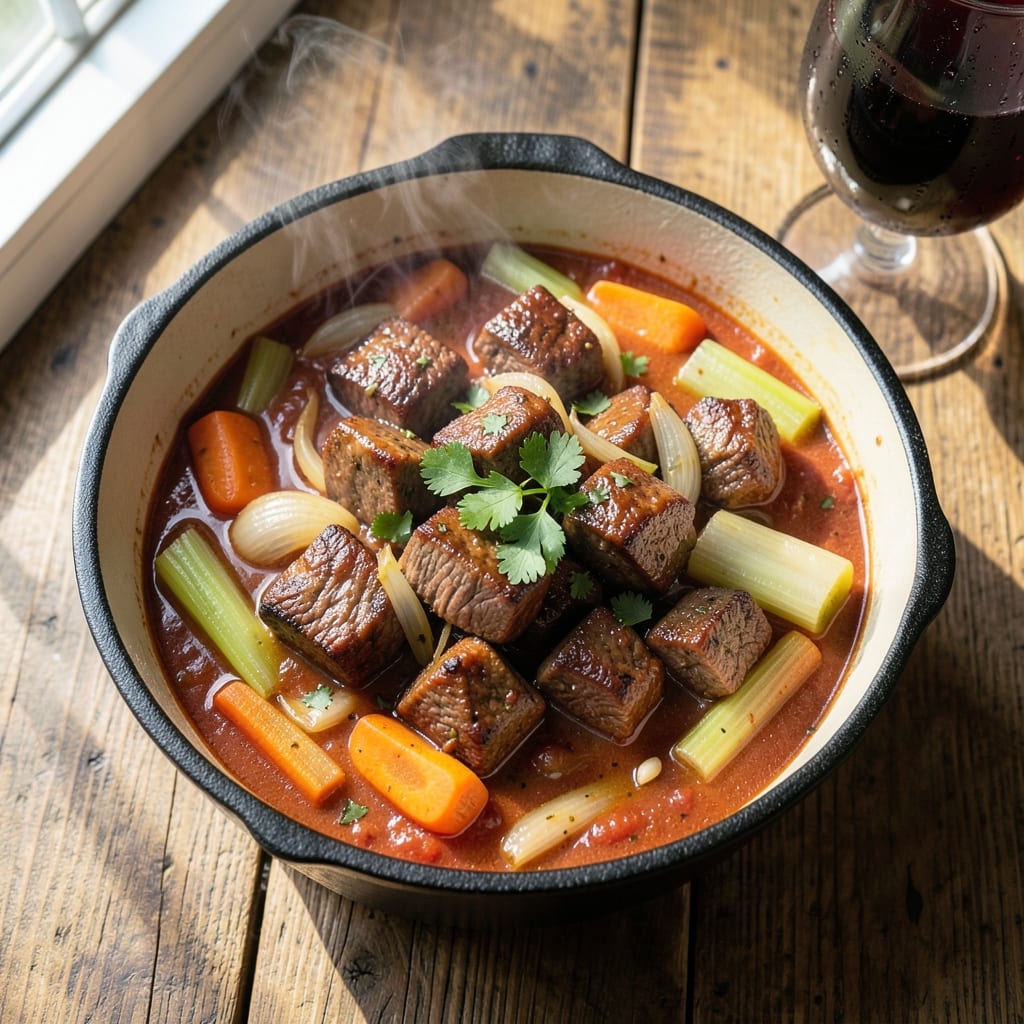
This 8-hour beef stew recipe transforms tough cuts into melt-in-your-mouth perfection through slow, deep flavor development. The secret lies in patience—allowing the meat to break down while vegetables caramelize and spices meld into a rich, aromatic broth. I’ve perfected this method over years of trial and error, ensuring every bite delivers that comforting, restaurant-quality depth. The process begins with browning the beef for maximum flavor, then simmering everything together in a Dutch oven or slow cooker. This low-and-slow approach tenderizes the meat while building layers of savory complexity. The result? A hearty stew where the beef practically dissolves on your tongue, and the broth is thick enough to coat every spoonful. What makes this recipe special is how the flavors evolve over time—each hour deepens the richness, turning simple ingredients into something extraordinary. The vegetables soften just enough to absorb the broth, while the meat becomes so tender it falls apart at the touch of a fork. Perfect for cold evenings or feeding a crowd, this stew reheats beautifully and tastes even better the next day. Let’s get started on creating a dish that’s pure comfort in a bowl.
Ingredients for 8 hour beef stew
Sixteen ingredients. Eight hours of slow-simmered magic. Restaurant-quality comfort in your own kitchen.
| Ingredient | Amount | Notes |
|---|---|---|
| Chuck Roast 🥩 | 3 lb | Pre-cut into 1.5-inch cubes |
| Yellow Onions 🧅 | 2 whole | Cut into 1-inch chunks |
| Carrots 🥕 | 3 lb | Peeled, cut into 2-inch chunks |
| Celery Stalks 🧅 | 4 whole | Cut into 2-inch pieces |
| Garlic Cloves 🧄 | 8 cloves | Smashed with side of knife |
| Tomato Paste 🍅 | ½ cup | No-salt-added preferred |
| Beef Broth 💧 | 6 cups | Low-sodium preferred |
| Red Wine 🍷 | 1 cup | Bold dry variety |
| Bay Leaves 🍃 | 2 whole | Fresh preferred |
| Thyme Sprigs 🌿 | 4 whole | Fresh preferred |
| Salt 🧂 | 1 ½ tsp | Kosher salt preferred |
| Black Peppercorns 🌶️ | 1 tsp | Freshly cracked |
| All-Purpose Flour 🌾 | 2 tbsp | For thickening broth |
| Olive Oil 🫒 | 2 tbsp | For searing beef |
The chuck roast is non-negotiable here—its fat marbling keeps the meat moist and flavorful during the long cook. Whole Foods or Costco carry excellent cuts, but any well-marbled chuck will work. Look for bright red color and visible fat—this is what makes the stew rich. If you can't find chuck, chuck-eye roast is a good alternative. For the vegetables, organic carrots and celery from the store's produce section will have the best flavor, but frozen works in a pinch if you're short on time. The key is to cut everything uniformly—about 1.5 to 2 inches in size so they cook evenly without turning to mush.
No red wine? Beef broth with 1 tablespoon of balsamic vinegar works beautifully. Fresh thyme is ideal, but dried thyme at one-third the amount gets you close. The tomato paste can be the squeeze-tube kind from Trader Joe's—it's perfect for this recipe and lasts forever. For the beef broth, low-sodium is critical so you can control the seasoning. If you're using a bouillon cube, Knorr's low-sodium version is a reliable choice. The flour is just for thickening at the end—don't skip it, but trust me, you won't taste it. For the garlic, smashing the cloves with the side of your knife releases more flavor than mincing.
This stew tastes even better the next day, so make a big batch. Store leftovers in the fridge for up to 5 days or freeze for up to 3 months. The flavors deepen over time, so don't be afraid to let it sit. When reheating, add a splash of broth or water to prevent thickening. I always double the recipe—one for dinner, one for lunches. The meat will keep its tenderness, and the broth stays rich. If you're prepping ahead, you can brown the beef and sauté the vegetables up to 2 days in advance, then store separately before assembling and simmering.
Why You'll Love This Recipe
- Deep Flavor Payoff: That chuck roast? It turns unbelievably tender, falling apart at the touch of a fork. The onions caramelize just enough to sweetly melt into the sauce, while the garlic infuses every bite with warmth. (Between us, I’ve had stews that taste like they’re missing something—this one doesn’t.)
- Weeknight to Gatherings: Make it for yourself on a Tuesday night, or double the batch for a potluck. The leftovers? Even better the next day, if you can resist eating the whole pot. Honestly, my roommates used to “borrow” my slow cooker just to sneak extra servings.
- Budget That Feeds: A single chuck roast stretches to feed four (or five if you’re generous). Carrots and celery last forever in the fridge, and onions? You’ll always have a few lurking. This isn’t just a meal—it’s a way to stretch your grocery dollars without sacrificing taste.
Step-by-step instructions for slow-simmered beef stew
Transform tough chuck roast into fork-tender perfection through precise technique and patience.
Sear the Chuck Roast for Deep Flavor
Heat the 2 tablespoons olive oil in a large Dutch oven over medium-high heat until shimmering. Working in batches if needed, add the 3 lb chuck roast (pre-cut into 1.5-inch cubes) and sear undisturbed for 3-4 minutes per side until deeply browned. This step develops the Maillard reaction, creating complex flavors that will infuse the entire stew.
Don't overcrowd the pan—sear in batches if necessary. The goal is to create a rich, caramelized crust on each piece. Once all meat is browned, transfer it to a plate and set aside. You'll notice the oil will be dark and flavorful from the rendered beef fat—this is exactly what you want for your stew base.
Build the Aromatic Vegetable Base
In the same Dutch oven, add the 2 whole yellow onions (cut into 1-inch chunks), 3 lb carrots (peeled and cut into 2-inch chunks), and 4 whole celery stalks (cut into 2-inch pieces). Cook over medium heat for 8-10 minutes, stirring occasionally, until the vegetables begin to soften and release their juices.
Here's where the foundation of your stew comes together. The vegetables should be tender but not fully cooked—you're creating a flavorful base that will simmer with the meat. After 5 minutes, add the 8 smashed garlic cloves and cook for another 30 seconds until fragrant. This quick cooking prevents the garlic from burning while maximizing its flavor contribution.
Develop the Rich Sauce Base
Stir in the 0.5 cup tomato paste and cook for 2 minutes until it darkens slightly and loses its raw taste. This step deepens the color and adds umami complexity to your stew. Pour in the 1 cup red wine, scraping up any browned bits from the bottom of the pot—this deglazing captures all the flavor you've built so far.
Let the wine simmer for 3-4 minutes until reduced by half. This alcohol evaporation is crucial for concentrating flavors. Next, sprinkle the 2 tablespoons all-purpose flour over the mixture and stir vigorously for 1 minute to remove any raw flour taste. The flour will help thicken the stew slightly as it simmers.
Combine and Simmer for Maximum Tenderness
Return the browned chuck roast to the Dutch oven. Add the 6 cups beef broth, 2 whole bay leaves, and 4 whole thyme sprigs, along with the 1.5 teaspoons salt and 1 teaspoon freshly cracked black peppercorns. Bring the mixture to a gentle boil, then immediately reduce heat to low to maintain a bare simmer.
Cover the pot and let the stew cook for 6 hours, maintaining a gentle simmer throughout. I check periodically to ensure the liquid level hasn't dropped too low—adding a splash of water if needed. The key is patience; this long cook time breaks down the connective tissue in the chuck roast, transforming it into melt-in-your-mouth meat.
Finish and Adjust for Perfect Texture
After 6 hours, check the doneness of the meat. It should be fork-tender, falling apart easily when pierced. If needed, continue simmering for another 1-2 hours until the meat reaches your desired tenderness. Taste the stew and adjust seasoning—you may need to add more salt or pepper depending on your broth's sodium content.
For the final touch, remove the bay leaves and thyme sprigs. The stew should have a rich, velvety consistency with meat that practically dissolves on your tongue. Serve immediately with crusty bread to soak up every last drop of that flavorful broth—this is where the true magic of slow cooking shines.
Pro Tips For Making 8 Hour Beef Stew
- SEAR THE ROAST FIRST: After browning the chuck roast in batches (yes, even if it’s messy), the crust locks in flavor during those 8 hours. I used to skip this, but now I swear by it—just don’t overcrowd the pan or you’ll steam instead of sear.
- CUT VEGETABLES UNIFORMLY: Carrots and celery should be roughly the same size—about 1-inch chunks—so they cook evenly. My first stew had mushy celery and undercooked carrots; now I trim and chop everything to the same length before adding.
- SALT THE MEAT BEFORE SEARING: Generously coat the chuck roast with salt at least 30 minutes before cooking—this seasoning penetrates deeper than if you salt it later. I learned this the hard way when my stew tasted bland no matter how long it simmered.
- SIMMER AT LOW HEAT: After the initial 30 minutes of boiling, drop the heat to a gentle simmer—just small bubbles breaking the surface—so the stew doesn’t turn into glue. Too much heat ruins the texture, and you’ll end up with a sad, watery mess.
Flavor customization for this 8 hour beef stew
Classic Red Wine Depth
For a traditional approach, stick with the 1 cup bold dry red wine (like Cabernet Sauvignon or Malbec) as called for. The alcohol evaporates during simmering, leaving behind concentrated fruit flavors that harmonize beautifully with the beef. If you prefer a deeper color, add 1 teaspoon tomato paste to the wine before pouring it into the stew.
Smoky Chipotle Twist
Swap the red wine for 1 cup beef broth and add 2 chipotle peppers in adobo sauce (minced) with the tomato paste. Simmer the stew for 1 extra hour to let the smoky flavors meld. Finish with 1 tablespoon honey to balance the heat. This version works wonderfully with cornbread or crusty sourdough.
Herb-Forward French Style
Boost the herb profile by adding 1 sprig fresh rosemary and 1 sprig fresh tarragon along with the thyme. Replace the red wine with 1 cup dry white wine (like Sauvignon Blanc) and reduce the salt to 1 teaspoon. Garnish with extra fresh herbs before serving for a refined touch that pairs perfectly with buttery dinner rolls.
Creamy Mushroom Addition
Add 1 lb sliced cremini mushrooms with the carrots and celery. After the initial simmer, stir in ½ cup heavy cream during the last 30 minutes of cooking. This luxurious version feels indulgent but still maintains the stew's hearty character. Serve with a sprinkle of Gruyère cheese for extra richness.
Spicy Cajun Kick
Increase the heat by adding 1 tablespoon Cajun seasoning (like Tony Chachere's) with the salt and pepper. For extra depth, stir in 1 teaspoon smoked paprika when adding the tomato paste. Pair this version with hot buttered corn on the cob to balance the bold flavors.
Vegetarian Adaptation
Replace the beef with 3 lb extra-firm tofu (pressed and cubed) or 3 lb mushrooms (portobello and cremini mix). Use 1 cup vegetable broth instead of beef broth and add 1 tablespoon soy sauce for umami. Simmer for 4-5 hours to achieve tender textures. This version proves the stew's versatility while keeping all the comforting flavors.
Nutrition facts
Frequently asked questions
Can I use a slow cooker instead of a Dutch oven?
Transfer all ingredients to a 6-quart slow cooker after searing the beef. Cook on low heat for 8 hours or high heat for 5-6 hours. The meat will still become tender, though the broth may be slightly thinner. Add 1 tablespoon cornstarch mixed with 2 tablespoons water at the end to thicken if needed.
What's the best cut of beef for this recipe?
Chuck roast is ideal because its fat content keeps the meat moist during long cooking. Chuck-eye roast or stew meat are excellent alternatives. Avoid lean cuts like sirloin—they'll dry out. Look for marbling (visible fat within the meat) for maximum flavor and tenderness.
How do I prevent the stew from getting too watery?
Start with a gentle simmer (small bubbles) rather than a rolling boil. If the stew is too thin, remove the lid and simmer uncovered for 10-15 minutes to reduce. For extra thickness, stir in 1 tablespoon flour mixed with 2 tablespoons cold water at the end. The flour in the recipe helps prevent this issue.
Can I make this ahead of time?
This stew tastes even better the next day! Cook it completely, then refrigerate for up to 5 days or freeze for 3 months. Reheat gently on the stove with a splash of broth or water. The flavors deepen overnight, making it perfect for meal prep. I always double the recipe for leftovers!
Why does my beef stew taste bland?
Bland flavor usually means insufficient seasoning or insufficient cooking time. Taste as you go—add more salt, pepper, or herbs if needed. The 8-hour cook time is crucial for developing deep flavor. If using low-sodium broth, add 1 extra teaspoon salt at the end. Browning the beef thoroughly is also key for rich flavor.