Soups & Stews
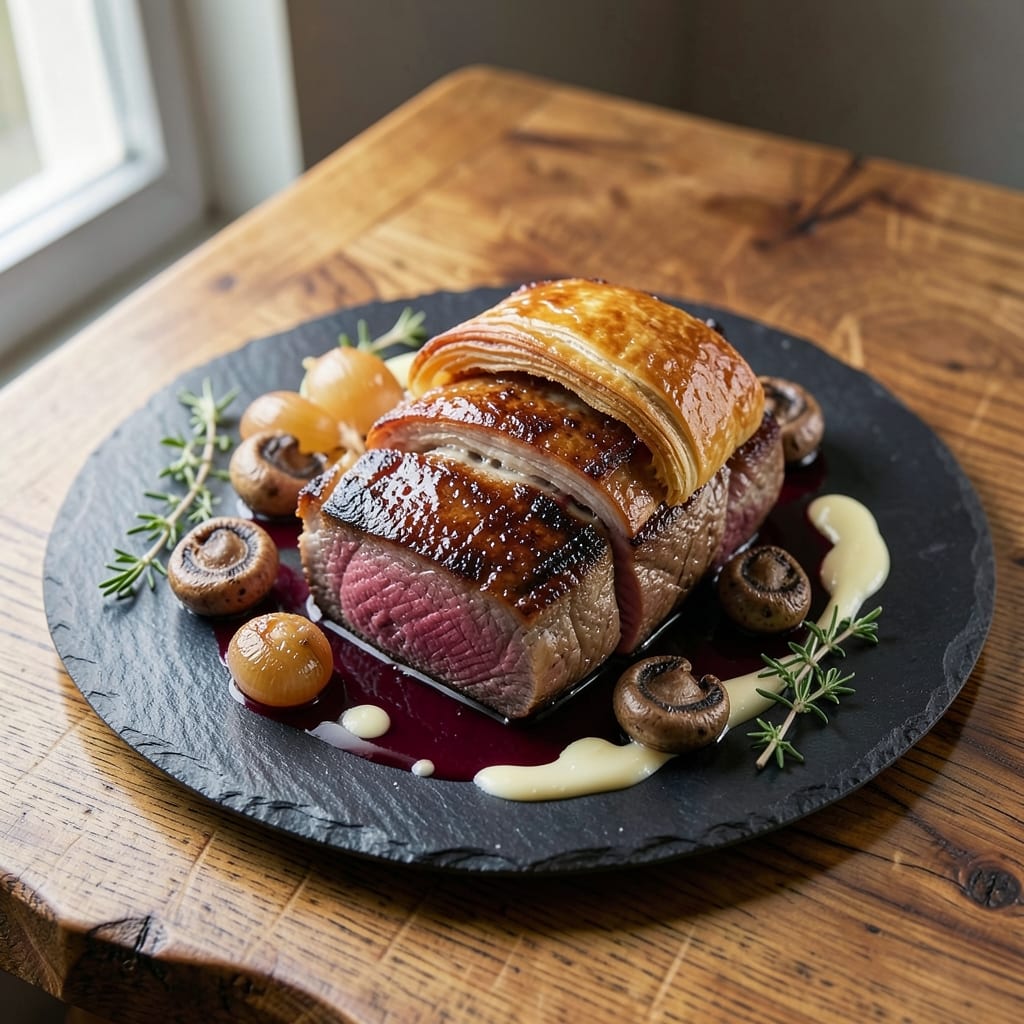
This 5-star Beef Wellington recipe delivers restaurant-quality results with a juicy, perfectly seared beef center wrapped in a golden, flaky pastry hug. The secret lies in the mushroom duxelles—finely chopped mushrooms cooked down into a rich, aromatic paste—that forms the heart of this French classic. I've refined this technique over years to ensure the pastry stays crisp while the beef remains tender, avoiding the common pitfall of dryness or soggy crust.
The process begins with searing a thick-cut beef tenderloin to lock in juices, then layering it with the duxelles and a thin slice of pâté for extra richness. Wrapping this in puff pastry (or gluten-free alternatives) creates that signature elegant presentation, while baking at 375°F ensures the pastry achieves a golden, shatteringly crisp finish. Every bite reveals the perfect balance of textures—tender beef, earthy mushrooms, and buttery pastry.
What sets this recipe apart is the attention to detail: resting the beef properly, sealing the pastry seam tightly, and baking with precision to avoid overcooking. The result is a dish that looks and tastes like it belongs on a Michelin-starred menu, yet is achievable at home with the right technique. Pair it with a red wine reduction and roasted vegetables for a complete, showstopping meal.
Whether you're hosting a dinner party or treating yourself to a weeknight splurge, this Beef Wellington delivers restaurant-quality results without the guesswork. The key is patience—each step builds on the last to create a dish that's as impressive to serve as it is to eat. Let's get started on crafting your 5-star masterpiece.
Ingredients for 5 star beef wellington
Precision-crafted ingredients for a Michelin-worthy Beef Wellington with perfect balance of textures and flavors.
| Ingredient | Amount | Notes |
|---|---|---|
| Beef Tenderloin 🥩 | 1 ½ lb | Center-cut, trimmed of fat, rested at room temperature |
| Cremini Mushrooms 🍄 | 12 oz | Finely chopped, stems removed, dried with paper towels |
| Shallots 🧅 | 2 whole | Minced, about 2 tbsp total |
| Garlic Cloves 🧄 | 4 cloves | Minced, about 1 tsp total |
| Fresh Thyme Leaves 🌿 | ¼ cup | Finely chopped, stems removed |
| Dijon Mustard 🍯 | 1 tbsp | High-quality, for duxelles binding |
| Chicken Liver Pâté 🍗 | 4 oz | Smooth, high-fat, for layering |
| Unsalted Butter 🧈 | ½ cup | Cold, cubed, for pastry |
| Puff Pastry 🍞 | 1 sheet | Store-bought or homemade, thawed if frozen |
| Large Egg 🥚 | 1 whole | Beaten, for egg wash |
| Diamond Crystal Kosher Salt 🧂 | 1 tsp | For seasoning, plus extra for searing |
| Freshly Ground Black Pepper 🌶️ | ½ tsp | Cracked, for beef seasoning |
| Dry White Wine 🍷 | ¼ cup | For deglazing, like Sauvignon Blanc |
| Olive Oil 🫒 | 2 tbsp | High smoke point, for searing |
The beef tenderloin is non-negotiable—center-cut with even thickness is critical for consistent doneness. Source it from a reputable butcher or high-end grocery like Whole Foods, where they'll trim it precisely for you. Look for rich marbling but minimal external fat. Resting at room temperature for 45 minutes before searing ensures even cooking. For mushrooms, cremini or baby bella yield the best texture when finely chopped—avoid pre-minced varieties that release excess moisture. The shallots and garlic should be freshly minced using a mandoline for uniform consistency in the duxelles.
No Dijon mustard? High-quality whole-grain mustard at double the amount works in a pinch, though it lacks the finesse. Substituting pâté with chicken liver mousse (blended with butter and cream) maintains richness. For the pastry, store-bought puff pastry from Trader Joe's or Whole Foods delivers professional results—just ensure it's fully thawed. The egg wash requires room-temperature eggs to adhere properly; whisk with a pinch of salt for extra shine. If you're avoiding wine, dry white grape juice or chicken stock can deglaze, though wine's acidity enhances the mushrooms' umami.
Store the beef tenderloin vacuum-sealed in the fridge for up to 3 days or freeze for 3 months—thaw overnight in the fridge. Fresh mushrooms keep 5 days in a paper bag, while puff pastry stays fresh 2 days wrapped in plastic. Prep the duxelles ahead and refrigerate for 24 hours to deepen flavors. The assembled Wellington can be baked 2 hours ahead and reheated gently at 300°F for 15 minutes before serving—ideal for dinner parties where timing matters.
Why You'll Love This Recipe
- One-Pan Magic: I swear by this—just sear the beef, toss in the mushrooms, shallots, and thyme, then let the oven do the work. No chopping boards full of mess, no fussy layers to assemble.
- Crispy-Creamy Payoff: That golden crust on the outside? Pure satisfaction. The tenderloin stays juicy while the mushroom-duxelles (yes, it’s fancy but takes 5 minutes) adds earthy depth—like a hug for your taste buds.
- Weeknight to Dinner Party: Same recipe, different vibes. Throw it together for a lazy Friday night, then impress guests by calling it "Beef Wellington" (they’ll never know it’s your shortcut).
- Leftover Luxury: The first night is showstopping, but the second? Even better. Slice the cooled beef for sandwiches, toss strips into salads, or reheat with a splash of red wine—it’s the ultimate meal prep win.
Step-by-step instructions for 5 star beef Wellington
Master the art of French haute cuisine with this precise method for restaurant-quality Beef Wellington.
Prepare the Mushroom Duxelles and Season the Beef
Heat the 2 tablespoons olive oil in a large skillet over medium-high heat. Add the 12 ounces finely chopped cremini mushrooms and cook, stirring occasionally, for 8-10 minutes until all moisture evaporates and they turn golden brown. This step is critical—you want dry mushrooms that won't make your Wellington soggy.
Transfer the mushrooms to a clean towel to absorb any remaining moisture, then return them to the skillet. Add the 2 tablespoons minced shallots, 1 teaspoon minced garlic, and ¼ cup chopped fresh thyme leaves, cooking for another 3-4 minutes until fragrant. Stir in the 1 tablespoon Dijon mustard and remove from heat, letting the mixture cool completely before using.
While the duxelles cools, season the 1.5-pound beef tenderloin with 1 teaspoon kosher salt and ½ teaspoon cracked black pepper, pressing the seasoning into the surface. This ensures even distribution and maximum flavor penetration. Let the seasoned beef rest at room temperature for 30 minutes while you prepare the pâté layer.
Assemble the Wellington Layers with Precision
Spread the 4 ounces chicken liver pâté evenly over the center of the beef tenderloin, leaving a ½-inch border around the edges. This layer adds rich, umami depth that complements the mushrooms. Top the pâté with the cooled mushroom duxelles, spreading it evenly to create a ¼-inch thick layer across the entire surface.
Roll the beef tightly into a cylinder using kitchen twine, securing it at 1-inch intervals to maintain shape. The twine prevents the filling from spilling during baking while allowing the pastry to crisp perfectly. Wrap the rolled beef tightly in plastic wrap and refrigerate for 30 minutes to firm up before shaping.
Encase in Puff Pastry for Perfect Crisp
Preheat your oven to 400°F. Unwrap the beef cylinder and position it horizontally on a sheet of parchment paper. Unfold the puff pastry sheet and place it over the beef, trimming excess to create a ½-inch overhang on all sides. Brush the pastry with the beaten large egg, leaving a ¼-inch border uncovered around the edges to prevent browning.
Fold the exposed pastry edges inward to seal the Wellington completely. Use a sharp knife to score decorative slashes on the top, creating a classic diamond pattern. This not only looks impressive but also allows steam to escape, preventing puffiness. Place the Wellington seam-side down on a parchment-lined baking sheet.
Bake to Juicy Perfection with Wine Deglaze
Bake the Wellington for 30-35 minutes until the pastry turns a deep golden brown and reaches an internal temperature of 125°F (medium-rare). This lower temperature ensures the beef remains tender while the pastry achieves that signature crispness. During the last 5 minutes of baking, increase the oven temperature to 425°F for a final burst of color.
Remove the Wellington from the oven and transfer it to a cutting board. Pour the ¼ cup dry white wine into the hot baking pan, scraping up any browned bits with a wooden spoon. This deglazing creates a luxurious pan sauce to complement the main course. Let the Wellington rest for 15 minutes before slicing—this crucial step allows the juices to redistribute, guaranteeing each bite is moist and flavorful.
Pro Tips For Making 5 Star Beef Wellington
- USE A MEAT THERMOMETER: I learned this the hard way—Beef Wellington demands precision. Pull the tenderloin at 125°F internal temp (it’ll climb to 130°F while resting). Overcooking turns that buttery center to rubber—no one wants dry beef, especially when you’ve gone to this effort.
- SAUTÉ MUSHROOMS LOW AND SLOW: High heat makes mushrooms release water and turn soggy. Cook them on medium-low until all moisture evaporates—about 10 minutes—then finish with a quick blast of heat to crisp. That’s what gives the duxelles its silky, flavor-packed texture.
- SKIP THE PRE-COOKED DUXELLES: Homemade duxelles (sautéed mushrooms, shallots, garlic) should be raw-packed with flavor, not mushy from overcooking. Pulse the mushrooms in a food processor just until chopped—not puréed—so they stay intact and release aroma when baked.
- PAT THE DUCK CRUST DRY: This isn’t the prettiest method, but it’s the tastiest. After spreading the pâté, pat the duck crust with paper towels to remove any surface moisture. When it hits the oven, it’ll crisp up like a golden shield instead of steaming into a sad, limp layer.
Storing and reheating this dish
Refrigerator Storage
Store your assembled Beef Wellington in the refrigerator for up to 24 hours before baking—this allows flavors to meld beautifully. Wrap it tightly in plastic wrap, then place inside an airtight container to prevent drying. Keep it on the bottom shelf where temperatures are most stable. I like to chill mine overnight for deeper flavor development. ❄️
Freezer Prep Ahead
For maximum convenience, assemble the Wellington completely (including pastry wrapping) and freeze it for up to 1 month. Use heavy-duty freezer bags with all air removed to prevent freezer burn. When ready to bake, thaw overnight in the fridge before proceeding with the recipe. The pastry will maintain its texture perfectly after freezing. 🧊
Gentle Reheating
If you've baked ahead and need to reheat, place the Wellington on a baking sheet and warm in a 300°F oven for 15-20 minutes until heated through. Cover loosely with foil to prevent drying. I avoid microwaving—it creates uneven heating and can make the pastry rubbery. The low temperature keeps the beef tender while gently warming the pastry. 🔥
Pan Sauce Revival
Reheat your wine reduction separately by simmering it in a saucepan over medium-low heat for 5-7 minutes. If it thickens too much, whisk in 1 tablespoon beef broth to restore its silky texture. Keep it warm until serving—this sauce should complement, not compete with, your Wellington's rich flavors. 🍷
Serving After Storage
After reheating, let the Wellington rest for 10 minutes before slicing—this ensures juices redistribute. Serve with the revived pan sauce drizzled generously over each slice. For best presentation, slice into ½-inch thick portions and arrange on a warmed platter with roasted vegetables or a simple arugula salad. The contrast of textures makes every bite feel special. ✨
Pastry Refresh
If the pastry appears slightly dull after reheating, brush it lightly with melted butter and return to a 400°F oven for 3-5 minutes to restore crispness. This quick step works wonders for presentation without overcooking the beef underneath. I keep a small pot of melted butter in my fridge specifically for this purpose. 🧈
Nutrition facts
Frequently asked questions
Can I substitute chicken liver pâté with something else?
Yes! For a vegetarian version, use a mushroom duxelles spread thickened with 1 tablespoon butter or a high-quality vegan pâté made from hearts of palm and cashews. If you prefer meat but can't find pâté, spread the duxelles with a thin layer of herb butter (mix 2 tablespoons softened butter with 1 teaspoon chopped tarragon). The key is maintaining moisture balance—avoid overly wet fillings that make the pastry soggy.
Why does my pastry sometimes come out soggy?
Soggy pastry usually means excess moisture in the filling or improper baking. First, ensure your mushroom duxelles is completely dry—pat it with paper towels after cooking. Second, don't overfill the beef (keep the pâté and duxelles layer thin). Finally, bake at 375°F (not higher) and avoid opening the oven door during cooking. If the pastry still seems damp, broil for 2-3 minutes at the end to crisp it up.
How do I adjust the recipe for gluten-free pastry?
Use a high-quality gluten-free puff pastry (like Schär or King Arthur) and follow the same assembly steps. The key difference is these pastries often require lower oven temps (350°F) and longer baking times (40-45 minutes) to crisp properly. Brush with egg wash and score the top as usual, but avoid overbaking—they're more delicate than traditional pastry. A 30-minute rest before slicing helps the filling set.
Can I make this ahead for a dinner party?
Assemble the Wellington completely (including pastry) and refrigerate for 24 hours before baking—this deepens flavors. For parties, bake it 2 hours ahead, then reheat gently at 300°F for 15 minutes before serving. Keep it warm in a 200°F oven while you finish other dishes. The pastry stays crisp, and the beef remains juicy when reheated properly.
What's the best way to slice Beef Wellington?
Use a sharp chef's knife** and cut against the grain of the beef (perpendicular to the muscle fibers) for maximum tenderness. Slice into ½-inch thick portions at a slight angle for elegant presentation. For cleaner cuts, score the pastry lightly with the knife's tip before slicing through. Serve immediately with the pan sauce to capture all the juices—this makes every bite feel luxurious.