
Main Courses
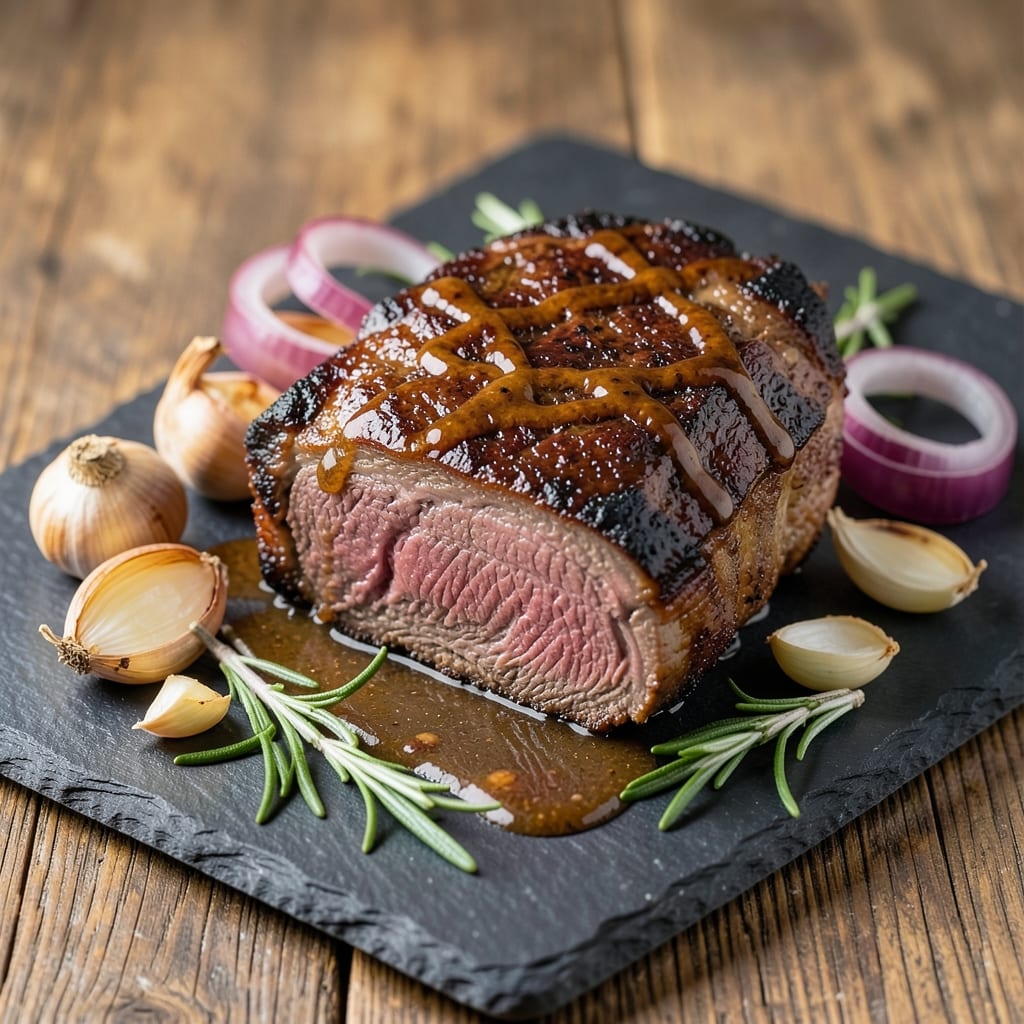
A 5 lb roast beef cooked to perfection delivers a showstopping centerpiece that stays moist and tender for hours—no dry slices here. The secret lies in a reverse sear technique paired with a rich au jus bath that locks in juices while caramelizing the exterior. This method transforms tough cuts into melt-in-your-mouth bites, ideal for holiday feasts or Sunday dinners when you want to impress without stress.
What sets this recipe apart is the au jus bath, a flavorful liquid made from the roast's drippings, which keeps the beef succulent even after resting. Start by searing the roast at high heat to develop a deep, caramelized crust, then finish in a 325°F oven until the internal temperature reaches 130°F for medium-rare. The slow cook ensures even doneness while the au jus infuses every bite with savory depth.
By the time you slice into this golden, glistening roast, you’ll uncover a juicy, pink center surrounded by a crispy exterior—exactly what makes a roast worth the effort. The au jus, reduced to a glossy, aromatic sauce, elevates the dish from ordinary to extraordinary, turning a simple roast into a restaurant-worthy masterpiece. Every slice delivers the perfect balance of texture and flavor, making it the star of any meal.
Pair with classic sides like roasted potatoes, glazed carrots, or a fresh salad to complete the meal. The au jus also doubles as a dipping sauce, ensuring no drop of flavor goes to waste. Ready to master the art of roast beef? Let’s get started with the foolproof steps that guarantee restaurant-quality results at home.
Ingredients for 5 lb roast beef
Five pounds of beef plus a handful of pantry staples—this is your ticket to showstopping roast perfection.
| Ingredient | Amount | Notes |
|---|---|---|
| Chuck Roast 🥩 | 5 lb | Well-marbled, trimmed of excess fat |
| Kosher Salt 🧂 | 2 tbsp | Diamond Crystal preferred |
| Freshly Ground Black Pepper 🌶️ | 1 tbsp | Freshly cracked for maximum flavor |
| Yellow Onion 🧅 | 1 whole | Large, halved lengthwise |
| Garlic Cloves 🧄 | 8 cloves | Smashed, not minced |
| Beef Broth 🍲 | 2 cups | Low-sodium preferred |
| Dry Red Wine 🍷 | 1 cup | Cabernet Sauvignon or Merlot |
| Fresh Rosemary 🌿 | ¼ cup | Chopped, stems removed |
| Fresh Thyme 🌿 | ¼ cup | Leaves only, stems discarded |
| Tomato Paste 🍅 | 2 tbsp | Squeeze tube preferred |
| Worcestershire Sauce 🥫 | 1 tbsp | Vegetarian if needed |
| Unsalted Butter 🧈 | 4 tbsp | Cold, cubed for searing |
| Olive Oil 🫒 | 2 tbsp | High smoke point |
The chuck roast is non-negotiable here—marbling is key for that juicy, melt-in-your-mouth texture. Costco or Whole Foods carry excellent pre-trimmed cuts, but if you're buying whole, ask the butcher to remove excess fat. For the herbs, fresh is best—the rosemary and thyme should smell vibrant, not dusty. I grab mine from the farmers market when possible, but the grocery store's fresh section works too. The beef broth? Low-sodium is crucial—you're controlling the seasoning here, not the salt content.
No red wine? Substitute with extra beef broth plus a splash of balsamic vinegar—it adds depth without overpowering. Running low on fresh herbs? Dried thyme at one-third the amount works in a pinch, but skip the rosemary swap—it's too different. Worcestershire sauce missing? Soy sauce plus a pinch of sugar gets you close. For the tomato paste, Trader Joe's squeeze tubes are perfect—they keep forever and you only use what you need. The butter matters too—cold cubes give you better sear marks than melted butter.
This roast reheats like a dream—better the next day once all the flavors meld. Store leftovers in the fridge for 4-5 days or freeze for up to 3 months by wrapping tightly in butcher paper. I always make extra au jus—it freezes beautifully for future meals. For serving, let the roast rest 15-20 minutes before slicing—this keeps every bite juicy. The au jus can be reheated gently on the stove, stirring occasionally.
Why You'll Love This Recipe
- Deep, Rich Payoff: The chuck roast turns into melt-in-your-mouth perfection—juicy inside, with a crust that’s almost too good to cut through. Between the caramelized onions and the garlic seeping into every bite, it’s the kind of flavor that makes people ask, “What’d you do to this?”
- Leftovers That Shine: This recipe actually improves the next day. Slice it thin for sandwiches, dice it for tacos, or throw it in a pasta sauce—it’s the ultimate meal prep hero. My freezer’s always stocked with portions because reheating it? Still delicious.
- Budget Meal for Crowds: Five pounds of chuck roast feeds a family of four and leaves leftovers—without breaking the bank. It’s the kind of dish where you get more than you pay for, and the taste? Worth every penny. (Yes, even when my grocery budget’s tight.)
Step-by-step instructions for 5 lb roast beef with au jus bath
This method delivers melt-in-your-mouth tenderness with a rich au jus that keeps the beef juicy for hours.
Prepare and Season the Chuck Roast
Pat the 5 lb chuck roast completely dry with paper towels—this is crucial for that perfect crust later. Place it on a cutting board and generously rub all sides with 2 tbsp kosher salt and 1 tbsp freshly ground black pepper. I press the seasoning in firmly so it adheres well and penetrates the meat as it cooks.
Next, prepare the aromatics: Halve the whole yellow onion lengthwise and slice each half into ¼-inch thick rounds. Smash the 8 garlic cloves with the flat side of your knife—this releases more flavor than mincing. Chop the ¼ cup fresh rosemary and ¼ cup fresh thyme leaves finely, discarding any woody stems. Set these aside for later.
Sear the Roast for Maximum Flavor
Heat a large Dutch oven over medium-high heat until very hot. Add 2 tbsp olive oil and let it shimmer for 30 seconds. Place the seasoned roast in the pot, fat-side down, and sear undisturbed for 5 minutes until a deep golden brown crust forms. Flip and sear the other side for another 5 minutes, then remove the roast and set it aside.
In the same pot, add the 4 tbsp cold unsalted butter and let it melt completely. Toss in the sliced onions and cook for 3 minutes until softened but not browned. Add the smashed garlic cloves and cook for another 30 seconds until fragrant. Stir in the 2 tbsp tomato paste, 1 tbsp Worcestershire sauce, ¼ cup chopped rosemary, and ¼ cup chopped thyme, scraping up any browned bits from the bottom of the pot.
Deglaze and Build the Au Jus Base
Pour in the 1 cup dry red wine and scrape vigorously with a wooden spoon to release all the flavorful browned bits from the bottom of the pot. Let the wine reduce by half—about 3-4 minutes—until it's syrupy and the alcohol smell has cooked off. Add the 2 cups beef broth and bring the mixture to a gentle simmer.
Return the roast to the pot, fat-side up, and nestle it into the aromatics. The idea is to create an au jus bath that will keep the meat moist throughout the long cook. Cover the pot with a tight-fitting lid and transfer it to a 325°F oven.
Cook Low and Slow Until Probe-Tender
Roast the beef for 3 hours, then check the internal temperature with a meat thermometer. It should read 195-200°F—this is the "probe-tender" stage where the meat becomes so tender it practically falls apart. If it's not there yet, return it to the oven for another 30-45 minutes, checking every 20 minutes to avoid overcooking.
Here's the thing—don't be tempted to rush this step. The low-and-slow method breaks down the tough collagen in the chuck roast, transforming it into melt-in-your-mouth tenderness. The au jus bath ensures every bite stays juicy, not dry. When the roast reaches the right temperature, remove it from the oven and let it rest for 15 minutes before carving.
Rest and Serve with Rich Au Jus
During the resting time, skim any excess fat from the au jus in the Dutch oven, leaving about ½ inch of fat on top. This helps create a glossy finish when you reheat the sauce. Transfer the roast to a cutting board and tent loosely with foil. Let it rest for at least 15 minutes—this allows the juices to redistribute throughout the meat.
Slice the roast against the grain into ¼-inch thick slices. Ladle the au jus into a warm serving dish and place it on the table alongside the sliced beef. The au jus should coat the back of a spoon with a rich, velvety texture. Serve immediately with crusty bread to soak up every last drop of that flavorful sauce.
Pro Tips For Making 5 Lb Roast Beef
- Pat the Roast Dry: Chuck roast loves moisture, but not too much—wipe it down with paper towels before searing. I learned this the hard way after my first attempt turned out soggy; the crust never formed properly. A dry surface = better browning, which means flavor.
- Sear in Batches: Five pounds is a lot—don’t crowd the pan. Sear the roast first, then set it aside and work in batches with the onions and garlic. I used to rush this, and the onions would steam instead of caramelize. Patience here makes all the difference.
- Use a Meat Thermometer: Guessing doneness with a chuck roast is a recipe for disappointment. Aim for 195°F internal temp—this ensures it’ll pull apart easily when rested. I skipped this once and ended up with a chewy, overcooked mess.
- Rest Under Foil: After roasting, tent the beef with foil and let it rest for 15-20 minutes. This keeps it juicy and makes slicing a breeze. I was skeptical until I tried it—now I never skip it, even if I’m hungry. (Yes, it’s that important.)
Wine and beer pairings for these flavors
Bold Red Wine Pairings
The rich, deep flavors of this roast beef demand a wine with equal intensity. I always reach for a bold Cabernet Sauvignon from Napa Valley—its dark fruit notes and firm tannins stand up to the beef's caramelized crust and au jus. For something slightly lighter but still robust, a Malbec from Argentina offers juicy plum flavors that complement the dish's savory depth. 🍷
Earthy Beer Complements
If you prefer beer, a dark Belgian ale like Westmalle Dubbel delivers malty sweetness that balances the roast's richness. For a hoppier option, try a German Dunkelweizen—its banana and clove notes play beautifully with the rosemary and thyme in the au jus. I keep a six-pack of Allagash Dark Ale on hand for special occasions.
Unexpected White Wine
Don't overlook white wine lovers! A full-bodied Chardonnay from Burgundy, with its buttery texture and hints of vanilla, pairs surprisingly well. The acidity cuts through the beef's richness while the oak notes enhance the au jus. I've even used a Viognier from Condrieu—its floral aromas add an elegant contrast to the hearty beef.
Regional Pairing Tips
For Texas-style gatherings, swap the red wine for a Texas Hill Country Aglianico—its spicy notes mirror the chuck roast's natural depth. In the Pacific Northwest, I opt for a Syrah from Walla Walla, where its peppery finish complements the beef's crust. Always let your wine breathe for 30 minutes before serving to release maximum aroma.
Non-Alcoholic Options
Non-drinkers shouldn't miss out! A sparkling cranberry juice with a splash of lime mimics wine's acidity, while a ginger beer adds refreshing zing. For something more substantial, try a smoked tea like Lapsang Souchong—its smoky depth pairs surprisingly well with the roast's caramelized exterior. 💫
Nutrition facts
Frequently asked questions
Can I use a different cut of beef instead of chuck roast?
While chuck roast is ideal for this recipe, you can substitute with top round or bottom round for a leaner option. However, these cuts require longer cooking times to achieve tenderness. For best results, stick with chuck or bottom sirloin—both have enough marbling to stay juicy. Never use tenderloin or ribeye, as they'll dry out during the long cook.
Why does the recipe call for a probe-tender temperature of 195-200°F?
This low internal temperature breaks down collagen in the tougher muscle fibers, transforming them into gelatin that keeps the meat moist. At 130°F (medium-rare), you'd miss out on that melt-in-your-mouth texture. The 3-hour cook at 325°F ensures even doneness while the au jus bath locks in all those juices.
How do I adjust this recipe for a smaller roast?
For a 3 lb roast, reduce all liquid ingredients by 30% and cook for 2 hours instead of 3. The key is maintaining the same ratio of beef to au jus—too much liquid will steam the meat instead of braising it. Always use the same Dutch oven size to ensure proper heat distribution. Smaller roasts cook faster, so check the temperature 15 minutes early.
What's the best way to reheat leftovers?
Slice the roast first, then reheat only what you need in a skillet with a splash of au jus over medium-low heat for 3-4 minutes. Never microwave—it turns the meat rubbery. For the au jus, warm it separately on the stove, stirring occasionally. Leftovers taste even better the next day as flavors meld further. Store in an airtight container with the au jus poured over the slices.
Can I make this recipe without red wine?
Replace the 1 cup red wine with 1 cup beef broth plus 1 tbsp balsamic vinegar for depth. The vinegar mimics wine's acidity while adding complexity. For extra richness, add ½ cup tomato paste instead of the original 2 tbsp. The au jus will still develop that glossy, flavorful finish—just with a slightly different profile.